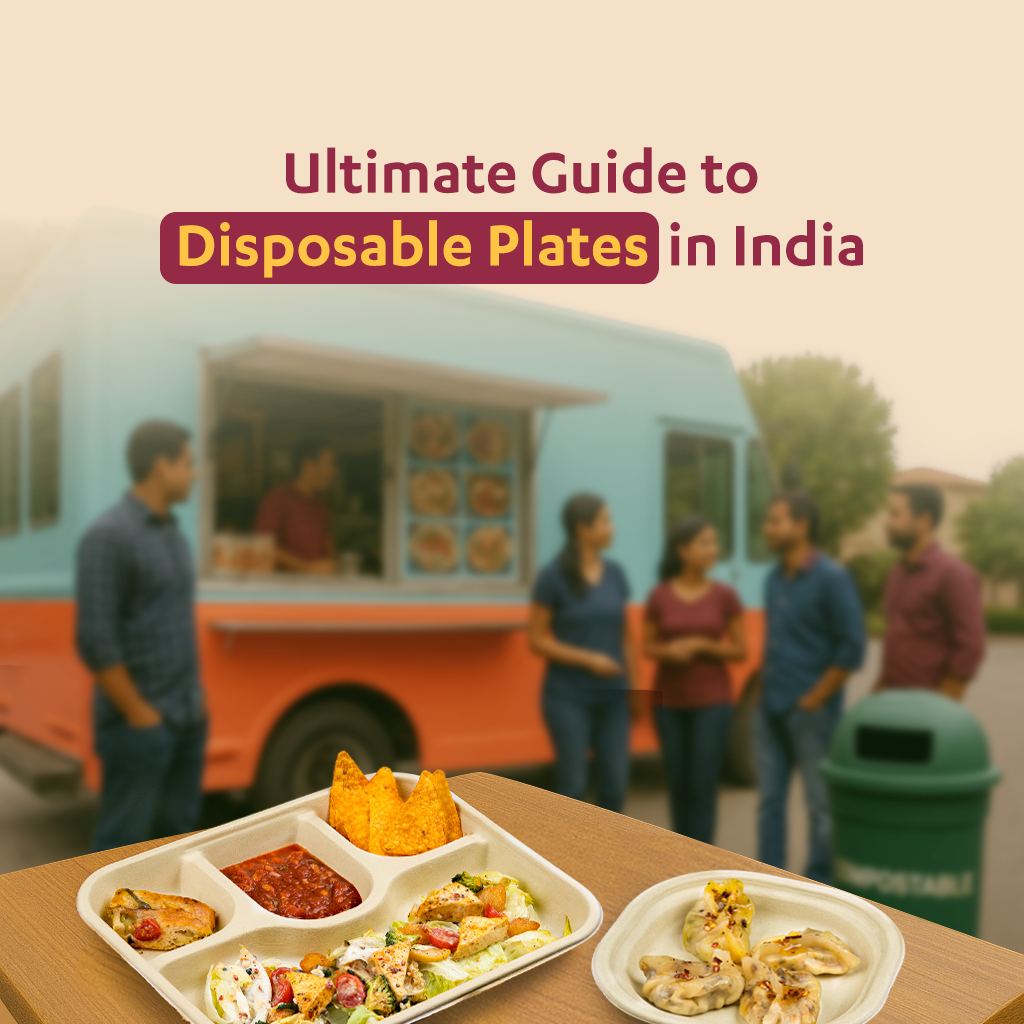
Disposable Plates in India: The Honest Guide Nobody Else Will Give You
Picture this. A Saturday night wedding in Jaipur serving 3,000 guests. A cloud kitchen in Bengaluru pushing 400 deliveries before lunch. A street food vendor in Delhi plating chaat faster than customers can queue.
What do they all have in common? Every single one of them depends on disposable plates. And every single one of them is making a choice that affects their bottom line, their customers’ health, and the environment, whether they realize it or not.
Here is the honest truth: the Indian disposable tableware market is heading toward Rs 35,000 crore by 2028. That is not a small number. The demand is massive, growing at over 6% year on year, driven by urbanization, hygiene awareness, and the food delivery boom.
But with that growth comes a mess of options. Paper plates, plastic plates, sugarcane bagasse plates, areca leaf plates, bamboo, corn starch, and everything in between. And what they don’t tell you is that most buyers pick the wrong plate for the wrong reason.
Whether you are a restaurant owner, a caterer handling wedding season, or a consumer hosting 30 people for a house party, this guide breaks down what actually matters. No fluff, no sales pitch, just honest comparisons and practical advice.
Let us get into it.
Why Disposable Plates Are Everywhere in India Right Now
This is not just about convenience anymore. The reasons behind India’s disposable plate demand are layered, and understanding them helps you make smarter buying decisions.
Here is what is driving the surge:
- Speed of service. No washing, no drying, no storage headaches. As a restaurant owner pushing 200 covers at lunch, that saved time translates directly into revenue.
- Bulk affordability. For large-scale events, weddings, and institutional feeding programs, disposable plates slash operational costs compared to maintaining reusable crockery.
- Post-pandemic hygiene awareness. Single-use plates remove the shared-utensil concern entirely. Customers notice this, even if they don’t say it out loud.
- Food delivery explosion. Aggregator platforms like Swiggy and Zomato have turned every restaurant into a packaging operation. Sturdy, leak-proof plates are not optional anymore, they are infrastructure.
- Plastic bans creating a market shift. With multiple Indian states enforcing single-use plastic bans, businesses are being forced, and in many cases choosing, to move toward compostable alternatives.
The bottom line? Disposable plates are not going away. The only question is which type you choose, and whether that choice is working for you or against you.
Types of Disposable Plates Available in India
Not all disposable plates perform the same. Not even close. The material determines everything: how the plate handles heat, whether it holds up with oily food, what it costs per unit, and what happens after you throw it away.
Here is a breakdown of every major type available in the Indian market, with the honest pros and cons.
Paper Plates
The most common type of disposable plate in India. You will find them at every kirana store, every street corner, every household function.
- What they are: Made from cellulose pulp, often with a plastic or wax coating to prevent sogginess.
- Best for: Dry snacks, light items like sandwiches, samosas, and small bites.
- Where they fail: Hot, oily, or gravy-based food. Without the coating, they collapse. With the coating, they are no longer truly compostable.
The honest truth about paper plates: Most people assume paper equals safe and natural. What they don’t tell you is that the coating needed to make paper plates functional is usually polyethylene, which is plastic. An uncoated paper plate is compostable but useless with anything heavier than a biscuit. A coated paper plate works for food but does not break down in soil.
As a caterer, this puts you in a bind. You need performance, but you also need to meet sustainability expectations. Paper plates give you neither fully.
Plastic Plates
Once the default choice for bulk catering, mess halls, and institutional use. Now rapidly falling out of favour, and for good reason.
- What they are: Made from polypropylene (PP), polystyrene (PS), or other petrochemical polymers.
- Best for: Historically used for wet and oily foods because of their water resistance.
- Where they fail: Everywhere that matters in 2026. Non-biodegradable. Banned in multiple Indian states. Increasingly rejected by consumers.
India generates over 3.4 million tonnes of plastic waste annually, according to CPCB data. Single-use plastic plates are a significant contributor. If you are still using them, you are not just on the wrong side of the environment. You are on the wrong side of the law in many states.
Sugarcane Bagasse Plates
This is where the industry is heading, and fast. Bagasse plates are made from the fibrous residue left after sugarcane juice extraction, turning agricultural waste into functional tableware.
- What they are: Moulded from sugarcane pulp fibre. No plastic coating needed because the natural fibre density provides structural integrity.
- Best for: Everything. Hot meals, oily gravies, biryani, dal, fried items, cold desserts. They handle the full range.
- Why they stand out:
- Microwave-safe and oven-safe (up to 200 degrees Celsius)
- Oil-resistant and leak-proof without any synthetic lining
- Freezer-safe for prep-ahead operations
- Fully compostable, both at home and industrially
- India produces over 100 million tonnes of sugarcane annually, so raw material supply is not a bottleneck
As a restaurant owner or caterer, bagasse plates solve the performance-sustainability dilemma that paper plates create. You get a plate that handles your hottest, oiliest dishes without needing plastic, and it breaks down naturally after disposal.
The cost is slightly higher than paper or plastic per unit. But factor in compliance with plastic bans, positive brand perception among customers, and zero risk of microplastic leaching into food, and the math starts looking very different.
Areca Leaf Plates
Deeply rooted in South Indian tradition and gaining popularity across the country among eco-conscious buyers.
- What they are: Made from dried fallen areca palm leaves, pressed into plate shapes using heat and pressure. No chemicals, no coatings, no additives.
- Best for: Traditional meals, temple prasadam, eco-friendly events, and premium catering where the natural aesthetic adds value.
- Where they fall short: Slightly higher cost, limited size and shape options, and availability can be inconsistent depending on region and season.
Areca plates decompose in approximately 60 days under composting conditions, leaving zero residue. They are genuinely beautiful tableware, and for the right occasion, nothing else comes close.
Bamboo and Wooden Plates
The premium end of the disposable plate spectrum. These are for buyers who want aesthetics alongside sustainability.
- What they are: Made from bamboo pulp, wood veneer, or pressed wood fibre. Some are single-use, others are sturdy enough for limited reuse.
- Best for: Boutique catering, luxury events, corporate hospitality, gifting.
- Where they fall short: Price. Bamboo and wooden plates cost significantly more than bagasse or paper. They are not practical for high-volume, everyday use.
Bamboo is one of the fastest-growing renewable materials on earth, which makes the sourcing story strong. But for most restaurant owners and caterers operating on tight margins, this sits in the “nice to have” category rather than everyday essentials.
Corn Starch Plates
A newer entrant in the Indian market, often marketed as the next generation of compostable disposables.
- What they are: Made from PLA (polylactic acid) derived from corn starch.
- Best for: Cold foods and room-temperature items.
- The catch: PLA does not handle heat well. At temperatures typical for Indian food service (above 60 degrees Celsius), it can warp, soften, and potentially leach. It also requires industrial composting conditions to break down, not your backyard compost heap.
As a buyer, be careful with corn starch plates if your use case involves hot food. The marketing often says “plant-based” without clarifying the heat limitations.
Comparison Table: Disposable Plate Types Head to Head
Here is the comparison that actually matters. Not marketing language, just performance facts.
| Feature | Paper Plates | Plastic Plates | Bagasse Plates | Areca Leaf Plates | Bamboo/Wood Plates | Corn Starch Plates |
|---|---|---|---|---|---|---|
| Material | Cellulose + coating | Petrochemical polymers | Sugarcane fibre | Dried palm leaves | Bamboo/wood pulp | PLA from corn |
| Hot Food Performance | Poor to Medium | Medium | Excellent | Good | Good | Poor |
| Oil Resistance | Low (without coating) | High | High (natural) | Medium-High | Medium | Low-Medium |
| Microwave Safe | No (coated types) | No | Yes | Limited | Limited | No |
| Compostable | Only if uncoated | No | Yes (home + industrial) | Yes | Yes | Industrial only |
| Plastic-Free | Usually no | No | Yes | Yes | Yes | Technically no (PLA) |
| Cost per Unit (Bulk) | Rs 1-2 | Rs 1-3 | Rs 2-4 | Rs 3-6 | Rs 5-15 | Rs 3-5 |
| Availability in India | Very High | Declining | Growing Fast | Regional | Niche | Limited |
| Legal Compliance | Varies by state | Banned in many states | Fully compliant | Fully compliant | Fully compliant | Varies |
| Sustainability Score | 2/5 | 0/5 | 5/5 | 4/5 | 4/5 | 2/5 |
The takeaway: If you need one plate that handles everything Indian food throws at it, performs well in heat, passes compliance checks, and actually breaks down after disposal, bagasse is the clear winner for everyday high-volume use. Areca and bamboo are excellent for specific occasions. Paper and corn starch have significant limitations that most buyers discover too late.
What to Actually Look For Before Buying
Buying disposable plates seems simple until you get 5,000 units that collapse under your dal makhani. Here is the checklist that saves you from expensive mistakes.
Material and Compostability
This is the single most important factor. Ask yourself:
- Does the plate need a coating to function? If yes, find out exactly what that coating is. PE coating means plastic. PLA coating means it needs industrial composting. No coating needed (like bagasse) means genuinely plastic-free.
- Is the “compostable” claim certified? Look for EN 13432, ASTM D6400, or CPCB-approved compostability certifications. Without certification, “compostable” is just a word on the packaging.
- Does it match your disposal infrastructure? If your city does not have industrial composting facilities, a plate that requires industrial composting is functionally no different from plastic in your waste stream.
Heat and Oil Resistance
As a restaurant owner or caterer, this is non-negotiable:
- Test with your actual menu items. A plate that holds dry puri might fail with chole. Always test with your heaviest, oiliest dish before committing to a bulk order.
- Check the temperature rating. Quality bagasse plates handle up to 200 degrees Celsius. Paper plates with PE coating start degrading above 80 degrees Celsius.
- Oil soak-through time matters. A plate that holds biryani for 5 minutes is useless for a buffet. You need at least 30 to 45 minutes of performance.
Certifications That Matter
Certifications separate genuinely good products from marketing spin:
- FSSAI approval for food-grade safety
- ISO certifications for manufacturing quality
- Compostability certifications (EN 13432, ASTM D6400, or India’s BIS standards)
- FDA compliance if you are exporting or serving international clients
If a supplier cannot produce certifications when asked, that tells you everything you need to know.
Bulk Pricing and Packaging
Smart buying starts with understanding the economics:
- Bulk packs (500 to 5,000 units) can reduce per-unit cost by 25 to 30 percent compared to retail packs.
- Storage matters. Paper plates absorb moisture in humid conditions. Bagasse plates are more stable. Factor in your storage environment before ordering large quantities.
- Check the packaging itself. If you are buying compostable plates wrapped in plastic packaging, the sustainability story falls apart. Ask if the outer packaging is also recyclable or compostable.
Branding and Customization
As a food business owner, your packaging is part of your brand identity:
- Bagasse and paper surfaces accept custom printing and embossing well.
- Areca and wooden plates are harder to brand but the natural look itself becomes a brand statement.
- Custom branding on plates can increase perceived value and reinforce your sustainability commitment with every meal you serve.
Best Use Cases: Matching the Right Plate to the Right Situation
Weddings and Large-Scale Catering
Indian weddings serve thousands of meals in a single event. You need plates that are sturdy enough for heavy food (paneer, biryani, dal, raita, all on one plate), affordable in bulk, and easy to dispose of.
Best choice: Bagasse plates with compartments. They keep dishes separated, handle heat and oil, and the post-event cleanup is straightforward. Compostable disposal means no plastic waste guilt at a celebration.
QSRs, Cloud Kitchens, and Food Delivery
Speed, consistency, and durability in transit are what matter here. Your plate has to survive a 30-minute delivery ride without leaking, soggy bases, or structural failure.
Best choice: Bagasse plates and containers with fitted lids. They stack well, microwave safely for the end customer, and hold up under the most demanding menu items.
Office Events and Corporate Catering
Corporate clients increasingly care about sustainability optics. Serving food on plastic at a corporate event sends the wrong message.
Best choice: Bagasse for everyday corporate catering. Areca or bamboo plates for premium executive events where presentation matters as much as the food.
Street Food and Small Vendors
Budget is king. But so is compliance with local plastic bans.
Best choice: Uncoated paper plates for dry items. Bagasse bowls and plates for wet items. The combination keeps costs manageable while keeping you on the right side of the law.
Schools, Hospitals, and Institutional Feeding
Consistent quality, food-grade safety, and cost-effectiveness at massive scale. These buyers cannot afford to experiment.
Best choice: Bagasse plates in bulk. Certified food-safe, cost-effective at scale, and increasingly being adopted in government midday meal programmes and NGO food drives.
Pricing Reality Check: What Disposable Plates Actually Cost in India
Let us talk numbers, because vague claims about “affordable” pricing help nobody.
What Drives the Price
- Material type: Bagasse costs more than paper but less than bamboo. Plastic is cheap, but you are paying in legal risk and brand damage.
- GSM (thickness): Higher GSM means sturdier plates and higher cost. A 300 GSM bagasse plate handles biryani. A 200 GSM paper plate handles biscuits. Know which you need.
- Design features: Compartments, embossing, custom printing, and specialized shapes all add to the cost.
- Certifications: Certified compostable, food-grade products may cost 5 to 10 percent more than uncertified alternatives. That premium buys you legal compliance and customer trust.
Approximate Price Ranges (Bulk, 2026)
| Plate Type | Price per Unit (Bulk) | Best Value For |
|---|---|---|
| Paper (uncoated) | Rs 0.80 – 1.50 | Dry snacks only |
| Paper (PE-coated) | Rs 1.00 – 2.00 | Light meals (not truly compostable) |
| Plastic | Rs 1.00 – 3.00 | Declining use, legal risk |
| Bagasse | Rs 2.00 – 4.50 | All-purpose, best ROI |
| Areca Leaf | Rs 3.00 – 7.00 | Premium events, eco-niche |
| Bamboo/Wood | Rs 5.00 – 15.00 | Luxury and boutique |
| Corn Starch (PLA) | Rs 3.00 – 6.00 | Cold food only |
The Cost vs Sustainability Calculation
Yes, bagasse plates cost more than paper per unit. But here is the calculation most buyers miss:
- Compliance savings. One fine for plastic ban violation costs more than months of bagasse plates.
- Brand value. Customers who see you using compostable disposables rate your business higher. That translates to repeat visits and positive reviews.
- Waste management. Compostable plates reduce the volume of non-degradable waste your business produces. In cities moving toward waste segregation enforcement, this matters financially.
- Menu performance. A plate that handles your food properly means fewer complaints, fewer replacements, and fewer messes during service.
As a restaurant owner, the cheapest plate is not the one with the lowest sticker price. It is the one that performs reliably, complies with regulations, and strengthens your brand. Run the full calculation before you decide.
How to Spot Greenwashing in Disposable Plates
Here is what they won’t tell you: not every product that says “eco-friendly” on the label actually is. Greenwashing is rampant in the Indian disposable tableware market.
Red flags to watch for:
- “Biodegradable” without a timeframe. Technically, even plastic biodegrades. In about 500 years. A genuine compostable product specifies 90 to 180 days.
- “Plant-based” without material disclosure. PLA is plant-based but behaves like plastic under heat and requires industrial composting. The label should tell you exactly what the plate is made from.
- No certifications on the packaging or website. If a brand claims compostability but cannot produce EN 13432, ASTM D6400, or equivalent Indian certification, be sceptical.
- Green-coloured packaging with no substance behind it. The colour of the box does not determine the compostability of the plate inside it.
As a buyer, asking for certifications is not rude. It is smart business. Any legitimate manufacturer will be happy to share them.
In a Nutshell
Disposable plates in India are not a one-size-fits-all decision anymore. The market has evolved, regulations have tightened, and customer expectations have shifted.
Here is what matters:
- Paper plates work for dry snacks but most contain hidden plastic coatings that undermine both safety and sustainability claims.
- Plastic plates are on their way out. Legal bans are expanding, and the environmental cost is no longer ignorable.
- Bagasse (sugarcane) plates deliver the best combination of performance, safety, cost-effectiveness, and genuine compostability for everyday high-volume use.
- Areca and bamboo plates are excellent for specific premium occasions but not practical for daily operations at scale.
- Always check certifications. “Eco-friendly” on the label means nothing without EN 13432, ASTM D6400, or equivalent proof.
- Run the full cost calculation. The cheapest per-unit price is not always the cheapest total cost when you factor in compliance, brand value, and performance.
If you are looking for compostable disposable plates that handle real Indian food without compromise, Chuk’s sugarcane bagasse range is built exactly for that. Sturdy enough for biryani, certified compostable, and designed for everything from daily deliveries to the biggest wedding you will ever cater.
The choice is yours. Make it an informed one.
Frequently Asked Questions
Which disposable plates are best for hot, oily Indian food?
Sugarcane bagasse plates perform best with hot, oily food. The natural fibre density resists oil absorption and handles temperatures up to 200 degrees Celsius without any plastic coating needed. Paper plates often need PE lining to handle oil, which introduces microplastic risk. Areca leaf plates also perform well but are less widely available and cost more in bulk.
Are paper disposable plates actually compostable?
It depends on the coating. Uncoated paper plates are compostable but cannot handle wet or oily food. Most functional paper plates have a polyethylene (PE) or PLA coating that prevents composting. If the paper plate in your hand holds hot dal without collapsing, it almost certainly has a plastic-based lining. Check the manufacturer’s specifications before assuming compostability.
Is it legal to use plastic disposable plates in India?
Multiple Indian states have banned single-use plastic items including plates, under the Plastic Waste Management Rules and state-level notifications. The CPCB has issued specific guidelines restricting single-use plastic tableware. Enforcement varies by state and municipality, but the direction is clear: plastic disposable plates are being phased out. Using them carries increasing legal and reputational risk.
How much do compostable disposable plates cost compared to plastic?
Compostable bagasse plates typically cost Rs 2 to 4.50 per unit in bulk, compared to Rs 1 to 3 for plastic plates. The per-unit premium is small, especially at scale. When you factor in potential fines for plastic ban violations, positive brand perception from using compostable alternatives, and reduced waste management costs, the total cost of ownership often favours compostable plates.
Can disposable plates be microwaved safely?
Sugarcane bagasse plates are microwave-safe because they contain no metal or plastic layers. Plastic plates and styrofoam should never be microwaved as they release harmful chemicals when heated. PE-coated paper plates are also risky in microwaves. If you serve food that customers are likely to reheat, bagasse is the safest material choice.
What certifications should I look for when buying disposable plates in bulk?
Look for FSSAI approval (food-grade safety), compostability certifications like EN 13432 or ASTM D6400, ISO manufacturing quality certifications, and BIS standards compliance. For export-oriented businesses, FDA compliance matters as well. These certifications verify that the product meets food safety, quality, and environmental claims. Any reputable manufacturer will share these on request.
How do I store disposable plates to maintain quality?
Store plates in a cool, dry environment away from direct sunlight and moisture. Paper plates are especially susceptible to humidity and can become soggy or lose structural integrity in damp storage conditions. Bagasse plates are more resistant to moisture but should still be kept sealed until use. For bulk orders, ensure your storage space can handle the volume without compression damage to the plates.
Are bagasse plates suitable for wedding catering at scale?
Absolutely. Bagasse plates are increasingly the preferred choice for large-scale wedding catering across India. They handle the full range of Indian wedding food, from heavy gravies to fried items, without structural failure. Compartment-style bagasse plates keep dishes separated on a single plate. They are available in bulk at competitive prices and the compostable disposal simplifies post-event cleanup significantly.
Related reading
- Are Disposable Plates Safe for Hot Food?
- How to identify best disposable plates?
- The Ultimate Guide to Hosting a Stunning Diwali 2025 Party:
Moving off plastic usually starts with the plate
The plate is where most kitchens start when they move off plastic. CHUK’s compostable bagasse plates take hot, oily and wet food without going limp, and they compost after use.
Browse compostable plates | Order a sample box | Get pricing on WhatsApp