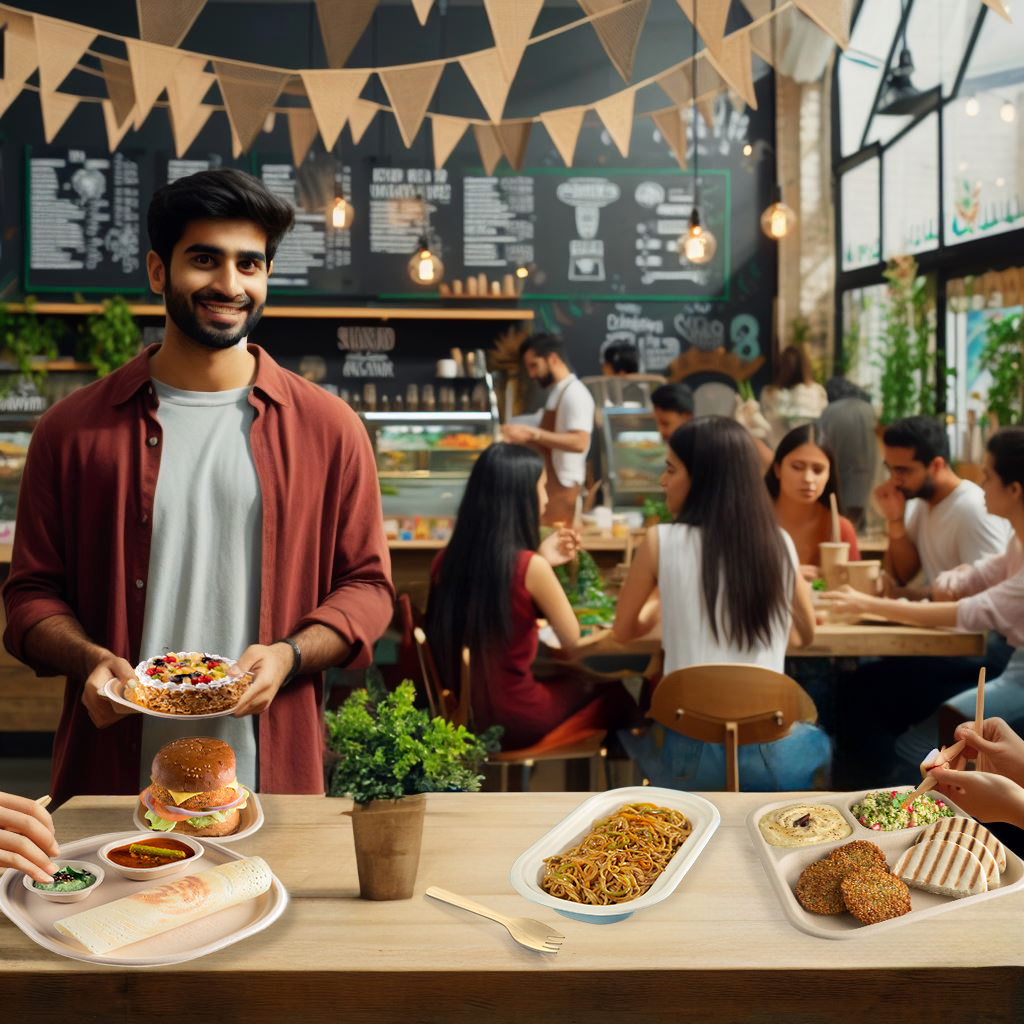
Your customer just picked the slightly pricier compostable container over the cheap plastic one. No discount code. No loyalty reward. No one watching.
Why?
That question matters more to your food business than any pricing spreadsheet. Understanding what actually made them reach for the compostable option is what separates restaurants with a green sticker from restaurants with genuine repeat customers.
This post isn’t about whether customers will pay more. (Spoiler: most already do.) It’s about what’s going on in their heads when they do, and how you, as a food business owner, can work with that psychology instead of guessing at it.
Key takeaways
- 80% of global consumers say they’ll pay more for sustainably sourced goods, averaging a 9.7% premium tolerance
- Indian consumers lead the world: 36% willing to pay significantly more for sustainable packaging (McKinsey 2025)
- The real driver isn’t environmentalism. It’s identity, emotion, and social proof
- The “warm glow effect” means customers pay premiums partly because it makes them feel good
- Food and beverage leads all product categories in sustainability premium acceptance at 48%
- Communicating the why behind your packaging choices matters more than the packaging itself
The numbers: sustainability premium by category
Before the psychology, a reality check. Not all categories see the same willingness to pay. Your industry sits right at the top.
| Product Category | % Consumers Willing to Pay More |
|---|---|
| Food and Beverage | 48% |
| Cleaning Products | 37% |
| Personal Care and Beauty | 30% |
| Clothing and Footwear | 26% |
| Home Appliances | 20% |
| Consumer Electronics | 19% |
| Automotive | 19% |
Source: PwC 2024 Voice of the Consumer Survey
Food tops the list because the link between what you eat, what it’s served in, and your health feels personal. It’s not abstract the way carbon credits are. Customers can see the container, touch it, smell it. That direct sensory link is where psychology kicks in.
The psychological triggers behind the premium
The warm glow effect
Behavioral economists have a name for this: the “warm glow effect.” When a customer picks your compostable disposables over plastic, they get a measurable bump in satisfaction. The interesting bit? That bump fires regardless of whether they actually know how much their choice helps the planet.
The act of choosing is the reward.
For your business, this plays out simply. Customers aren’t running carbon math at the table. They’re making emotional decisions. The premium they pay is partly buying a feeling. And your packaging? It holds food, yes. But it’s also delivering a small psychological reward every time someone opens it.
Identity signaling
A big chunk of sustainable purchasing has nothing to do with the environment. It’s about self-image.
When someone orders from your restaurant and gets a compostable container instead of styrofoam, it confirms something they already believe about themselves: that they make thoughtful choices. Psychologists call this identity signaling, where buying decisions reinforce how someone sees themselves and wants to be seen.
Cloud kitchens, QSRs, and takeaway brands see this play out every day. Your packaging becomes part of the customer’s personal brand. A compostable container in someone’s Instagram story says something about them, not your food. Millennial and Gen Z customers (49% and 47% respectively willing to pay packaging premiums) treat these choices the same way they treat which sneakers they wear or which brands they follow on social media.
Social proof
People copy each other. When sustainable packaging becomes the norm in your market, customers don’t just prefer it. They expect it. Restaurants still using cheap plastic start looking like they missed the memo.
Consumer psychology research calls out social influence as one of the strongest levers for changing behavior. Your customers look at what other restaurants in their area are doing, what food influencers use in their unboxing videos, what delivery platforms highlight. They watch what their friend group considers normal.
As a restaurant owner, your packaging choice positions you in this ecosystem. And in India, where 73% of consumers say they’d pay more for sustainability in food production (PwC 2025 India), the pressure to match your competitors is real.
Loss aversion
This one catches people off guard. Many customers aren’t paying more for sustainability. They’re paying more to avoid guilt.
Loss aversion, the idea that people feel losses about twice as intensely as equivalent gains, is one of the most replicated findings in behavioral economics. The psychological discomfort of knowingly contributing to plastic waste outweighs the financial sting of a slightly higher bill. People hate feeling complicit more than they enjoy saving a few rupees.
What does this mean practically?
- “Save the planet” messaging on its own falls flat
- “Single-use plastic takes 450 years to decompose” lands harder
- Being transparent about what your packaging is made from, and what it isn’t, taps directly into this avoidance instinct
- Honest labeling on compostable disposables reduces the fear of unknowingly making things worse
The trust premium
McKinsey’s 2025 packaging survey found that 36% of Indian consumers, the highest figure globally, will pay significantly more for sustainable packaging. But there’s a catch. They need to trust the claim.
Greenwashing has made everyone skeptical. The restaurants that benefit are the ones where the sustainability claim is verifiable (FSSAI-compliant, certified compostable, not a vague “green” label), consistent across the whole packaging line (not one token product), and visible enough that the customer can see and feel the difference.
When that trust clicks into place, the willingness to pay doesn’t just hold. It grows. These customers come back. They tell people about you.
The India factor
Indian consumers aren’t following global trends. They’re ahead of them in several ways.
- 36% willing to pay “a lot more” for sustainable packaging, highest of 11 countries surveyed (McKinsey 2025)
- 73% willing to pay more for sustainability in food production vs. 44% globally (PwC 2025)
- 38% specifically willing to pay a 10%+ premium on sustainably packaged food (2023 survey)
Cultural factors amplify the psychology here. Food in India isn’t just fuel. It’s prasad. It’s served with respect. Packaging that dishonors that value sticks out, and packaging that honors it resonates on a level that goes beyond rational calculation.
There’s also community accountability. In tight knit business communities and family networks, your packaging choices get noticed and discussed. And with single-use plastic bans already in effect across multiple states, choosing compostable disposables isn’t just smart positioning at this point. It’s compliance.
The intention-action gap
Here’s where most articles on this topic lose credibility. They pretend every willing customer follows through.
They don’t.
Research puts the number at about 8% for consumers who are both highly willing to pay more and actually committed to doing so. The “movable middle,” roughly 27% of the market, feels motivated by responsibility and environmental anxiety. But when the bill shows up, they rank price and quality first.
For your food business, this means:
- Don’t price yourself out of the market assuming universal premium willingness
- The sweet spot sits around 5-10%, backed by visible quality
- Quality has to match or beat the plastic alternative. Nobody sacrifices their food experience for a feel good moment
- Make the sustainable option the easy option. If your compostable containers perform like plastic and look better, the psychology handles the rest
Putting this to work
You don’t need a marketing degree for this.
On your packaging, use clear labeling. “100% compostable, made from sugarcane bagasse” works. Add a simple line like “This container returns to the earth in 90 days.” And make sure the packaging looks and feels premium. Perception drives willingness to pay more than specifications do.
On your menu and ordering platforms, a small leaf icon or “served in compostable disposables” note is enough to trigger identity signaling. Mention it once, clearly. Don’t overdo it. Customers distrust heavy green messaging.
In operations, train delivery staff to mention the packaging when they hand over orders. If you’re on Zomato or Swiggy, add your sustainable packaging to the listing description. Share the story in your Google Business profile.
On pricing, absorb part of the premium into your margins where you can. The customer should feel value, not cost. “Our packaging is compostable” lands better than “We charge Rs 5 extra for compostable containers.” Bundle it. Don’t itemize it.
In a Nutshell
Your customers are already willing to pay more. Every major survey confirms it, and Indian consumers lead the world on this front.
But the reasons are more personal than you’d expect. They haven’t calculated their carbon footprint. What’s actually driving them is the warm glow of making a choice that feels right, the identity boost from picking the better option, social proof from watching peers and competitors do the same, the desire to avoid feeling complicit in waste, and trust in brands that are straightforward about what they sell.
Your job as a food business owner isn’t to convince anyone to care about sustainability. That part is done. The job is to make the sustainable option easy, obvious, and trustworthy. Do that, and the customer psychology works in your favor.
Frequently asked questions
How much more are Indian customers actually willing to pay for sustainable food packaging?
McKinsey’s 2025 global packaging survey puts India at the top: 36% of Indian consumers willing to pay significantly more, the highest rate among 11 countries. A separate 2023 study found 38% willing to pay at least 10% more for sustainably packaged food and beverages.
Does “willingness to pay more” actually translate into real purchases?
Not always. Only about 8% of consumers are both highly willing and highly committed. The movable middle, roughly 27%, follows through when the product quality matches expectations and the sustainable option doesn’t require extra effort. Your compostable disposables need to perform as well as plastic or the psychology breaks down.
Which age group cares most about sustainable packaging?
Gen Z (49%) and Millennials (47%) lead in willingness to pay packaging premiums. Gen X sits at 41%, Boomers at 37%. If your customer base skews younger, which is common for cloud kitchens and QSR brands, these triggers translate more directly into actual purchases.
Will customers stop caring about sustainability if prices keep rising?
Inflation creates pressure, no question. McKinsey’s data shows willingness to pay “a lot more” declined between 2020 and 2023 in several markets and hasn’t fully recovered. In India, though, the trend has held. The approach that works: position sustainability next to quality and value instead of stacking it on top as an extra cost.
How do I communicate sustainable packaging without sounding preachy?
One line works: “served in 100% compostable containers made from sugarcane.” That’s it. Let the quality of the packaging do the talking. Customers notice when a container looks clean, holds heat, and doesn’t leak. That functional experience reinforces the psychological triggers better than marketing copy ever will.
Is switching to compostable disposables worth the higher cost for a small restaurant?
The premium gap is narrower than most people assume. Compostable disposables from sugarcane bagasse are competitively priced against many plastic alternatives now, especially once you factor in compliance with India’s single-use plastic regulations. Even a modest, visible commitment to sustainability builds customer trust and loyalty out of proportion to the cost. The research on this is pretty consistent.