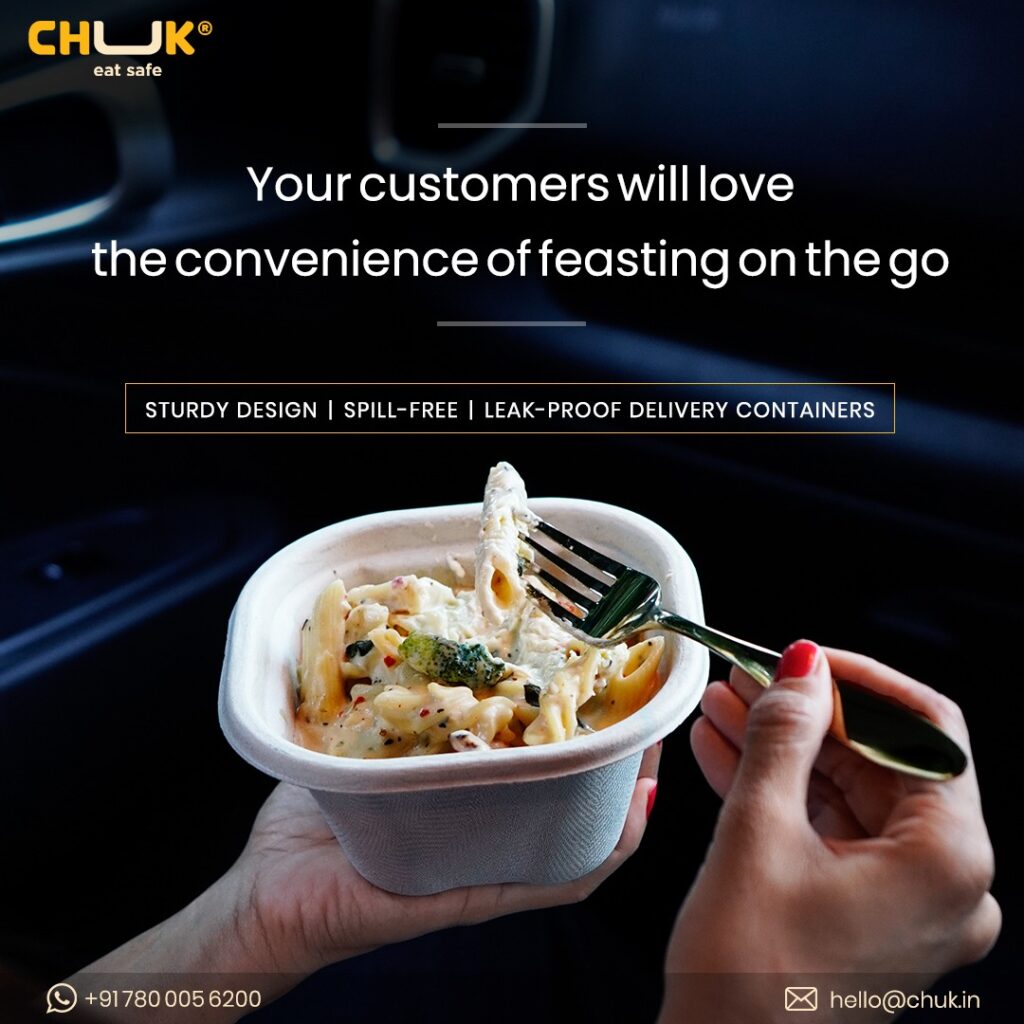
How to Choose the Right Delivery Container for Your Food Business
Your biryani lands at the customer’s door. The lid is loose. Gravy has leaked into the rice. The review reads: “Food was okay, packaging was terrible.”
If you run a cloud kitchen, QSR, or takeaway brand, you already know this story. The container you pick decides whether your food arrives the way it left your kitchen — or whether it arrives as a disappointing mess.
This guide walks you through the exact decisions you need to make when choosing delivery containers. No fluff, no jargon walls. Just the practical stuff that affects your food quality, your costs, and your customer ratings.
For a wider comparison across container types, see our guide to food delivery containers and how to match each format to the dish it carries.
Key Takeaways
- Match the container to the dish — gravies need leak-proof bowls, dry items work in clamshells, and thalis need compartment trays
- Material matters more than you think — compostable containers made from sugarcane bagasse handle heat, oil, and moisture without warping
- Delivery platforms judge your packaging — Zomato and Swiggy ratings are directly influenced by how food arrives, not just how it tastes
- Compostable disposables cost less than you expect — bulk pricing on bagasse containers is now competitive with plastic, and you skip the regulatory headaches
- One container type will not cover your full menu — most delivery kitchens need 3-4 container formats to serve their menu properly
Why Your Delivery Container Is a Business Decision, Not an Afterthought
Here is the honest truth: most food business owners spend weeks perfecting recipes and minutes choosing packaging.
But your container does three jobs at once:
- Protects food quality during transit — temperature, texture, and presentation
- Shapes the customer’s first impression — the unboxing moment is your restaurant’s handshake with the customer
- Determines your compliance standing — single-use plastic bans are tightening across Indian states, and FSSAI food-contact regulations are not optional
If your container leaks, warps, or smells like chemicals, that is a one-star review waiting to happen. And if it is made from banned plastic, that is a fine waiting to happen.
Step 1: Map Your Menu to Container Types
Before you browse any catalogue, sit down with your menu and sort every item into one of these categories:
Dry Items (Starters, Breads, Snacks)
These need ventilation, not sealing. A container that traps steam turns crispy samosas into soggy ones. Clamshell containers with micro-vents work well here.
Gravies and Curries
Leak-proof is non-negotiable. Round bowls with secure lids keep dal makhani where it belongs. Look for containers rated for hot liquids — not every bowl can handle 90-degree gravy without softening.
Rice and Biryani
You need depth and width. Biryani portions are bulky, and a container that is too shallow means customers get a compressed, unappealing presentation. Rectangular or deep round containers work best.
Thali-Style and Combo Meals
Compartment trays are the only sensible option. Without physical dividers, your raita mixes into your sabzi, and the whole meal looks chaotic on arrival.
Beverages and Soups
Cups with tight-fitting lids. This sounds obvious, but the number of cloud kitchens that ship soup in generic bowls — and lose customers to spills — is surprisingly high.
Step 2: Understand Your Container Options
Here is a side-by-side comparison of the four main container types used in Indian food delivery:
| Feature | Clamshells | Bowls | Compartment Trays | Cups |
|---|---|---|---|---|
| Best for | Starters, snacks, dry meals | Gravies, curries, rice, biryani | Thalis, combo meals, multi-item orders | Soups, beverages, chutneys, raita |
| Material (compostable) | Sugarcane bagasse | Sugarcane bagasse | Sugarcane bagasse / moulded fibre | Sugarcane bagasse with PLA lining |
| Heat safe | Up to 100 degrees C | Up to 100 degrees C | Up to 100 degrees C | Up to 85 degrees C (with lid) |
| Leak-proof | Moderate (hinge seal) | High (with tight lid) | Moderate (compartments contain spills) | High (with snap lid) |
| Stackability | Excellent | Good | Excellent | Good |
| Typical cost (bulk) | Rs 2.5 – 4.5 per unit | Rs 3 – 5 per unit | Rs 5 – 8 per unit | Rs 2 – 4 per unit |
| Ideal order type | Single-item snack orders | Single-dish meals | Full meal / combo deals | Add-on soups, sauces |
A note on material: Sugarcane bagasse is the fibrous residue left after extracting juice from sugarcane. It is a natural, renewable material that holds up to heat, oil, and moisture. Containers made from bagasse are compostable — they break down into organic matter in a composting environment, unlike plastic which persists for centuries.
Step 3: Evaluate the Five Things That Actually Matter
1. Heat Retention and Resistance
Your food leaves the kitchen hot. The container needs to hold that temperature for 20-40 minutes without warping, sweating excessively, or releasing any chemical odour.
Compostable bagasse containers handle this well — they are naturally heat-resistant and do not leach chemicals into food. Plastic containers, particularly thin polypropylene ones, can warp and release microplastics when exposed to hot food repeatedly.
2. Leak-Proof Performance
Indian food is gravy-heavy. If your container cannot handle dal, rasam, or curry without seeping through the seal, you are going to lose customers.
Test this before you commit to bulk orders. Fill a container with warm water, seal it, tip it sideways, and leave it for ten minutes. If it leaks, move on.
3. Aroma Integrity
What they don’t tell you: cheap containers absorb and transfer aromas. Your butter chicken starts smelling like the container material instead of the spices.
Bagasse-based compostable containers are inert — they do not absorb or transfer odours. This is a real operational advantage when you are packing multiple cuisines from the same kitchen.
4. Stackability and Storage
If you are running a cloud kitchen, space is limited. Containers that nest neatly when empty and stack securely when packed save you real estate in your prep area and in the delivery bag.
Clamshells and compartment trays typically stack better than round bowls. Factor this into your choice if kitchen space is tight.
5. Branding and Presentation
The container is the first thing a customer sees. A clean, professional-looking container with your logo communicates that you care about the full experience — not just the food.
Many compostable container suppliers now offer custom branding — printed logos, brand colours, and even QR codes that link to your menu or loyalty programme. This turns every delivery into a branded touchpoint.
Step 4: Match Containers to Your Delivery Volume
Your ordering pattern should dictate your container strategy:
- Under 50 orders/day: Start with 2-3 container types. A clamshell for dry items, a bowl for gravies, and cups for soups or chutneys. Keep it simple.
- 50-200 orders/day: Add compartment trays for combo meals. Negotiate bulk pricing with your supplier — this volume qualifies you for meaningful discounts.
- 200+ orders/day: You need a dedicated packaging strategy. Consider branded containers, custom sizes for your best-selling dishes, and a supplier relationship that guarantees consistent stock.
Step 5: Check Compliance Before You Commit
The regulatory space for food packaging in India is tightening:
- Single-use plastic bans are in effect across most states. Certain categories of plastic packaging are banned outright under the Plastic Waste Management Amendment Rules.
- FSSAI regulations require that all food-contact materials meet safety standards. Non-compliant packaging can result in fines and licence issues.
- Extended Producer Responsibility (EPR) norms are expanding. Businesses using non-compostable packaging may face additional compliance requirements.
Switching to compostable disposables is not just a sustainability decision — it is a compliance decision. Bagasse-based containers from certified manufacturers meet FSSAI food-contact standards and sidestep plastic ban complications entirely.
How Chuk Containers Fit Into Your Delivery Setup
Chuk offers a full range of compostable containers designed specifically for Indian food service — from small chutney cups to large biryani bowls and multi-compartment meal trays.
Every Chuk container is:
- Made from sugarcane bagasse — tree-free, chemical-free, food-grade certified
- FSSAI-compliant and tested for hot, oily, and liquid foods
- Available in bulk with nationwide delivery through distributor partners
- Customisable with your brand logo and colours
If you are a cloud kitchen or restaurant doing delivery, Chuk’s range covers every container type discussed in this guide. You can explore the full catalogue at chuk.in or connect with a distributor for bulk pricing.
In a Nutshell
Choosing the right delivery container is not a one-time decision — it is an ongoing part of running a food delivery business well. The container you pick affects food quality, customer satisfaction, platform ratings, and regulatory compliance.
Here is the short version:
- Sort your menu by food type and match each category to the right container format
- Prioritise heat resistance, leak-proof seals, and aroma integrity
- Factor in stackability and storage — especially if you run a compact kitchen
- Choose compostable disposables made from bagasse to stay compliant and future-ready
- Test before you bulk-order, and scale your container variety as your order volume grows
Your packaging is the last thing your kitchen touches and the first thing your customer sees. Make it count.
Frequently Asked Questions
What is the best delivery container for biryani and rice dishes?
Deep round bowls or rectangular containers made from sugarcane bagasse work best for biryani. They offer the depth needed for generous portions, handle high temperatures without warping, and keep the rice from getting compressed. Look for containers with tight-fitting lids to retain heat and prevent spills during transit.
Are compostable containers strong enough for oily and gravy-heavy Indian food?
Yes. Sugarcane bagasse containers are naturally resistant to oil and moisture. Unlike paper-based containers that can soften and leak, bagasse holds its structure even with hot, oily gravies. The key is to choose containers specifically rated for liquid and oil resistance — not all compostable options are equal.
How do I know if my current packaging complies with India’s plastic ban?
Check whether your containers fall under the categories listed in the Plastic Waste Management Amendment Rules. Items like plastic plates, cups, trays, and certain foam packaging are banned. Compostable containers made from bagasse are exempt from these bans because they are not plastic. Your supplier should provide compliance documentation — if they cannot, that is a red flag.
Can I get custom-branded compostable containers for my cloud kitchen?
Yes. Most compostable container manufacturers, including Chuk, offer branding options — printed logos, brand colours, and custom sizes for high-volume orders. Minimum order quantities for custom branding typically start at 5,000-10,000 units depending on the supplier.
How much do compostable delivery containers cost compared to plastic?
Bulk pricing for compostable bagasse containers ranges from Rs 2 to Rs 8 per unit depending on size and type. This is now competitive with food-grade plastic containers, especially when you factor in the compliance costs and potential fines associated with using banned plastic packaging. The price gap has narrowed significantly over the past two years.
Do compostable containers keep food hot during delivery?
Bagasse containers retain heat effectively for 20-40 minutes, which covers the typical delivery window for platforms like Zomato and Swiggy. They insulate better than thin plastic containers because bagasse is a naturally fibrous material. For maximum heat retention, pair your container with an insulated delivery bag — the container does its part, but the bag completes the chain.
Looking for compostable containers built for Indian food and Indian delivery conditions? Browse Chuk’s delivery container range or get in touch for a sample kit matched to your menu.