Why packaging matters in the era of food delivery
In today’s market, packaging is no longer just a container for food—it is a critical part of the food safety and standards framework, a brand touchpoint, and a compliance requirement. Food delivery platforms are increasingly scrutinizing packaging for safety, functionality, and sustainability. Poor packaging can lead to:
- Customer complaints
- Delivery mishaps
- Negative ratings
- Platform-imposed penalties
Understanding these expectations can help your restaurant not only avoid penalties but also improve customer satisfaction and operational efficiency.
How delivery platforms influence packaging choices
Most delivery aggregators have clear packaging guidelines. They typically cover:
- Food safety and hygiene: Packaging must prevent contamination, leakage, and spoilage.
- Material standards: Non-toxic, food-grade materials are often required.
- Temperature control: Proper insulation for hot and cold items.
- Eco-friendliness: Increasingly, platforms encourage sustainable packaging to reduce waste.
Platforms may audit restaurants, either randomly or based on customer complaints. Violations can affect your listing, delivery eligibility, or even incur direct penalties.
Common packaging pitfalls that can trigger penalties
Restaurants often overlook simple yet critical aspects:
- Leaking or flimsy containers: Can lead to customer complaints and poor ratings.
- Non-food-grade materials: Unsafe plastics or inks can be a violation of food safety standards.
- Inadequate portioning: Oversized or poorly sealed packages can compromise food quality and safety.
- Ignoring sustainability requirements: Some aggregators now prioritize restaurants with eco-friendly safety packaging.
- Poor labeling: Missing allergens or preparation instructions can lead to regulatory or platform warnings.
Being proactive in these areas can prevent platform interventions and reinforce customer trust.
What happens if a platform flags your packaging
Typically, food delivery platforms may:
- Notify the restaurant and request corrective action.
- Temporarily suspend the listing for repeat violations.
- Penalize through lower search visibility or priority.
- Share negative reviews publicly if customers report packaging issues.
It’s important to treat these measures as guidance rather than punishment. They highlight areas where your food safety and packaging practices can be improved.
Best practices for restaurant-friendly delivery packaging
- Choose the right materials
- Use certified food safety and hygiene approved containers.
- Ensure all wraps, bags, and disposables are food-grade and safe.
- Prefer compostable or recyclable materials to align with evolving platform standards.
- Optimize design for stability and insulation
- Sturdy containers reduce spills and complaints.
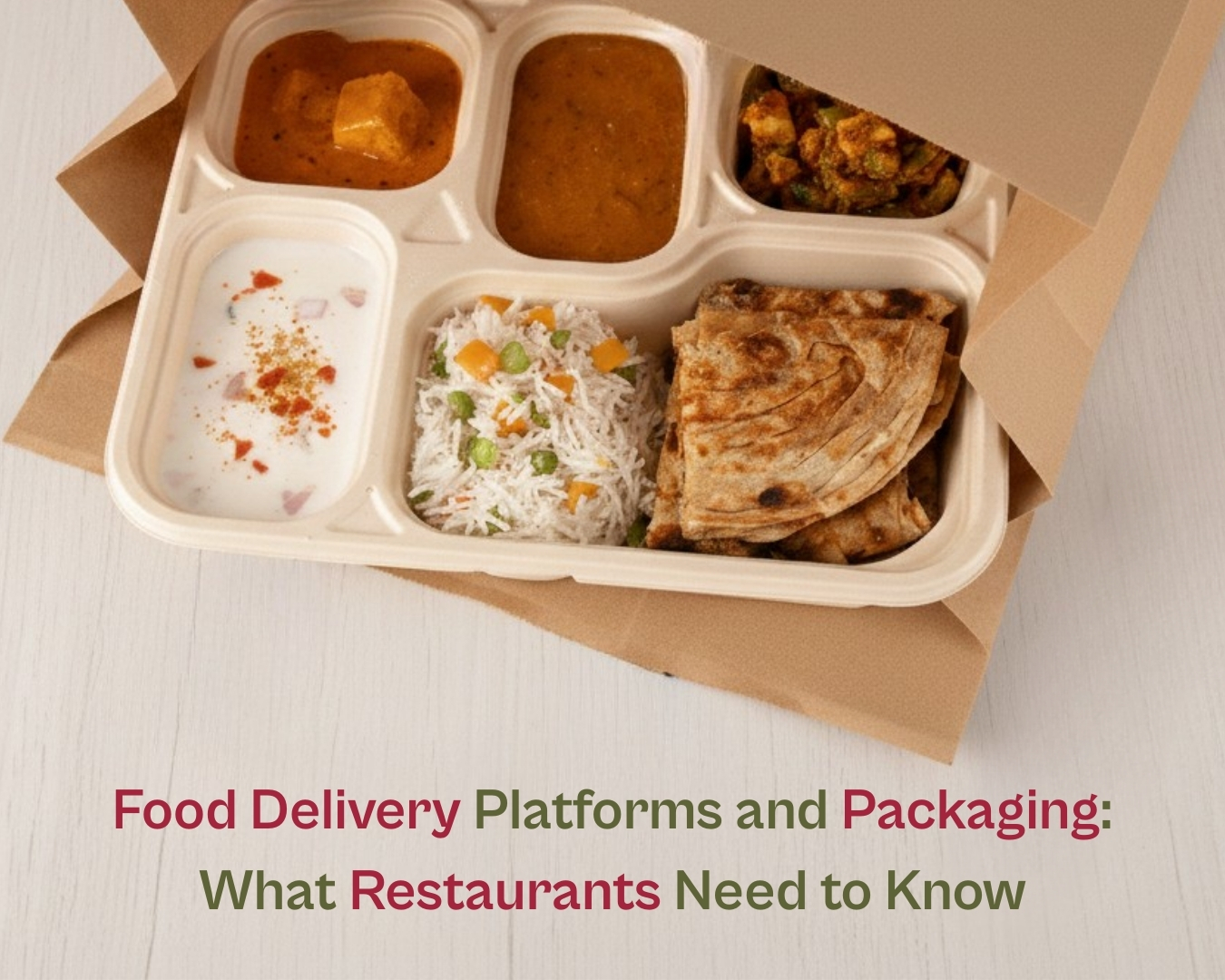
- Compartments or sectioned trays help separate hot, cold, or gravy items.
- Maintain proper labeling
- Include allergen warnings and reheating instructions.
- Clearly display your brand without compromising food safety and hygiene.
- Align labeling with aggregator and local food safety guidelines.
- Train your staff
- Regular food safety training and certification for packaging teams ensures compliance.
- Assign a food safety supervisor to oversee operations and maintain consistency.
- Encourage a culture where staff understand food safety management systems and platform requirements.
- Audit and review
- Conduct internal checks using food safety inspection services or third-party auditors.
- Maintain logs to demonstrate readiness during food safety and standards inspections.
- Review performance metrics on aggregator platforms to detect recurring issues.
Integrating packaging into your restaurant’s food safety culture
Good packaging is not just a delivery requirement; it’s a reflection of your food safety culture. Restaurants that integrate packaging decisions with safety, hygiene, and customer experience benefit from:
- Fewer complaints and higher ratings
- Streamlined operations
- Stronger compliance with food safety and sanitation laws
- Long-term brand credibility
Proactive restaurants often leverage food safety solutions and eco-friendly innovations to reduce risk while enhancing customer trust.
Future trends: Sustainability and aggregator expectations
Delivery platforms are increasingly prioritizing sustainability:
- Eco-friendly packaging may become mandatory in certain cities.
- Aggregators are encouraging reduced single-use plastics.
- Digital certification of food safety and sanitation practices can become a differentiator.
Restaurants that adopt forward-looking strategies can avoid penalties and gain marketing advantages, showing customers and platforms alike that safety and sustainability go hand in hand.
Key takeaway
Food delivery platforms can influence your packaging choices, but compliance is straightforward with the right systems and mindset. By focusing on food safety, hygiene, sustainable materials, staff training, and continuous review, restaurants can meet platform standards without compromising operations or customer satisfaction.
Think of packaging not as a restriction, but as an integral part of delivering safe, high-quality food that delights your customers and keeps your restaurant in the good books of delivery aggregators.