How QSRs in India Can Slash Their Carbon Footprint with Compostable Disposables
You are running a QSR in a market that is growing past USD 30 billion. Your delivery orders are climbing. Your packaging costs are climbing with them. And somewhere between the lunch rush and the evening spike, your disposable plates, bowls, and containers are quietly stacking up a carbon bill nobody talks about.
The honest truth? Packaging waste is one of the largest controllable sources of carbon emissions for any quick service restaurant. And with India tightening regulations on single-use plastics every quarter, this is not just an environmental conversation anymore. It is a compliance and cost conversation.
Here is what you need to know about cutting that footprint — and why compostable disposables are the most practical lever you have right now.
Key Takeaways
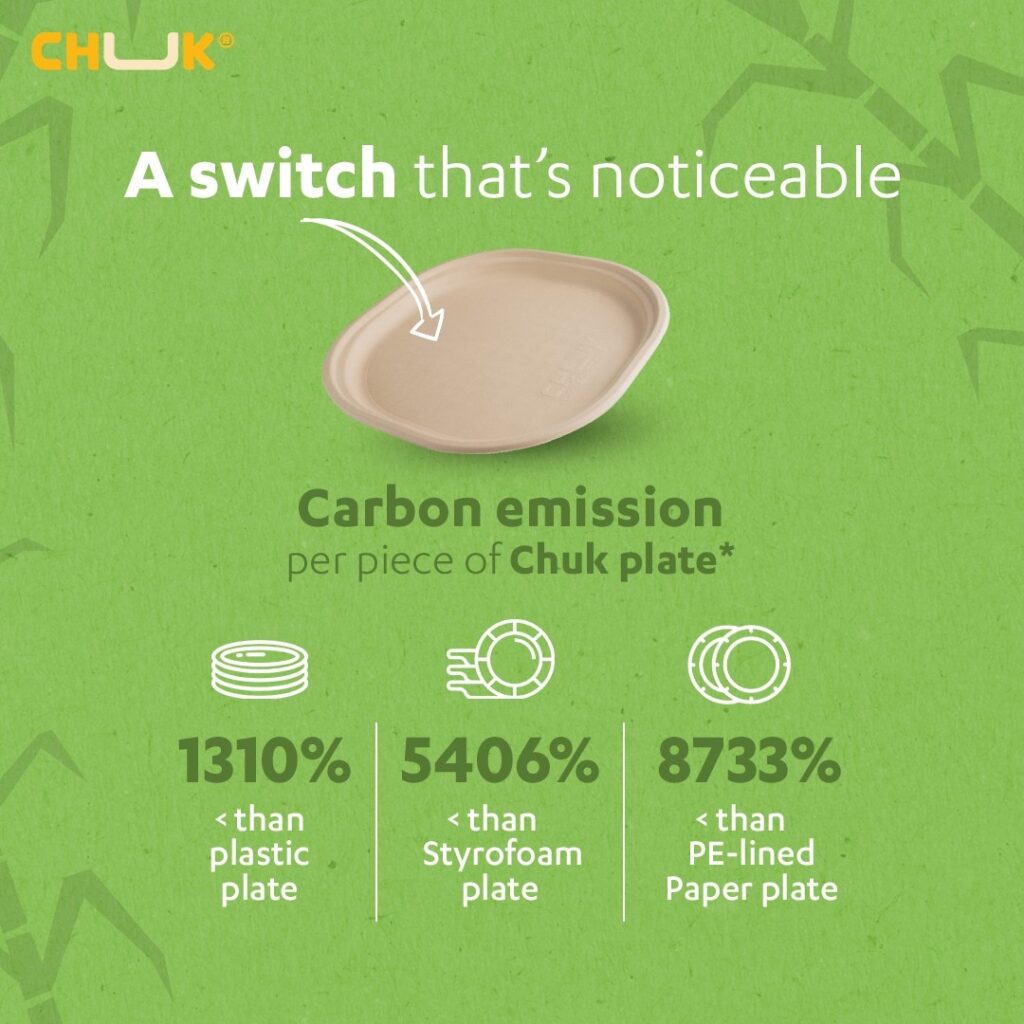
- Compostable disposables made from sugarcane bagasse generate 65-80% less CO2 across their lifecycle compared to plastic and polystyrene alternatives
- India’s QSR market is projected to hit USD 47 billion by 2031, and sustainability is becoming a brand differentiator for capturing the growing base of conscious consumers
- The single-use plastic ban is expanding — penalties can reach INR 1 lakh per offence, with licence cancellations for repeat violations
- Switching packaging is one of the highest-impact, lowest-effort carbon reduction moves a QSR operator can make
- Bagasse-based compostable tableware decomposes within 60-90 days, compared to 400+ years for conventional plastic
Where Does a QSR’s Carbon Footprint Actually Come From?
Before you can reduce emissions, you need to know where they are hiding. Most QSR operators think about food waste and energy consumption. Fair enough. But packaging is the blind spot.
Here is a breakdown of the typical carbon footprint sources for an Indian QSR operation:
Carbon Footprint Sources for Indian QSRs
| Source | Share of Total Emissions | Reduction Potential with Compostable Switch |
|---|---|---|
| Food supply chain (sourcing, cold chain, transport) | 35-45% | Low (requires supply chain overhaul) |
| Energy use (cooking, HVAC, lighting) | 20-30% | Medium (equipment upgrades needed) |
| Packaging and disposables | 10-15% | High (direct swap, immediate impact) |
| Food waste (prep waste, unsold inventory) | 8-12% | Medium (process changes required) |
| Water usage and treatment | 3-5% | Low-Medium |
| Customer and delivery transport | 5-10% | Low (outside operator control) |
Look at the packaging row. It may not be the largest slice, but it is the one you can change fastest. No equipment upgrades. No supply chain renegotiation. No menu overhaul. You swap your plates, bowls, cups, and containers — and the carbon savings start immediately.
Why Plastic Disposables Are a Carbon Problem You Cannot Ignore
Let us put some numbers to this.
Lifecycle assessment studies published in peer-reviewed journals have consistently found that conventional plastic packaging — particularly polystyrene foam and PET containers — carries a heavy carbon load at every stage:
- Raw material extraction: Plastic is derived from petrochemicals. The production stage alone accounts for over 50% of total lifecycle emissions.
- Manufacturing: Moulding and extruding plastic tableware is energy-intensive. A single kilogram of plastic packaging generates roughly 78 kg of CO2 equivalent.
- Disposal: Plastic that reaches landfills does not decompose. It breaks down into microplastics over hundreds of years, leaching into soil and water. Incineration releases even more carbon.
For a QSR serving 500-1,000 meals a day, the packaging carbon adds up to several tonnes of CO2 per year. Multiply that across your outlets, and you are looking at a significant liability — one that regulators and consumers are both paying attention to.
The Regulatory Squeeze: What Indian QSR Operators Need to Know
If carbon emissions alone were not motivating enough, compliance should be.
India has been progressively tightening its stance on plastic waste since the initial single-use plastic ban in July 2022. Here is what matters for you as a QSR owner or operator:
- Banned items: Plates, cups, glasses, forks, spoons, knives, trays, and several other single-use plastic items are already illegal under CPCB regulations
- Penalties: Fines up to INR 1 lakh per offence. Severe or repeated violations can mean imprisonment of up to five years under the Environment Protection Act.
- Licence risk: CPCB has directed local authorities to cancel commercial licences of establishments found selling or using banned plastic items
- EPR obligations: From 2025, all Producers, Importers, and Brand Owners must meet category-wise recycling targets. India is targeting 60% recycling of all plastic packaging by 2029.
- Labelling requirements: As of July 2025, updated marking and labelling requirements apply to all plastic packaging, with PIBO name and registration via barcode or QR code
In the first month of enforcement alone, over 775,000 kg of illegal plastics were seized across India, with more than INR 5.8 crore collected in penalties.
The direction is clear. The window for voluntary transition is shrinking. QSRs that switch proactively avoid disruption. Those that wait risk fines, licence issues, and reputational damage.
How Compostable Disposables Cut Your Carbon Footprint
This is where the numbers get interesting for your business.
Compostable disposables — particularly those made from sugarcane bagasse — perform dramatically better on every stage of the lifecycle:
Raw Material Stage
Sugarcane bagasse is an agricultural byproduct. India produces over 100 million tonnes of it annually. Using it for tableware means:
– No virgin material extraction
– No petrochemical processing
– The sugarcane plant has already absorbed CO2 during growth — making the feedstock partially carbon-negative
Manufacturing Stage
Pulp moulding (the process used to shape bagasse into plates, bowls, and containers) uses up to 70% less energy than plastic extrusion. CO2 emissions during production drop by approximately 50-65% compared to polystyrene.
End-of-Life Stage
This is where the gap becomes massive:
– Bagasse tableware biodegrades under natural conditions within 60 days
– Composting returns carbon to soil as nutrients instead of releasing it as greenhouse gas
– Zero microplastic contamination of soil and water systems
– Compared to plastic that persists for 400+ years in landfills, releasing methane and leachate
The bottom line: A lifecycle assessment published in the Journal of Cleaner Production found that bagasse packaging emits 65-80% less CO2 over its full lifecycle compared to PET plastic packaging. For a QSR doing 800 meals a day, that is a measurable, reportable reduction in your annual carbon footprint.
The Business Case: Beyond Carbon
Cutting carbon is good. But as a QSR operator, you need the business case to add up too. Here is why compostable disposables make financial and strategic sense:
Compliance Cost Avoidance
- No risk of INR 1 lakh fines per incident
- No risk of licence cancellation
- No disruption from regulatory crackdowns
Brand Differentiation
- India’s QSR market is projected to cross USD 47 billion by 2031
- Millennial and Gen Z consumers — who make up the bulk of QSR customers — actively prefer brands with visible sustainability practices
- Compostable packaging is a tangible, visible signal that your brand takes responsibility seriously
Operational Simplicity
- Bagasse-based tableware handles hot and oily foods without leaking or deforming
- Microwave-safe and oil-resistant — no performance trade-off for your kitchen
- Available in plates, bowls, clamshells, cups, and meal trays — covering your full service range
ESG and Reporting
- Switching to compostable disposables gives you documentable emissions reductions
- Useful for ESG reporting, investor presentations, and sustainability certifications
- Carbon reduction from packaging is one of the easiest metrics to calculate and verify
Chuk’s range of compostable tableware is built specifically for high-volume food service operations. Made from sugarcane bagasse, every product in the lineup — from plates to meal trays to clamshell containers — is designed to handle the demands of a busy QSR kitchen while delivering the carbon savings outlined above.
How to Make the Switch: A Practical Roadmap for QSR Operators
Switching packaging is straightforward if you approach it systematically. Here is a step-by-step roadmap:
1. Audit your current packaging inventory
– List every disposable item you use: plates, bowls, cups, containers, cutlery, straws
– Note the material, quantity per day, and supplier for each item
2. Identify direct swap opportunities
– Most plastic and styrofoam items have a 1:1 compostable equivalent
– Plates, bowls, clamshells, and meal trays are the easiest starting point
3. Run a pilot at one outlet
– Test compostable disposables for 2-4 weeks
– Monitor for any kitchen performance issues (heat tolerance, oil resistance, stacking)
– Get feedback from your kitchen staff and delivery partners
4. Calculate the carbon and cost impact
– Use the per-unit emissions data from your supplier to estimate annual CO2 reduction
– Factor in compliance cost avoidance (fines, licence risk) when comparing unit costs
5. Scale across outlets
– Roll out the switch outlet by outlet
– Train kitchen staff on storage and handling (bagasse products store best in dry conditions)
– Update your packaging procurement contracts
6. Communicate the switch
– Add sustainability messaging to your packaging, menu cards, and delivery app listing
– Share your carbon reduction numbers — consumers respond to specifics, not vague green claims
In a Nutshell
Your QSR’s carbon footprint from disposables is one of the few things you can cut dramatically without changing your menu, your kitchen equipment, or your supply chain. Compostable disposables made from sugarcane bagasse deliver 65-80% lower lifecycle carbon emissions compared to plastic — and they solve your regulatory compliance problem at the same time.
The Indian QSR market is growing fast. Consumer expectations around sustainability are growing faster. And the regulatory environment is leaving less and less room for plastic.
Switching to compostable tableware from Chuk is the simplest high-impact move you can make right now. Start with a packaging audit, pilot at one location, and scale from there.
Frequently Asked Questions
Are compostable disposables really better for the environment than plastic?
Yes, and the data is clear. Lifecycle assessments published in peer-reviewed journals show that compostable disposables made from sugarcane bagasse emit 65-80% less CO2 than PET and polystyrene alternatives. The raw material is an agricultural byproduct, the manufacturing uses less energy, and the product biodegrades within 60-90 days instead of persisting for centuries.
Do compostable plates and containers hold up with hot, oily food?
Bagasse-based tableware is engineered for food service conditions. It handles hot curries, oily gravies, and fried items without leaking, warping, or getting soggy. It is also microwave-safe, which matters for delivery reheating.
What is the cost difference between plastic and compostable disposables?
The unit cost for compostable disposables has come down significantly over the past few years and is approaching parity with plastic in many categories. When you factor in the compliance cost avoidance (fines of up to INR 1 lakh per offence, licence risk) and the brand value of visible sustainability, the total cost of ownership often favours compostable.
Will switching packaging actually show up in my carbon reporting?
Absolutely. Packaging is one of the most straightforward emissions categories to measure. Your supplier can provide per-unit carbon data, and the switch gives you a clean before-and-after comparison. This is particularly useful for QSR chains that report ESG metrics.
How long does it take compostable tableware to break down?
Under natural composting conditions, sugarcane bagasse tableware biodegrades within 60-90 days. In industrial composting facilities, it can break down even faster. Compare this to conventional plastic, which takes 400 to 1,000 years to decompose and releases microplastics throughout the process.
Is compostable tableware compliant with India’s single-use plastic ban?
Compostable tableware made from sugarcane bagasse is not plastic and is not covered by the single-use plastic ban. By switching, you move entirely outside the scope of CPCB’s banned items list, eliminating compliance risk altogether.
Explore Chuk’s full range of compostable tableware for QSRs at chuk.in. Calculate your packaging carbon footprint and see what switching could save your business.