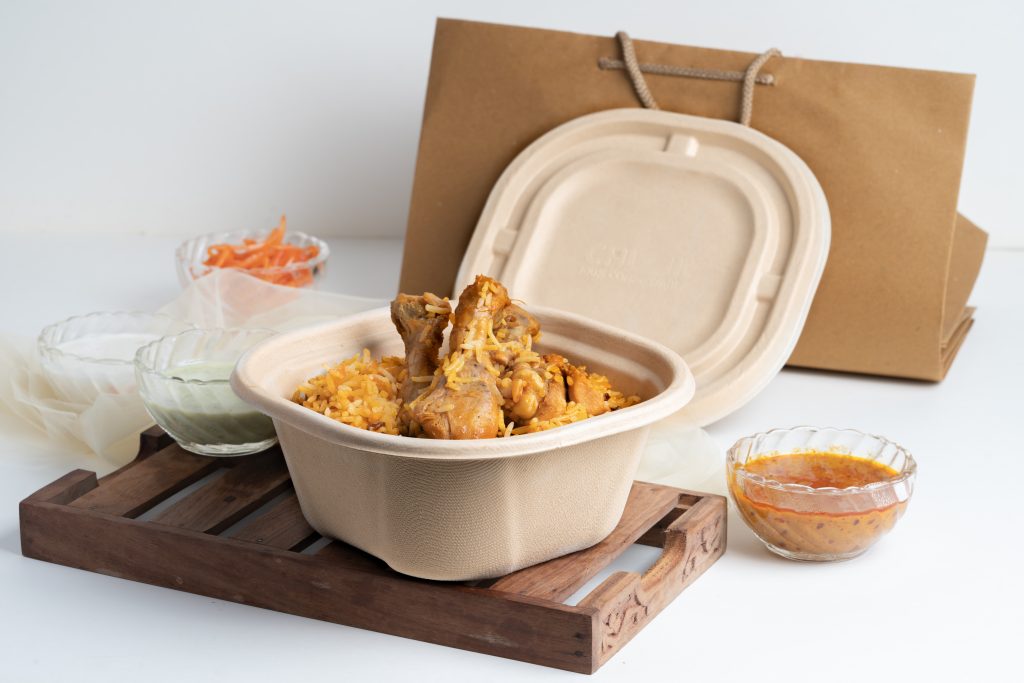
How to choose the right compostable delivery container for your business
You run a delivery-first kitchen. Orders go out the door 200, 300, maybe 500 times a day. Every single one of those orders arrives inside a container that your customer sees before they see the food.
And yet, most restaurant owners spend more time choosing a table napkin colour than choosing their delivery packaging.
The honest truth? Your container choice directly affects your Zomato and Swiggy ratings, your food cost per order, your regulatory standing, and whether customers reorder or move on. Compostable disposables are no longer the “expensive alternative.” In 2026, they’re the smart default for any food business that wants to stay compliant, protect margins, and build a brand that customers actually remember.
Here’s how to pick the right one for your operation.
Key Takeaways
- Your delivery container is a brand decision, not just a procurement line item
- Compostable disposables now match or beat plastic on cost when you factor in compliance risk and customer perception
- Material choice (bagasse, PLA-lined, areca) depends on your food type, heat profile, and order volume
- Certifications matter more than marketing claims — check for food-safe, compostable, and microwave-safe ratings
- Swiggy and Zomato packaging guidelines increasingly favour compostable options
- The cheapest container is never the cheapest when it leaks, warps, or tanks your ratings
Why your delivery container is a business decision, not a packaging detail
If you’re a cloud kitchen operator or a restaurant owner doing 60% or more of your revenue through delivery, your container is the only physical brand touchpoint your customer gets. There’s no ambience, no table service, no plating on ceramic. Just your food, inside your container, on their dining table.
If you are still narrowing down formats, our guide to choosing the right food delivery containers compares container types by dish, sealing method and leak risk.
That changes the stakes entirely.
- Customer perception: A flimsy container that warps or leaks tells your customer you cut corners. A sturdy, clean container signals a professional operation.
- Platform ratings: Soggy food from condensation buildup or leaking gravy is one of the top reasons for 3-star delivery reviews on Swiggy and Zomato. Your container is directly responsible.
- Compliance: India’s Plastic Waste Management Rules have been tightening steadily. Single-use plastic bans are expanding across states. Compostable disposables keep you ahead of the regulatory curve instead of scrambling to catch up.
- Repeat orders: Customers who have a good unboxing experience reorder more frequently. Packaging that photographs well generates free social media exposure between orders.
The bottom line: spending an extra INR 1-2 per container on the right compostable option is not a cost. It’s one of the cheapest marketing and retention investments you can make.
Compostable vs biodegradable: the distinction that saves you from greenwashing
This is something most restaurant owners get wrong, and it’s not your fault. The terms sound interchangeable. They’re not.
Biodegradable means a material will eventually break down. Eventually could mean 5 years, 50 years, or never fully. No standard timeline, no certification requirement, and no guarantee it won’t leave behind microplastics.
Compostable means the material breaks down into natural, non-toxic components within 90-180 days under composting conditions, leaving zero harmful residue. Compostable products are certified to standards like IS 17088 (India), EN 13432 (Europe), or ASTM D6400 (US).
All compostable products are biodegradable. But not all biodegradable products are compostable.
Why does this matter? If you’re marketing your packaging as “eco-friendly” while using biodegradable containers that don’t meet composting standards, you’re exposed to greenwashing complaints. With Swiggy and Zomato both moving towards sustainability badges, genuinely compostable disposables put you on the right side of the shift.
The three things to evaluate before choosing any container
1. Material composition
The material determines heat tolerance, moisture resistance, food compatibility, and compostability. Here’s what’s available in India:
- Bagasse (sugarcane fibre): The most versatile option. Handles hot curries, biryanis, and fried items. Microwave-safe, oil-resistant, rigid enough to stack. The default for most cloud kitchens, QSRs, and takeaway brands.
- PLA-lined paper: Good for cold items, salads, and desserts. PLA lining provides grease resistance, but heat tolerance is limited. Not ideal for hot gravies.
- Areca palm leaf: Premium look and feel for dry and semi-dry items. Higher cost per unit but strong brand perception for artisanal concepts. Limited availability at scale.
- Moulded fibre (recycled paper pulp): Budget-friendly for trays and plate liners. Less moisture-resistant than bagasse. Works for dry snacks and sides.
2. Certifications that actually matter
Marketing copy on a supplier’s website is not a certification. Ask for proof of:
- Food Safe Certified — confirms the container won’t leach chemicals into food. Non-negotiable.
- Compostable Certified (IS 17088 / EN 13432 / ASTM D6400) — confirms genuine compostability, not just biodegradability.
- Microwave Safe — critical if customers reheat food. Containers that warp under microwave heat are a liability.
- FSSAI-compliant — mandatory for any food-contact material in India.
If a supplier can’t produce these on request, that’s your answer.
3. Design and functional fit
A container that checks every material and certification box but doesn’t fit your food is useless. Think about:
- Lid seal: Does the lid lock securely for delivery transit? Loose lids are the top cause of spill complaints.
- Compartments: Do you need separated sections for rice-dal-sabzi combos or thali meals?
- Ventilation: Fried items need steam vents to prevent sogginess. Gravy items need sealed containers. You can’t use the same one for both.
- Stackability: Delivery riders stack containers in bags. Containers that crush under stacking pressure mean damaged bottom orders.
- Size range: Match volume to portion size. Oversized containers make portions look small. Undersized ones lead to leaks.
Container types compared: clamshells, bowls, and compartment trays
| Feature | Clamshell Containers | Round/Square Bowls | Compartment Trays |
|---|---|---|---|
| Best material | Bagasse | Bagasse or PLA-lined | Bagasse |
| Ideal use case | Burgers, sandwiches, wraps, momos, fried snacks | Curries, dal, rice, noodles, soup, biryani | Thali meals, rice + curry combos, multi-item lunch sets |
| Heat tolerance | Up to 120 deg C (bagasse) | Up to 120 deg C (bagasse), 70 deg C (PLA) | Up to 120 deg C (bagasse) |
| Moisture resistance | High (bagasse) | High (bagasse), Moderate (PLA) | High (bagasse) |
| Microwave safe | Yes (bagasse) | Yes (bagasse), No (PLA) | Yes (bagasse) |
| Lid type | Hinged (built-in) | Separate snap-on lid | Separate snap-on lid |
| Stackability | Moderate — hinged lids can shift | Good — uniform shape | Good — flat profile stacks well |
| Approximate cost range | INR 4-8 per unit | INR 3-7 per unit | INR 6-12 per unit |
| Best for | QSRs, burger joints, fast-casual | Cloud kitchens, biryani brands, North Indian delivery | Multi-cuisine restaurants, thali delivery, meal box services |
A note on cost: Ranges are based on wholesale pricing for 1,000+ units in India as of early 2026. Actual cost depends on volume, customisation, and supplier relationships. At scale, compostable bagasse is within 10-15% of equivalent plastic — and that gap closes when you factor in compliance costs of continuing with single-use plastic.
How Swiggy and Zomato packaging rules affect your container choice
If you’re doing delivery through aggregator platforms, your packaging choices aren’t entirely your own. Both platforms have been tightening expectations:
- Spill-proof packaging is a rating factor. Consistent spill complaints get you deprioritised in search results.
- Sustainability signals are increasingly visible. Zomato’s “green packaging” badge and Swiggy’s sustainability labels reward restaurants using compostable packaging.
- Packaging feedback loops exist in review prompts. Both platforms ask customers about packaging quality, and those responses feed into your visibility score.
Switching to certified compostable disposables does three things at once: protects your platform ratings, qualifies you for sustainability badges, and future-proofs your operation against tightening regulations.
A practical buying checklist for your next container order
Before you place your next bulk order, run through this:
- [ ] Does the material match your food type? (Hot gravies need bagasse, not PLA)
- [ ] Can the supplier provide food-safe, compostable, and microwave-safe certifications?
- [ ] Does the lid lock securely enough for delivery transit?
- [ ] Have you tested the container with your actual menu items for at least one week?
- [ ] Does the container stack well in your packaging station and in delivery bags?
- [ ] Is the cost per unit sustainable at your current order volume?
- [ ] Does the container present your food well when the customer opens it?
That last point matters more than you think. Your delivery container is the last thing between your kitchen and your customer’s plate. It’s the first impression of your food.
In a Nutshell
Choosing the right compostable delivery container isn’t about jumping on a sustainability trend. It’s about making a business decision that affects your ratings, your compliance standing, your food quality on arrival, and your brand perception — every single order, every single day.
For most cloud kitchens, QSRs, and takeaway brands in India, bagasse-based compostable containers are the default answer. They handle Indian food temperatures, resist oil and moisture, are microwave-safe, and meet FSSAI and composting certification standards. Match the container format to your menu — clamshells for dry and fried items, bowls for curries and rice, compartment trays for combo meals — and you’ve solved 90% of the problem.
The remaining 10% is testing. Order samples, run your bestselling items through them for a week, check how they hold up during delivery, and then commit to a bulk order.
Your food deserves to arrive looking as good as it tastes. That starts with the container.
Frequently asked questions
What are the best compostable containers for Indian food delivery?
Bagasse (sugarcane fibre) containers are the best all-round choice. They handle temperatures up to 120 degrees Celsius, resist oil and moisture, and are microwave-safe. For biryani, thali, or curry delivery, bagasse performs across the widest range of Indian dishes.
How much do compostable delivery containers cost compared to plastic?
Compostable bagasse containers cost INR 3-12 per unit depending on size and format — roughly 10-15% more than equivalent plastic at wholesale volumes. Factor in plastic ban compliance costs, potential fines, and customer perception advantage, and total cost of ownership is comparable or lower.
Are compostable containers microwave-safe?
Bagasse compostable containers are generally microwave-safe up to 120 degrees Celsius. PLA-lined containers are not recommended for microwave use as the lining can deform above 70 degrees Celsius. Always check for a specific microwave-safe certification from your supplier rather than relying on general claims.
What certifications should I look for in compostable food containers?
Four certifications matter: Food Safe Certified (non-negotiable for any food-contact material), Compostable Certified to IS 17088, EN 13432, or ASTM D6400 standards, Microwave Safe (if your customers reheat food), and FSSAI compliance. If a supplier can’t provide documentation for these on request, look elsewhere.
Can compostable containers handle hot curries and gravies without leaking?
Yes, if you choose the right material. Bagasse containers have high oil and moisture resistance and can hold hot curries, dal, and gravies without leaking or warping. The key is to ensure the container has a secure lid seal for delivery transit. PLA-lined containers are less suitable for very hot or oily foods — stick to bagasse for anything above 70 degrees Celsius.
Do Swiggy and Zomato prefer restaurants that use compostable packaging?
Both platforms are moving in that direction. Zomato offers green packaging badges and Swiggy has introduced sustainability labels for participating restaurants. More importantly, both platforms factor packaging quality into their rating algorithms through customer feedback prompts. Using certified compostable disposables can improve your visibility score and protect your ratings from packaging-related complaints.
Looking for compostable delivery containers that handle Indian food and Indian delivery conditions? Browse Chuk’s delivery container range — bagasse-based, FSSAI-compliant, and built for the way your kitchen actually operates.
Comparing containers? See the real sizes, prices and case counts
Clamshells, bowls and compartment trays each suit a different menu. CHUK’s compostable delivery range lists case size, per-piece price and heat tolerance for each one, so you can match the container to what actually leaves your kitchen.
Browse delivery containers | Order a sample box | Get pricing on WhatsApp