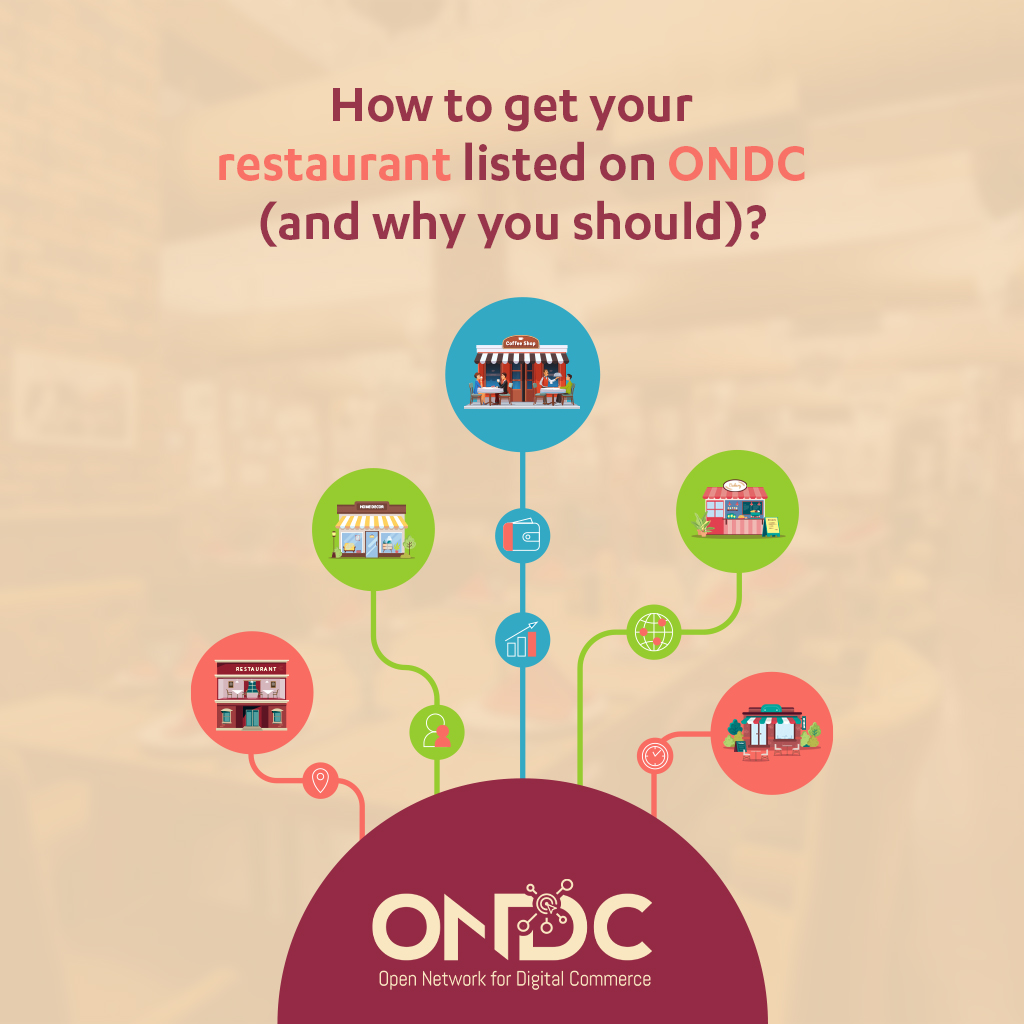
Why Your Restaurant Should Be on ONDC — And What You Stand to Gain
You are paying commissions that eat into every single order. You know it. Your accountant knows it. And your profit margin definitely knows it.
If you are a restaurant owner in India running delivery through Zomato or Swiggy, you are likely giving away 20-30% of every order value in platform commissions. That is not a small leak. That is a hole in the bottom of your bucket.
ONDC — the Open Network for Digital Commerce — is not just another food delivery app. It is a government-backed open protocol that fundamentally changes how your restaurant connects with customers. And if you have been ignoring it, this is the post that explains why you should stop.
Note: We have a separate guide on how to list your restaurant on ONDC that walks through the step-by-step registration process. This post focuses on the why — the financial case, the operational advantages, and the long-term strategic value of being on ONDC as a restaurant owner.
What Exactly Is ONDC and Why Does It Matter to You?
ONDC stands for Open Network for Digital Commerce. It is an initiative by the Government of India’s Department for Promotion of Industry and Internal Trade (DPIIT).
Here is the simplest way to understand it. Zomato and Swiggy are closed platforms. They own the customer, the listing, the delivery, and the pricing use. ONDC is an open network — it separates the buyer side from the seller side, so multiple apps can show your restaurant to customers without any single platform controlling the relationship.
Think of it like UPI for commerce. Before UPI, you were locked into one payment app. After UPI, any app could talk to any bank. ONDC does the same thing for ordering.
Why this matters for your restaurant
- You are no longer locked into one aggregator’s ecosystem
- Multiple buyer apps (Paytm, Magicpin, Ola, and more) can display your menu
- You choose your own logistics partner or use your delivery team
- Your pricing, branding, and customer data stay with you
The Real Cost of Aggregator Dependence
Before we talk about ONDC benefits, let us be transparent about what the current model actually costs you. Most restaurant owners underestimate this.
Commission comparison: ONDC vs Zomato vs Swiggy
| Factor | Zomato / Swiggy | ONDC |
|---|---|---|
| Commission per order | 18-30% | 3-8% |
| Listing fee | Varies, often bundled | Free to minimal |
| Delivery charges | Platform-controlled | You choose the logistics partner |
| Customer data ownership | Platform owns it | You retain it |
| Menu and pricing control | Platform can override | Full control stays with you |
| Visibility algorithm | Pay-to-play ranking | Level playing field |
| Discount pressure | Heavy platform-led discounts | You decide your offers |
| Payout cycle | 7-14 days typical | Varies by seller app, often faster |
Let us put this into rupees. If your restaurant does Rs 5 lakh per month in delivery orders through Zomato at a 25% commission, you are paying Rs 1.25 lakh per month just to be on the platform. That is Rs 15 lakh per year.
On ONDC, with average commissions around 5-8%, that same Rs 5 lakh in monthly orders costs you Rs 25,000-40,000 per month. The difference — Rs 85,000 to Rs 1 lakh per month — goes straight back into your business.
That is not a theoretical advantage. That is real money you could spend on better ingredients, staff training, kitchen upgrades, or simply keeping as profit.
7 Reasons ONDC Is a Smart Business Move for Restaurants
1. Dramatically lower commissions
This is the headline number and it deserves to be. The commission gap between traditional aggregators and ONDC is significant. Most restaurants on ONDC report paying between 3% and 8% per order versus the 18-30% range on Zomato and Swiggy.
For a cloud kitchen or QSR operating on thin margins, this difference can be the line between profitable and unsustainable.
2. Multi-platform visibility without multi-platform headaches
When you list on ONDC through a seller app, your restaurant becomes visible across every buyer app connected to the ONDC network. Right now, that includes:
- Paytm — massive existing user base
- Magicpin — strong hyperlocal discovery
- Ola — integrated with ride-hailing users
- Mystore — growing in Tier 2 and Tier 3 cities
- ONDC reference apps — and more being added regularly
You do not need to create separate accounts, manage different dashboards, or upload your menu five times. One seller app listing reaches all buyer apps.
3. You keep your customer relationships
Here is the honest truth about aggregator platforms. The customer who orders from your restaurant on Swiggy is not your customer — they are Swiggy’s customer. The platform owns that relationship, that data, and that loyalty.
On ONDC, the dynamic shifts. You get more visibility into who is ordering, what they prefer, and how to bring them back. This data is gold for a restaurant owner building a repeat-order business.
4. Control over your pricing and promotions
Aggregator platforms frequently push restaurants to offer deep discounts. Those “buy one get one” offers and “60% off up to Rs 120” deals? The restaurant usually absorbs a chunk of that cost.
On ONDC, you set your own prices. You decide when to run a promotion, how deep the discount goes, and who it targets. No platform sales team pressuring you into margin-destroying deals.
5. Logistics flexibility
On Zomato and Swiggy, you use their delivery fleet. On ONDC, you have options:
- Use ONDC-connected logistics partners like Dunzo, Shadowfax, or LoadShare
- Use your own delivery riders if you have an in-house team
- Self-pickup for walk-in or takeaway orders
This flexibility lets you optimize delivery costs based on your location, order volume, and geography.
6. A level playing field for small restaurants
On aggregator platforms, visibility is heavily influenced by ad spend, commission tiers, and promotional commitments. A large chain restaurant that pays for premium placement will always appear above your neighbourhood biryani joint.
ONDC does not work that way. Because it is an open network, there is no single algorithm deciding who gets seen first. Different buyer apps use different discovery methods, giving smaller restaurants a fairer shot at being found.
7. Future-proofing your business
ONDC is backed by the Government of India. The network is expanding rapidly, with new buyer apps, seller apps, and logistics providers joining every quarter. Transaction volumes have crossed 12 million orders per month and continue to grow.
As a restaurant owner, being early on ONDC means you build your presence and reviews before the platform gets crowded. Early movers in any digital ecosystem tend to benefit the most.
What Restaurant Owners Actually Experience on ONDC
Let us move beyond the talking points and look at what restaurants on the ground are reporting.
The wins
- Commission savings are real and immediate — most restaurants see a 15-20 percentage point drop in per-order costs
- Order volumes are growing as more consumers discover ONDC through Paytm and Magicpin
- Smaller cities are seeing outsized impact — restaurants in Tier 2 and Tier 3 towns where aggregator presence is low are finding ONDC fills a genuine gap
- Restaurant chains like Wow! Momo and local favourites in Bengaluru, Delhi, and Hyderabad have publicly shared positive results
The honest challenges
- Consumer awareness is still building — not every customer knows about ONDC yet, so order volumes may start slow
- Delivery reliability varies by logistics partner and city — some areas have excellent coverage, others are still catching up
- The technology is newer — expect some interface friction compared to the polished Zomato/Swiggy experience
- You need to actively manage your menu — unlike aggregators that assign you a relationship manager, ONDC requires more self-service
None of these are dealbreakers. They are growing pains of a system that is getting better every month.
How ONDC Fits Into Your Larger Delivery Strategy
The smartest approach is not ONDC instead of Zomato and Swiggy. It is ONDC alongside them.
Here is a practical framework:
- Keep your Zomato and Swiggy listings active — they still have the largest consumer base
- Add ONDC as a parallel channel — let it bring incremental orders at lower cost
- Track your per-order profitability across all three channels — you may find ONDC orders are significantly more profitable
- Gradually shift promotional spend toward ONDC as the platform’s consumer base grows
- Use ONDC customer data to build your own direct ordering channel over time
This hybrid approach reduces your dependence on any single platform while maximizing reach.
Your Packaging Should Match Your Platform Strategy
As you expand to ONDC and manage delivery across multiple channels, one thing stays constant — the food needs to arrive in perfect condition. Packaging is not an afterthought. It is the first physical impression your customer gets.
Whether an order comes through Swiggy, Paytm, or Magicpin via ONDC, the container it arrives in speaks for your restaurant. Leaky packaging, soggy boxes, or containers that warp under heat will cost you reviews and repeat orders on any platform.
This is where compostable disposables make strategic sense. Containers made from sugarcane bagasse hold up against heat and moisture better than most cheap plastic alternatives. They do not leak. They do not bend. And they signal to your customer that your restaurant thinks beyond just the food.
When a customer opens a delivery from your restaurant and sees a sturdy, premium-looking compostable container instead of a flimsy plastic box, you have already started building loyalty — before they take the first bite.
For restaurant owners managing orders across ONDC, Zomato, and Swiggy simultaneously, having consistent, reliable packaging simplifies operations. You are not juggling different container types for different platforms. One solid compostable disposable line handles everything.
Getting Started: What You Need Before You List
Before you begin the registration process, make sure you have these ready:
- FSSAI License — mandatory for any food business in India, your 14-digit registration number
- GST Registration — required if your turnover exceeds the threshold (recommended even if below)
- Bank Account Details — for receiving payouts from the seller app
- PAN Card — of the business or proprietor
- Menu with Pricing — finalized item list with clear pricing, descriptions, and high-quality photographs
- Restaurant Address Proof — utility bill, lease agreement, or municipal trade license
Having these documents ready means you can complete the onboarding process in as little as 2-3 business days instead of weeks.
For the detailed step-by-step walkthrough of the registration process — choosing a seller app, submitting documents, integrating logistics, and going live — check our dedicated guide on how to list your restaurant on ONDC.
Mistakes to Avoid When Joining ONDC
Based on what restaurants that have already listed on ONDC report, here are the most common early mistakes:
- Poor menu photographs — this is not optional. On a platform where you do not have brand recognition yet, your food photos do the selling. Invest in good shots.
- Inconsistent pricing — do not list different prices on ONDC versus your other platforms. Customers compare, and price inconsistency erodes trust.
- Ignoring logistics setup — choosing the wrong delivery partner or not having a backup option can lead to cancelled orders and bad early reviews.
- Setting it and forgetting it — ONDC requires active menu management. If items are out of stock, mark them unavailable immediately.
- Not promoting your ONDC presence — tell your existing customers. Add a QR code or mention on your in-store materials. The early orders will likely come from people who already know your restaurant.
ONDC Growth Numbers That Should Get Your Attention
If you are wondering whether ONDC is gaining real traction or is still a pilot project, here are numbers worth noting:
- 12 million+ monthly transactions as of late 2025, growing rapidly
- Active in 600+ cities across India, including deep Tier 2 and Tier 3 penetration
- Food and grocery dominate transaction volume, making this directly relevant to restaurants
- Major buyer apps like Paytm, Magicpin, and Ola are investing heavily in ONDC integration
- Government policy support continues to strengthen — several state governments have encouraged local businesses to join ONDC
The network is past the experimental phase. This is now an established channel that is scaling.
In a Nutshell
ONDC is not a replacement for your Zomato and Swiggy presence. It is a strategic addition that puts more money back in your pocket and more control back in your hands.
As a restaurant owner, you owe it to your business to at least test ONDC. The registration is straightforward, the commissions are dramatically lower, and the early-mover advantage is real.
- Commissions drop from 18-30% to 3-8% — the single biggest financial benefit
- Multi-platform visibility through one seller app listing
- You keep customer data and pricing control — build your own brand, not someone else’s
- Logistics flexibility lets you optimize delivery costs
- Government backing and rapid growth make this a platform that is here to stay
- Pair it with reliable compostable disposables so your delivery packaging reinforces your brand across every channel
The restaurants that move first will have the strongest presence when consumer adoption catches up. And it is catching up fast.
Frequently Asked Questions
What is ONDC and how is it different from Zomato or Swiggy?
ONDC (Open Network for Digital Commerce) is a government-backed open protocol that connects restaurants with customers through multiple buyer apps. Unlike Zomato or Swiggy, which are closed platforms controlling every aspect of the transaction, ONDC separates the buyer side from the seller side. This means your restaurant can be discovered on Paytm, Magicpin, Ola, and other apps simultaneously through a single listing, while you retain control over your pricing, customer data, and delivery logistics.
How much commission does ONDC charge compared to Zomato and Swiggy?
ONDC seller apps typically charge between 3% and 8% commission per order, compared to the 18-30% charged by Zomato and Swiggy. For a restaurant doing Rs 5 lakh per month in delivery orders, this difference can save you Rs 85,000 to Rs 1 lakh per month — money that goes directly back into your business.
Can I be on ONDC and Zomato/Swiggy at the same time?
Yes, absolutely. In fact, this is the recommended approach. Keep your existing aggregator listings active while adding ONDC as a parallel channel. This gives you maximum reach while gradually building a more profitable order stream. Many successful restaurants run all three simultaneously and track per-order profitability across channels.
What documents do I need to register my restaurant on ONDC?
You need your FSSAI License, GST Registration, PAN Card, bank account details, restaurant address proof, and a finalized menu with pricing and photographs. Having these ready allows you to complete onboarding in 2-3 business days through any ONDC seller app like Bitsila, Mystore, eSamudaay, GoFrugal, or GrowthFalcons.
Is ONDC available in my city?
ONDC is active in over 600 cities across India, including major metros and Tier 2/Tier 3 towns. Cities like Delhi, Bengaluru, Mumbai, Hyderabad, Chennai, Pune, Lucknow, Jaipur, and Ahmedabad have strong coverage. Tier 2 cities are actually seeing some of the fastest adoption because aggregator presence is weaker there, making ONDC an attractive alternative for both restaurants and customers.
How do deliveries work on ONDC? Do I need my own delivery riders?
You have three options. You can use ONDC-connected logistics partners like Dunzo, Shadowfax, or LoadShare. You can use your own in-house delivery team. Or you can offer self-pickup for takeaway orders. This flexibility lets you choose the most cost-effective delivery setup for your restaurant’s location and order volume.
Will I get enough orders on ONDC to make it worthwhile?
Order volumes on ONDC are growing rapidly, with the network processing over 12 million transactions per month. However, your initial order volume will depend on your city, cuisine type, and how actively you promote your ONDC presence. The key advantage is that even if volumes start lower than your aggregator channels, the dramatically lower commissions mean each ONDC order is significantly more profitable. Most restaurants find the economics compelling even with modest order numbers.
How does ONDC help small and independent restaurants?
On aggregator platforms, visibility is heavily influenced by advertising spend and promotional commitments, which favours large chains. ONDC creates a more level playing field because there is no single algorithm controlled by one company deciding who gets seen. Different buyer apps use different discovery methods, giving smaller restaurants a fairer chance at being found by new customers without having to pay for premium placement.
What kind of packaging should I use for ONDC deliveries?
Your packaging should be consistent across all delivery channels — ONDC, Zomato, and Swiggy. Use containers that handle heat and moisture well, do not leak, and present your food professionally. Compostable disposables made from sugarcane bagasse are a strong choice because they perform well structurally, look premium, and signal to customers that your restaurant cares about quality beyond just the food itself.
The container decides whether the customer orders again
Once the order leaves the kitchen the container is the only thing protecting it. CHUK’s compostable bagasse delivery containers hold heat, resist leaks and keep you clear of single-use plastic rules.
Browse delivery containers | Order a sample box | Get pricing on WhatsApp