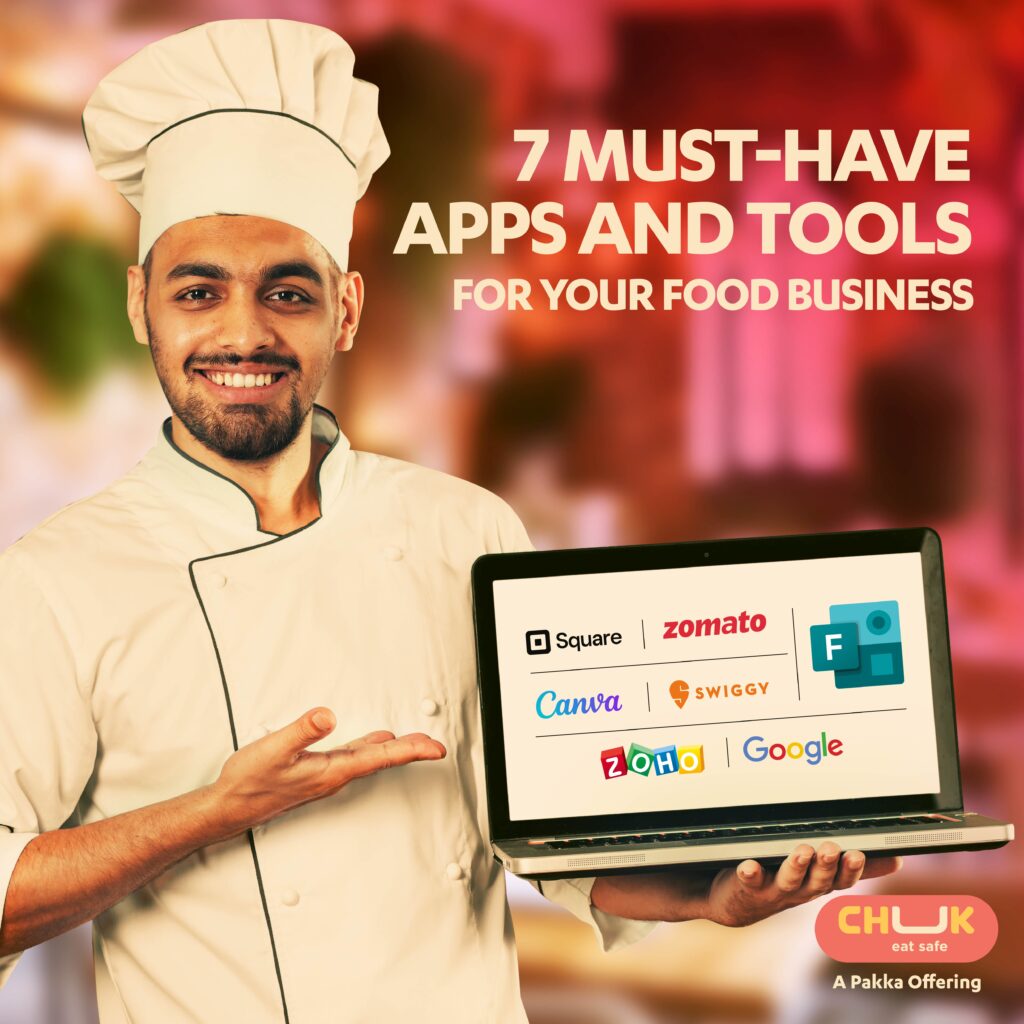
Run your food business like a pro: 7 must-have apps and tools for 2026
You got into the food business because you love food. Nobody opens a restaurant thinking “I can’t wait to manage spreadsheets and calculate shift rosters at 11 PM.” But that is exactly where most of your time ends up going.
The kitchen runs on instinct and skill. Everything outside the kitchen? Mostly chaos.
The honest truth is that the gap between a food business that just about survives and one that actually grows usually comes down to the systems running behind the kitchen. Better tools, not bigger menus.
Below are 7 categories of apps that Indian food business owners are using right now. All available in India, all tested in real restaurant and cloud kitchen setups. You do not need all of them. Pick the ones that match your biggest headaches and start there.
Key takeaways
- A good POS catches revenue leaks you did not know existed and typically pays for itself within months
- Zomato and Swiggy reward active, optimized listings, not just total review count
- Inventory software alone can cut food waste by 20-30%
- One person with the right social media tools can do what used to need a whole marketing team
- Scheduling apps save 4-5 hours per week on staff management
- What you serve food in (compostable disposables, quality packaging) ends up in customer photos and review images whether you plan for it or not
1. POS systems: where everything connects
Your Point of Sale system is the backbone of daily operations. It is not a billing machine. It is where orders, payments, inventory levels, sales data, and delivery platform integrations all come together.
A modern POS does this:
- Accepts UPI, cards, cash, and digital wallets
- Tracks which dishes sell and which ones sit dead on the menu
- Inventory monitoring, so you know when paneer stock is low before the kitchen runs out mid service
- Daily, weekly, and monthly sales reports without you opening Excel
- Zomato and Swiggy orders pulled directly into the kitchen display
Tools worth looking at:
- Square POS works well for smaller cafes and food businesses. There is a free tier for basic billing.
- Petpooja is built for Indian restaurants. GST billing, Zomato/Swiggy integration, multi outlet support all come baked in.
- POSist is cloud based and scales from single restaurants to chains. The reporting and CRM side is strong.
National Restaurant Association data puts the efficiency gain from a proper POS at around 20% compared to manual billing. That number makes sense when you think about it. When billing, inventory, and reporting are connected, you stop losing money in the gaps between them.
Still using a basic billing printer with no backend? This is where to start.
2. Delivery platforms: where your next customer finds you
Your customers are browsing Zomato at lunch, placing Swiggy orders at dinner, and checking your Google listing before deciding to visit. If you are not on these platforms with a properly set up listing, a big chunk of your potential market simply does not know you exist.
These platforms do more than deliver food:
- They put your restaurant in front of thousands of hungry users within your delivery radius
- They handle logistics, payments, and tracking
- They give you data on ordering patterns and customer preferences
- They offer paid promotion tools to push your listing during peak hours
Where to be:
- Zomato for Business covers dine in discovery and delivery. The review system is huge for acquiring new customers.
- Swiggy Partner App has the strongest delivery network in most Indian cities. The Instamart integration is also worth exploring if you sell packaged food.
- ONDC is growing. Lower commissions than the big two, and adoption is picking up through 2026. Worth keeping on your radar.
- Your own website with direct ordering (through a tool like Dotpe or Thrive) saves you the 20-25% commission that aggregators charge. Works best once you have a loyal customer base.
Something most owners skip: listings with decent photos and updated menus get a lot more clicks than listings without. Spend 30 minutes shooting your top dishes in good light. Keep seasonal items current. Respond to reviews the same day.
Also pay attention to what shows up in those customer food photos. When your delivery arrives in clean compostable containers with neat labelling, it photographs well. That is free marketing every time someone posts their meal on Instagram or Zomato.
3. Inventory management: the quiet money leak
Running out of a key ingredient during Friday dinner rush is bad. But the bigger problem is the slow bleed that happens daily. Over ordering, spoilage, inconsistent portioning, ingredients sitting at the back of the walk in until they expire.
Indian restaurants lose an estimated 4-10% of revenue to poor inventory management. On INR 10 lakh monthly revenue, that is INR 40,000 to 1,00,000 disappearing every month.
Inventory software gives you:
- Live tracking of every ingredient across your storage
- Alerts before you run out of anything
- Per dish recipe costing so you know your actual margin
- Waste logs that reveal patterns (always throwing out curd on Mondays? Now you know.)
- Purchase orders generated from actual consumption data instead of guesswork
Tools worth checking:
- Zoho Inventory is affordable and connects with their accounting suite. Works for restaurants and packaged food operations both.
- Posist has an inventory module that ties into their POS. Kitchen consumption auto deducts from stock.
- Limetray handles multi location inventory with central reporting. Better suited for chains.
There is a downstream effect here that people miss. When you track usage properly and waste goes down, the money you were losing on spoiled stock frees up. That freed up budget makes it easier to invest in things like compostable disposables, which cost a bit more per unit than bottom shelf plastic but look better, hold up better, and show up better in customer photos. The math works once you stop bleeding inventory money.
4. Social media: make the food people already love actually visible
You probably have great looking food. But if you post once every three weeks whenever you happen to remember, or not at all, nobody online knows about it.
Indian diners under 35 discover restaurants on Instagram and YouTube more than any other channel outside Zomato and Swiggy. Social media is not a side project. It is one of your main customer acquisition channels.
What the right tools let you do:
- Design posts and stories that look professional without hiring a graphic designer
- Schedule a full week of content in one sitting so you are not scrambling during Friday dinner service
- See which posts actually drive engagement versus which ones nobody cares about
Tools:
- Canva is a drag and drop design tool with thousands of food and restaurant templates. The free tier handles most of what you need.
- Buffer schedules posts across Instagram, Facebook, and X. Includes analytics.
- Meta Business Suite is free and handles Instagram plus Facebook posting, scheduling, and inbox management together.
What actually works for food businesses in India: kitchen behind the scenes videos, well lit plating shots, customer testimonials on camera, festival special announcements, and short “how it’s made” reels.
One thing that keeps showing up in the best performing customer posts? Distinctive serving ware. When food arrives in clean, branded compostable containers instead of the same generic plastic everyone else uses, people photograph it. The packaging, the takeaway box, the catering plate setup, all of it is content. You just have to give customers something worth photographing.
5. Employee scheduling: stop doing this on WhatsApp
Managing shifts manually works when you have 3-4 people. Once you hit 8-10 staff across kitchen, service, and delivery, it becomes a weekly mess. Missed shifts. Double bookings. Staff finding out their schedule at the last minute. Overtime arguments.
Scheduling apps fix this:
- Drag and drop shift assignment for your whole team
- Automatic notifications when schedules go live or change
- Attendance logging and time tracking
- Leave requests and swap management, all digital
- Overtime tracking so labour costs stay visible
Tools:
- When I Work is popular globally and works for Indian food businesses. Free plan for small teams.
- 7shifts is built for restaurants specifically. Tip pooling, labour compliance, team communication.
- Zoho People plugs right into the Zoho ecosystem if you already use their inventory or accounting tools.
Restaurant operators using scheduling tools save 4-5 hours a week on shift management. That is 4-5 hours you get back for training staff, working on food quality, or just being present on the floor during service.
6. Customer feedback: the cheapest market research you will find
Your gut feeling says the biryani is great. Customer feedback says they love the biryani but hate the 45 minute wait on weekends. One of those insights actually helps your business. The other keeps you comfortable while problems quietly build.
You just have to ask. Systematically.
Feedback tools help you:
- Collect structured reviews through QR codes on tables, post delivery surveys, or follow up messages
- Pull Zomato, Swiggy, and Google reviews into one view
- Spot recurring complaints before they turn into public one star reviews
Tools:
- Google Forms is free and customizable. Print a QR code linking to a feedback form, stick it on every table. Most restaurants never bother with this and it costs literally nothing.
- Zomato Business Dashboard has an insights tab with sentiment analysis and popular dish data.
A cafe in Mumbai discovered through a simple feedback survey that customers preferred smoothies over coffee drinks. They restructured the menu around that insight and saw a 15% bump in average order value within two months. The insight came from a free Google Form, not from a consultant.
Worth noting: when customers mention packaging in Zomato reviews (and they do), it shapes what new customers expect. Positive mentions of clean compostable containers build trust. Negative mentions of leaky, flimsy packaging do the opposite. You may not think of your takeaway container as a marketing decision, but your customers already treat it like one.
7. Financial management: the part nobody likes but everyone needs
You can have the best food in your city and still go under if the money side is a disaster. GST compliance. Expense tracking. Vendor payments. Profit margins. Tax filing. None of this is exciting, but it determines whether your food business stays open next year.
What financial tools actually do:
- Sort expenses into categories automatically: rent, ingredients, staff wages, utilities, packaging
- GST compliant invoicing
- Monthly P&L statements without your accountant doing it by hand
- Cash flow tracking so you see your real financial position, not just whatever is in the bank today
- Tax season documentation organized and ready before your CA starts asking for it
Tools:
- QuickBooks handles invoicing, expenses, payroll, and tax prep. GST compliant for India.
- Zoho Books is a more affordable option that integrates with the rest of Zoho. GST filing is strong.
- Khatabook is built for Indian small businesses. Simple interface, basic accounting and ledger features, and a free tier.
Financial tools catch problems early. If your packaging costs jumped 15% last month, the software flags it. Manual bookkeeping usually surfaces that kind of thing three months later, if at all.
App and tool comparison at a glance
| Category | Top pick | Alternative | Free tier? | Best for |
|---|---|---|---|---|
| POS System | Petpooja | Square POS | Limited | Billing, sales tracking, inventory sync |
| Online Ordering | Zomato for Business | Swiggy Partner App | Yes (commission based) | Customer acquisition, delivery |
| Inventory | Zoho Inventory | Posist Inventory | Yes (basic) | Stock tracking, waste reduction |
| Social Media | Canva + Buffer | Meta Business Suite | Yes | Content creation, scheduling |
| Scheduling | When I Work | 7shifts | Yes (small teams) | Shift management, attendance |
| Feedback | Google Forms | Zomato Insights | Yes | Review collection, sentiment data |
| Finance | Zoho Books | QuickBooks | Limited | GST, expenses, tax prep |
Picking the right stack for your size
You do not need all seven from day one. Start with what hurts the most.
If you are a home kitchen or cloud kitchen with 1-3 people:
– Square (free tier) for billing, one delivery platform, Canva for posts, and Khatabook for finances
– Total monthly cost: close to zero
If you run a single restaurant with 5-15 staff:
– Petpooja or POSist, both Zomato and Swiggy, Zoho Inventory, a scheduling tool, and Zoho Books or QuickBooks
– Total monthly cost: INR 3,000-8,000 depending on plans
If you run multiple outlets:
– Enterprise POS with multi location support, all delivery platforms, centralised inventory, 7shifts, and consolidated financial reporting through QuickBooks or Zoho Books
– Total monthly cost: INR 15,000-40,000
Fix the biggest leak first. Then add the next tool. Then the next.
The thing none of these apps can fix for you
All seven categories above handle what happens behind the scenes. There is one thing that sits in front of the customer at every single touchpoint, and no software controls it.
Your serving ware and packaging.
Open any Zomato delivery review page and look at the photos. The container is in every single shot. Customers do not crop it out. A sturdy compostable container that looks clean and holds together? That ends up in the photo looking professional. A flimsy plastic box with oil leaking through the lid? Also ends up in the photo.
Compostable disposables from Chuk hold up to hot, oily, gravy heavy Indian food without leaking or getting soggy. They also look like you care about what you are sending out. Customers pick up on that, and it shows up in repeat orders and in the photos that bring in new customers who have never tried your food before.
Your takeaway container is part of the customer experience whether you think about it or not. Might as well make it work for you.
In a Nutshell
Running a food business in 2026 without digital tools is like running a kitchen without a gas connection. You can technically do it, but everything takes three times as long.
POS, delivery platforms, inventory tracking, social media, scheduling, customer feedback, financial management. These are not add ons. They are how food businesses that are growing right now actually operate. The ones that set up systems early freed up time and bandwidth to focus on food quality, customer experience, and scaling without everything falling apart.
Start with the one or two things that are eating your time right now. Get those sorted. Add the rest later. You do not have to overhaul everything in a week.
Frequently asked questions
What is the best POS system for a small restaurant in India?
Petpooja works best for most Indian restaurants. GST billing is native, Zomato and Swiggy plug in directly, and they have plans for different sizes. Square POS is a solid choice if you run a smaller cafe or cloud kitchen and want to start with a free tier. The deciding factor is usually whether you need delivery platform integration or just basic billing.
How much do restaurant management apps cost per month?
For a single restaurant, plan for INR 3,000-8,000 across POS, inventory, scheduling, and accounting combined. A lot of these tools have free tiers that genuinely work for smaller operations. If you are running a home kitchen or cloud kitchen, you can start at nearly zero using Square’s free plan, Canva, Google Forms, and Khatabook.
Can I manage inventory manually without software?
You can. You will also lose money doing it. Manual tracking misses spoilage patterns, cannot alert you before stockouts, and cannot calculate per dish ingredient costs in any practical way. The estimated revenue loss from poor inventory management is 4-10%. On INR 8-10 lakh monthly revenue, that adds up fast.
Which delivery platform should I list on first?
Whichever one is stronger in your specific city and locality. In metros and tier 1 cities, listing on both Zomato and Swiggy makes sense because both have large user bases. In tier 2 or tier 3 cities, one platform usually dominates. Check which one has more active users in your area before putting time into listing optimization.
How do scheduling apps reduce labour costs?
They show you exactly how many staff hours each shift actually needs. You see where overtime is building up and which shifts are consistently over or under staffed. If your Tuesday dinner shift needs 4 people but you have been putting 6 on the roster every week, the tool makes that visible. Operators report saving 4-5 hours a week on shift management alone.
Does food packaging actually affect customer reviews?
It does. Delivery reviews on Zomato and Swiggy mention packaging more often than you would expect. Customers photograph their food when it arrives, and the container is always in the shot. Sturdy, clean compostable disposables look good in photos. Cheap containers that leak or collapse hurt the perception of the food itself, even when the food is excellent.
What is the easiest financial tool for someone with no accounting background?
Khatabook was built for Indian small business owners who are not accountants. Simple interface, basic ledger, GST support, and a free tier. Once your business grows to the point where you need proper P&L statements and tax filing support, Zoho Books or QuickBooks are the natural next step.