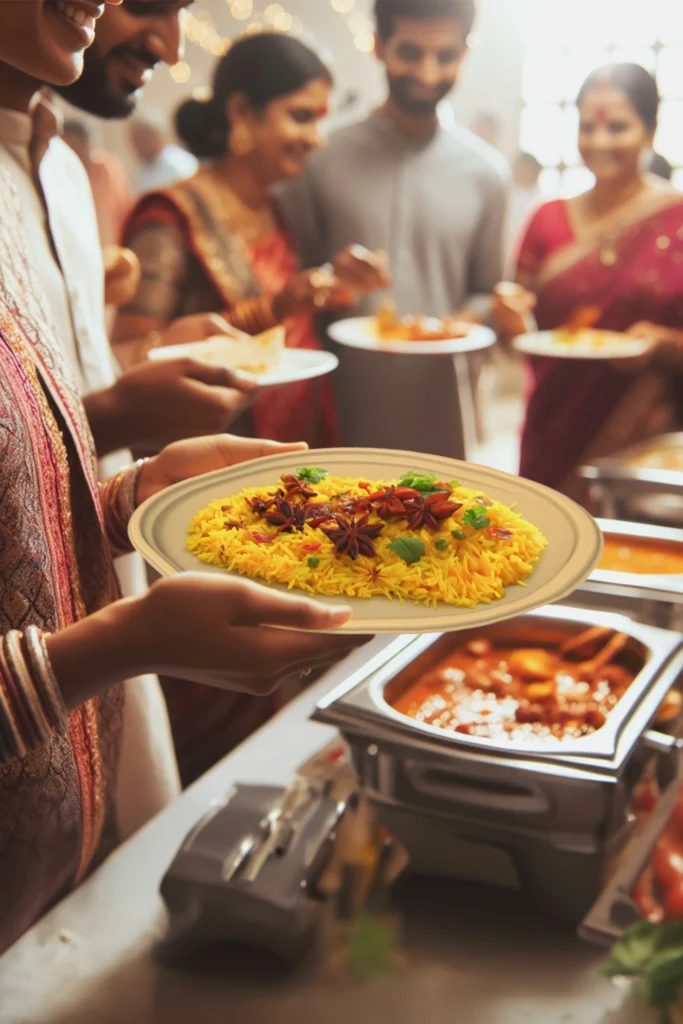
Green ‘I Dos’: your complete guide to planning an eco-friendly Indian wedding in 2026
An average Indian wedding generates between 200 and 400 kilograms of waste across just three to five days of celebrations. Multiply that by the roughly 10 million weddings that happen in India every year, and the scale of the problem becomes hard to ignore.
If you are a bride or groom planning your wedding, or a caterer handling back-to-back shaadi season bookings, you have probably already noticed the shift. Guests are paying attention. Families are asking questions about sustainability. And municipal authorities in cities like Mumbai, Bangalore, and Delhi are enforcing single-use plastic bans at event venues with increasing seriousness.
The honest truth? Going green with your wedding does not mean compromising on grandeur. It means making smarter choices across your mandap, mehendi, sangeet, and reception, so you celebrate big while wasting less.
Key Takeaways
- Indian weddings generate 200-400 kg of waste per event, most of it avoidable with the right swaps
- Compostable disposables perform identically to plastic for serving hot, oily, and liquid foods at wedding functions
- Sustainable swaps across decor, invitations, tableware, and favours can reduce your wedding’s waste footprint by 60-70%
- Many green choices (digital invites, seasonal flowers, rented decor) actually save money compared to traditional options
- Caterers serving 50+ weddings a season can differentiate their brand by offering compostable tableware as a standard package
Why Indian weddings need a sustainability rethink
Indian weddings are not small affairs. A typical celebration stretches across the mehendi, sangeet, haldi, main ceremony, and reception, with guest lists that regularly cross 300 to 500 people. Each function involves food service, decoration, gifting, and logistics that generate enormous quantities of single-use waste.
Here is what the waste profile of a conventional 400-guest Indian wedding typically looks like:
- Plastic tableware and cutlery: 1,500-2,500 individual pieces across all functions
- Single-use decoration items: Thermocol pillars, synthetic flowers, plastic buntings that head straight to landfill
- Printed invitations: 200-500 card sets, most discarded within a week
- Food waste: 20-30% of catered food goes uneaten at the average Indian wedding
- Gift wrapping and packaging: Metres of non-recyclable foil wrap, ribbons, and plastic boxes
If you are a caterer, you see this multiplied across every event you serve. If you are a couple planning your day, you have the power to change the pattern for at least one wedding, and that matters more than you might think.
The eco-friendly Indian wedding checklist
This is your practical reference. Each row covers a category, what is traditionally used, the sustainable swap, and whether it costs more or actually saves you money.
| Category | Traditional Option | Sustainable Swap | Cost Impact |
|---|---|---|---|
| Invitations | Printed card sets with envelopes (INR 50-150/set) | Digital invitations via video or e-invite platforms | Saves 70-90% on invitation costs |
| Mandap decor | Thermocol pillars, synthetic flowers, plastic drapes | Fresh seasonal flowers, banana stems, marigold strings, fabric drapes (reusable) | Comparable or 10-15% lower with seasonal flowers |
| Tableware (mehendi/sangeet) | Single-use plastic plates, cups, and cutlery | Compostable plates, bowls, and cutlery made from sugarcane bagasse | 15-25% higher per unit, offset by lower waste disposal |
| Tableware (reception) | Melamine or plastic buffet-ware for large-format serving | Compostable serving trays, compartment plates, and bowls | Similar overall cost when factoring waste savings |
| Food service | Excess ordering to avoid shortage, no donation plan | Right-sized catering with food donation tie-up (Feeding India, local NGOs) | Saves 15-20% on food costs |
| Return gifts/favours | Plastic-wrapped sweets boxes, imported trinkets | Potted saplings, seed packets, jute pouches with local sweets | Comparable or 10% lower |
| Lighting | Diesel generators for decorative lighting | LED string lights, solar-powered lanterns, candles | Saves on fuel cost, 20-30% lower energy bill |
| Transport | Individual cars for each family | Shared shuttle service or carpooling coordination for guests | Saves 30-40% on guest transport |
If you are a caterer reading this, the tableware rows are your use point. Offering compostable disposables as part of your standard wedding catering package is a genuine differentiator, especially when you can tell clients their entire function generated zero plastic waste.
Breaking it down: sustainable swaps for every wedding function
Mehendi and haldi
These are typically the smaller, more intimate gatherings, and that makes them the perfect starting point for sustainable choices.
- Serve on compostable plates and bowls. Mehendi and haldi functions involve finger foods, chaats, and snacks that are oily and saucy. Sugarcane bagasse plates handle heat and oil without getting soggy, unlike paper plates that fall apart midway through the meal.
- Use natural, organic mehendi. Chemical-laden mehendi cones often contain PPD (paraphenylenediamine), which is a skin irritant. Natural henna gives a deeper, richer stain without the synthetic additives.
- Decorate with fresh flowers and banana leaves. Banana leaves as table runners, marigold strings for the entrance, and loose flower arrangements in clay pots. All of it composts naturally after the function.
- Skip the thermocol decorations. Thermocol (expanded polystyrene) does not biodegrade. It breaks into microplastics that persist in soil and water for centuries. Use fabric drapes, paper lanterns, or repurposed sari cloth instead.
Sangeet
The sangeet is where the energy peaks. Large gatherings, elaborate stage setups, and heavy food service.
- Compostable cups for beverages. Whether it is chaach, thandai, or mocktails, compostable cups hold cold and hot beverages without leaking. No need for plastic glasses.
- LED and fairy light decor. Replace diesel-powered decorative lighting with energy-efficient LEDs. Solar-powered fairy lights are now widely available at INR 200-500 per string and create the same festive ambience.
- Rent the stage setup. Stage decor, backdrops, and props can all be rented and returned. Buying single-use decorations that head to a dumpster the next morning is the most wasteful part of any sangeet.
- Digital photo booths. Instead of printed props and physical photo strips, use digital photo booths that send pictures directly to guests’ phones.
The main ceremony (mandap)
The mandap is the spiritual heart of an Indian wedding, and sustainability here carries a deeper meaning. In Indian tradition, the fire (agni) in the mandap represents purity. Surrounding it with synthetic, non-biodegradable materials feels like a contradiction.
- Seasonal, locally sourced flowers for mandap decoration. Roses, marigolds, jasmine, and lotus sourced from local growers cost less than imported flowers and carry zero air-freight carbon.
- Banana stem pillars. Banana stems as mandap pillars are a traditional South Indian practice that is both stunning and entirely compostable. North Indian weddings are increasingly adopting this.
- Clay and brass over plastic. Kalash, diyas, and ritual vessels in clay or brass last forever and carry cultural significance. Plastic substitutes cheapen the aesthetic and the sentiment.
- Compostable leaf plates for prasad distribution. If your ceremony involves distributing prasad or a small meal, serve it on compostable leaf plates. This is actually a return to tradition, since Indian weddings served food on banana leaves and sal leaf plates (pattal/dona) long before plastic existed.
Reception
The reception is the highest-volume food service event, and where the most waste is generated. This is where your tableware choices have the biggest impact.
- Compostable compartment plates for buffet service. A single compartment plate replaces the need for multiple bowls and plates per guest. It handles dal, rice, sabzi, and roti on one surface without leaking or bending.
- Compostable bowls for desserts and curries. Kheer, gulab jamun, raita, anything liquid or semi-liquid stays contained in bagasse bowls exactly the way it would in plastic.
- Compostable cutlery. Spoons, forks, and knives made from plant-based materials that perform identically to plastic cutlery for the duration of the meal.
- Right-size your catering order. Work with your caterer to estimate portions accurately. A 10% buffer is reasonable. A 30% buffer, which is common, means 30% more food waste.
- Partner with a food donation NGO. Organisations like Feeding India (Zomato), Robin Hood Army, and local temple kitchens will collect surplus food from your reception the same evening. This turns potential waste into meals for people who need them.
The caterer’s opportunity: making sustainable weddings your brand
If you are a caterer serving 30, 50, or 100+ weddings a season, this is not just a feel-good story. It is a business opportunity.
Here is why:
- Differentiation. Most wedding caterers in India still default to plastic tableware. Offering compostable disposables as your standard, not an optional extra, puts you in a different category entirely.
- Higher-value clients. Families planning sustainable weddings typically have higher budgets overall. They are not cutting corners. They are making intentional choices and are willing to pay for quality.
- Compliance protection. As plastic bans tighten across states, caterers still using restricted single-use plastics face event-day disruptions, fines, and reputational damage. Switching to compostable disposables eliminates that risk permanently.
- Simpler waste management. When everything on the table is compostable, post-event cleanup is faster and disposal is cheaper. No need to sort plastic from food waste. It all goes into one stream.
Wedding season in India runs October through February, with a second peak in April-May. That is seven months where your packaging choices directly shape tens of thousands of meals served. Making the switch before the next season starts is the smartest operational decision you can make.
Common concerns (and the honest answers)
“Compostable tableware cannot handle Indian food”
This is the most common misconception, and it is flatly wrong. Sugarcane bagasse tableware is designed to handle temperatures up to 120 degrees Celsius. It resists oil, gravy, and moisture for the full duration of a meal. Hot dal, oily biryani, saucy paneer, these are exactly the conditions compostable tableware is built for.
“It costs too much for a large wedding”
The per-piece cost is 15-25% higher than plastic. For a 500-guest reception, that translates to roughly INR 5,000-8,000 extra on tableware. Compare that to the total wedding budget (INR 10-50 lakhs for most middle-to-upper-middle-class Indian weddings) and it is a rounding error. You will likely save more than that amount by switching to digital invitations alone.
“Guests will not notice or care”
They will. Especially younger guests. A 2024 survey by LocalCircles found that 67% of urban Indian consumers actively prefer businesses that demonstrate sustainable practices. Your guests will notice compostable tableware. Many will comment on it. Some will ask where they can get it for their own events.
“It is too complicated to source”
It is not. Compostable tableware is available for bulk order through direct suppliers with delivery across India. Whether you need 500 pieces for a mehendi or 5,000 for a reception, the supply chain now supports wedding-scale orders with standard lead times.
In a Nutshell
Planning a sustainable Indian wedding is not about sacrifice. It is about making the same celebration smarter, less wasteful, and more aligned with the values you are starting your married life with.
The highest-impact swaps are:
- Digital invitations over printed cards (saves money and paper)
- Compostable disposables for all food service across mehendi, sangeet, and reception (handles Indian food perfectly, eliminates plastic waste)
- Seasonal, local flowers over imported or synthetic decor (lower cost, zero waste)
- Right-sized catering with food donation (less waste, more impact)
- Rented decor and LED lighting over single-use setups (saves money, reduces landfill contribution)
Whether you are planning your own wedding or catering hundreds of them, the shift toward sustainable celebrations is not a trend. It is where the entire industry is heading. The families and caterers who move first will be the ones setting the standard.
Frequently Asked Questions
Is compostable tableware sturdy enough for a large Indian wedding buffet?
Yes. Compostable tableware made from sugarcane bagasse is rigid, leak-proof, and heat-resistant up to 120 degrees Celsius. It handles heavy Indian dishes like biryani, dal makhani, and paneer gravies without bending, leaking, or getting soggy. Thousands of caterers across India already use it for large-format events.
How much extra does compostable tableware cost compared to plastic for a wedding?
Expect a 15-25% increase in per-piece cost. For a 500-guest wedding, the total additional cost is approximately INR 5,000-8,000. When you factor in lower waste disposal costs and the elimination of plastic ban compliance risk, the net cost difference is minimal.
Can compostable plates and bowls be used for both hot and cold food items?
Absolutely. Compostable bagasse tableware works across the full temperature range of Indian food service, from chilled raita and desserts to piping hot curries and soups. There is no functional compromise compared to plastic.
What is the best way to dispose of compostable tableware after a wedding?
Compostable tableware can go directly into wet waste or organic waste streams. If your venue has a composting facility, even better. Unlike plastic, which needs to be segregated and sent to specialised recycling (if it gets recycled at all), compostable tableware breaks down naturally within 90 to 180 days in an industrial composting environment.
How do I convince my family that a sustainable wedding will still look grand?
Show them the numbers and the visuals. Sustainable weddings using fresh seasonal flowers, fabric drapes, brass decor, and LED lighting are consistently rated as more elegant than those using synthetic alternatives. Share examples from real Indian weddings that have gone the sustainable route. The aesthetic quality goes up, not down.
Where can caterers source compostable tableware in bulk for wedding season?
Compostable tableware is available for bulk purchase through established suppliers with pan-India delivery. Whether you need plates, bowls, compartment plates, cups, or cutlery, wedding-season volumes are well within standard supply capacity. Plan your orders 4-6 weeks ahead of peak season to ensure availability.
Planning your wedding and want to explore compostable tableware options for every function? Browse the full range of Chuk compostable tableware designed for large-format food service, from mehendi snacks to reception buffets.