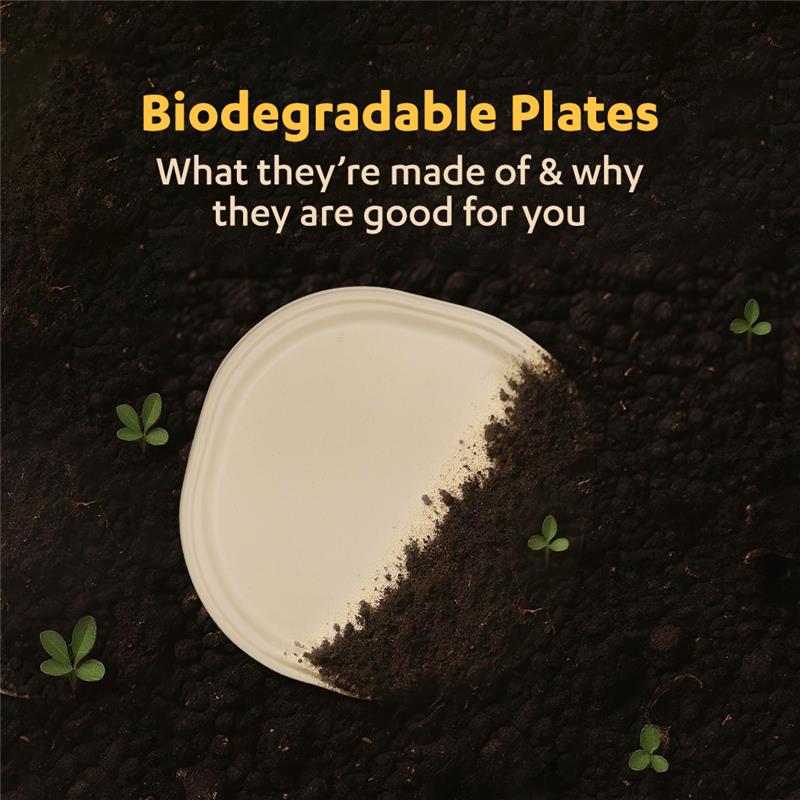
Compostable plates: what they’re really made of and why your business should care
You’ve seen the terms everywhere. Biodegradable. Compostable. Eco-friendly. Green. They get slapped on packaging like confetti at a wedding, and half the time they mean almost nothing.
If you run a restaurant, cloud kitchen, or catering operation in India, you’ve probably been pitched “biodegradable plates” at least a dozen times. But here’s what they don’t tell you: not all plates that break down are created equal, and the difference between biodegradable and compostable isn’t just semantics. It directly affects your costs, your compliance, and whether your sustainability claims actually hold up.
This is the honest breakdown. What compostable plates are made from, how they differ from the biodegradable labels you keep seeing, and why the distinction matters for your bottom line.
Key Takeaways
- “Biodegradable” is a loosely regulated term. Almost anything breaks down eventually, including plastic over 500 years. The label alone tells you nothing useful
- Compostable plates decompose fully within 90-180 days under composting conditions, leaving zero toxic residue
- The most common materials are sugarcane bagasse, bamboo, areca leaf, and PLA (plant-based bioplastic). Bagasse leads in price-performance for foodservice
- Certified compostable products meet specific standards (IS/ISO 17088, CPCB, OK Compost). If it doesn’t have a certification, treat the claim with suspicion
- For restaurant owners: switching to certified compostable disposables is a compliance advantage, a customer trust signal, and increasingly a cost-neutral decision
The honest truth about “biodegradable” plates
Here’s a fact that most packaging suppliers won’t volunteer. The word “biodegradable” has no standardised legal definition in India. Any material that breaks down through natural processes, at any speed, technically qualifies.
A banana peel is biodegradable. So is a plastic bag, if you’re willing to wait 500 years.
When a supplier tells you their plates are “biodegradable,” they could mean the product breaks down in 60 days. Or they could mean it fragments into smaller pieces over several years, potentially leaving microplastics or chemical residue in the soil. Without a certification, you have no way to tell.
This isn’t about being cynical. It’s about protecting your business. As a restaurant owner, if you’re marketing “eco-friendly packaging” to customers and your plates are biodegradable in name only, you’re carrying a reputation risk you didn’t sign up for.
What “compostable” actually means
Compostable is the stricter standard, and it’s the one that matters.
A compostable plate meets three specific criteria:
- Disintegration: It physically breaks apart within 12 weeks under composting conditions
- Biodegradation: At least 90% of the material converts to CO2, water, and biomass within 180 days
- Ecotoxicity: The resulting compost is non-toxic and safe for plant growth
When a product carries a compostable certification (more on that below), it means independent labs have tested and confirmed all three criteria. That’s a fundamentally different promise than “biodegradable.”
For your operations, this distinction shapes everything from waste disposal to what you can legally claim on your menu cards and delivery packaging.
Biodegradable vs compostable vs recyclable: the comparison you actually need
As a food business operator, you’ve probably seen all three terms thrown around interchangeably. They’re not the same thing. Here’s what each means in practice for your restaurant.
| Feature | Biodegradable | Compostable | Recyclable |
|---|---|---|---|
| What it means | Breaks down naturally over time | Breaks down fully in composting conditions, zero toxins | Can be reprocessed into new material |
| Timeframe | Months to hundreds of years | 90-180 days (certified) | Varies by material and facility |
| Residue left behind | May leave microplastics or chemical fragments | None. Turns into nutrient-rich compost | N/A (material is reused) |
| Regulated standard in India | No standardised definition | IS/ISO 17088, CPCB certification | BIS standards for specific materials |
| Works with food waste? | Not always | Yes. Can be composted together with leftover food | No. Food contamination ruins recyclability |
| Greenwashing risk | High. Loosely defined term | Low, if certified | Moderate. “Recyclable” doesn’t mean it gets recycled |
| Best for restaurants? | Unreliable unless certified | Yes. Compliance-friendly and disposal-simple | Impractical for food-soiled disposables |
| Cost comparison | Similar to compostable | Slightly above plastic; gap shrinking | Depends on material |
The takeaway is straightforward. For food service operations, compostable disposables win on every metric that matters: disposal simplicity, regulatory safety, and customer trust. Recyclable materials fail the moment food touches them, and “biodegradable” without a certification is a gamble.
What compostable plates are actually made from
Here’s where the materials story gets interesting. Compostable plates aren’t made from some exotic lab-grown polymer. Most of them come from agricultural waste and plant fibres you’d recognise immediately.
Sugarcane bagasse plates
This is the workhorse of the compostable disposables world, and for good reason.
Bagasse is the fibrous residue left after sugarcane is crushed for juice. India produces over 450 million tonnes of sugarcane annually, generating roughly 135-150 million tonnes of bagasse. Most of it gets burned as boiler fuel in sugar mills. The portion diverted to tableware manufacturing turns agricultural waste into sturdy, food-grade plates.
Why bagasse dominates in foodservice:
- Heat resistant up to 120 degrees C. Handles hot gravies, biryanis, and fried items without warping
- Microwave and refrigerator safe. Works across your entire temperature range
- Oil and water resistant without any plastic lining or chemical coating
- Fully compostable within 60-90 days under industrial composting
- Cost-competitive with mid-range plastic alternatives at volume
If you’re running a QSR, cloud kitchen, or catering operation, sugarcane bagasse plates are the most practical starting point for switching away from plastic and foam.
Bamboo plates
Bamboo grows fast, regenerates without replanting, and has natural antibacterial properties. Plates made from bamboo are lightweight, elegant, and strong.
The trade-off? They’re priced higher than bagasse, making them better suited for premium dining, weddings, and events where presentation carries extra weight. For everyday high-volume foodservice, bamboo’s cost per unit is harder to justify.
Areca leaf plates
Made by pressing naturally fallen areca palm leaves into moulds. No chemicals, no coatings, just heat and pressure. The resulting plates have a distinctive rustic look that works beautifully at traditional events and festive occasions.
The limitation is availability. Areca palms grow in specific regions (Karnataka, Kerala, parts of the Northeast), and leaf supply is seasonal. Scaling areca plates nationally means longer supply chains and higher transport costs, which adds to your per-unit pricing and carbon footprint.
PLA-based plates (cornstarch)
PLA (polylactic acid) is a bioplastic derived from corn starch or sugarcane. Plates made from PLA look and feel like conventional plastic, but they’re fully compostable under industrial composting conditions.
One important caveat for restaurant operators: PLA requires industrial composting at sustained temperatures above 58 degrees C. It won’t break down in a home compost bin or an open dump. If your city doesn’t have industrial composting infrastructure, PLA plates may technically be compostable but practically end up in landfill anyway.
Paper plates (uncoated)
The cheapest option, and it shows. Uncoated paper plates are technically compostable, but they have almost zero structural integrity with wet or oily food. No gravy, no dal, no curry. They’re limited to dry snacks at best.
Most “paper plates” sold at retail actually have a thin plastic or wax lining for moisture resistance, which makes them neither compostable nor recyclable. If you’re considering paper, check the fine print carefully.
Why plastic and foam plates are a growing business risk
This isn’t a moral argument. It’s a practical one.
As a restaurant owner in India, here’s what the regulatory and market space looks like right now:
- The Plastic Waste Management (Amendment) Rules have banned specific single-use plastic items across India. Enforcement is tightening, not loosening
- FSSAI packaging regulations are increasingly favouring food-contact materials that don’t leach chemicals. Foam and certain plastics are under scrutiny
- Zomato, Swiggy, and major aggregators are beginning to flag and preference restaurants that use sustainable packaging. This affects your visibility and ranking
- Customer expectations are shifting measurably. Urban consumers, especially in metros, actively notice and comment on packaging choices in reviews
The cost gap between plastic and compostable alternatives has narrowed significantly over the past three years. At bulk volumes, compostable disposables are often within 10-15% of conventional plastic pricing, and that delta continues to shrink.
Sticking with plastic isn’t saving you much money anymore. But it is accumulating compliance risk, brand risk, and customer perception risk. That math is getting harder to defend.
How to spot greenwashing: what they don’t tell you
The sustainable packaging market is growing fast, and so is the greenwashing. As a food business operator buying disposables in bulk, you need to know what to look for and what to avoid.
Certifications that actually mean something
Genuine compostable plates carry one or more of these verified marks:
- CPCB Certified (Central Pollution Control Board, India) – Required for products claiming compostability in India
- IS/ISO 17088 – The Indian standard for compostable materials, aligned with international norms
- OK Compost (TUV Austria) – Widely recognised international certification for industrial compostability
- OK Compost HOME – Separate certification for home compostability (stricter requirement)
- BPI Certified (Biodegradable Products Institute, US) – Accepted globally
- EN 13432 (EU standard) – European compostability benchmark
If a product doesn’t carry any of these, the “compostable” or “biodegradable” label on the packaging is just marketing copy. Chuk’s compostable tableware carries verified certifications that you can confirm independently.
Red flags to watch for
When evaluating suppliers, be wary of:
- Vague language like “eco-safe,” “earth-friendly,” or “100% natural” with no supporting certification
- Plates with a visible shiny coating (often a giveaway for plastic or wax lining)
- No mention of whether composting is home or industrial
- Missing manufacturer details or material declarations on the product packaging
- Unusually low pricing that doesn’t align with genuine plant-based materials
- Claims about decomposition timelines without specifying conditions
What to ask your supplier
Three questions that separate real compostable products from greenwashed ones:
- “What certifications does this product carry? Can I see the certificate?”
- “What material is this made from, and is there any plastic coating or lining?”
- “Under what conditions does this compost, and in what timeframe?”
Any legitimate supplier will answer all three without hesitation. If you get vague responses, that tells you what you need to know.
How to dispose of compostable plates the right way
Buying compostable disposables is only half the equation. The disposal side matters just as much, especially if you’re running a food business that generates high volumes of plate waste daily.
What works
- Composting on-site: If your operation has space, compostable plates can go directly into a composting system along with food waste. Many restaurants in Bengaluru, Pune, and Indore are already doing this
- Municipal composting: Cities with active composting programmes accept compostable tableware in the organic waste stream. Check with your local municipal body
- Community drop-off points: NGO-run and RWA composting facilities in metro areas increasingly accept certified compostable products
What doesn’t work
- Littering: Even compostable plates become eyesores and drain blockers if littered. They need composting conditions to break down properly
- Burning: Releases carbon and potentially harmful fumes. Unnecessary when composting is available
- Mixing with plastic waste: This contaminates recycling streams and often sends everything to landfill
- Sending to landfill without composting: Compostable plates in anaerobic landfill conditions decompose slowly and may produce methane. Composting is the intended end-of-life pathway
If you’re a restaurant operator serving 200+ covers daily, setting up a basic composting arrangement (even partnering with a local composting facility) turns your waste stream into a closed loop. That’s a story worth telling your customers.
What’s changing in Indian food packaging (and what to prepare for)
The compostable tableware market in India is evolving fast. Here’s what’s shaping the next 2-3 years for food business operators.
Material and design improvements
- Bagasse blends with natural binding agents are producing plates that are thinner, stronger, and more heat-resistant than products from even two years ago
- Stackable, space-saving designs are reducing storage costs for high-volume operations
- Home compostable formulations are expanding, which reduces dependence on industrial composting infrastructure
Regulatory direction
- Multiple Indian states have active or proposed bans on specific single-use plastics. The enforcement trend is towards stricter, not relaxed
- Swachh Bharat Mission and related government programmes continue to push waste segregation and composting, creating ecosystem support for compostable products
- CSR mandates are driving corporate catering and events towards verifiable sustainable packaging
Market signals
- Urban food delivery customers are beginning to select restaurants partly based on packaging. Review platforms and social media amplify both positive and negative packaging experiences
- Major FMCG and QSR chains have publicly committed to reducing single-use plastic in their supply chains, creating downstream pressure on smaller operators to follow
The direction is clear. Compostable disposables aren’t a niche play anymore. They’re becoming the operational baseline for food businesses that want to stay competitive and compliant.
In a Nutshell
- “Biodegradable” is a marketing term with no legal teeth in India. “Compostable” with a certification is what you should look for when buying disposable plates for your restaurant (the full disposable plate buying guide compares every material side by side)
- Compostable plates are made from sugarcane bagasse, bamboo, areca leaf, PLA, or uncoated paper. For high-volume foodservice, bagasse offers the best combination of performance, price, and availability
- The cost difference between compostable and conventional plastic has shrunk to 10-15% at scale. Factor in compliance risk, customer sentiment, and brand positioning, and the switch increasingly pays for itself
- Always verify certifications (CPCB, IS/ISO 17088, OK Compost). If a supplier can’t produce a certificate, walk away
- Proper disposal means composting, not landfill. Partnering with a local composting facility closes the loop and gives you a genuine sustainability story to tell your customers
- The regulatory and market environment in India is moving toward compostable as the default. Moving early is a strategic advantage, not just an ethical choice
Frequently Asked Questions
What is the difference between biodegradable and compostable plates?
Biodegradable means a material will break down naturally over time, but the timeline and residue are unregulated. A plastic bag is technically biodegradable over centuries. Compostable plates meet specific certified standards: they decompose fully within 90-180 days under composting conditions, leaving zero toxic residue and producing nutrient-rich compost. For restaurant operators, compostable with a certification is the only claim worth trusting.
Are compostable plates safe for serving hot food like curries and biryanis?
Yes. Sugarcane bagasse plates are heat resistant up to 120 degrees C, which handles most hot Indian foods comfortably. They’re also oil and water resistant without any plastic coating. Bagasse plates can go from your kitchen to the microwave to the customer’s table without warping, leaking, or releasing chemicals. That makes them practical for exactly the kind of food most Indian restaurants serve.
How much more do compostable plates cost compared to plastic plates?
The gap has narrowed significantly. At bulk volumes (the kind restaurants buy at), certified compostable bagasse plates typically cost 10-15% more than conventional plastic. When you factor in tightening plastic regulations, potential fines, customer preference trends, and the marketing value of genuine sustainability credentials, the effective cost difference is close to zero for most food businesses.
Can I compost these plates at my restaurant?
If the plates are certified home compostable, you can add them to an on-site composting system along with food waste. For plates certified under industrial composting standards (like PLA-based products), you’ll need a composting partner or municipal facility that maintains temperatures above 58 degrees C. Many cities including Pune, Bengaluru, and Indore have composting infrastructure that accepts certified compostable tableware.
How do I verify if a supplier’s “compostable” claim is genuine?
Ask for the certification. Legitimate compostable products carry marks from CPCB, IS/ISO 17088, OK Compost (TUV Austria), BPI, or EN 13432. These certifications mean independent labs have tested the product and confirmed it meets specific disintegration, biodegradation, and ecotoxicity standards. If a supplier can’t produce a certificate or gives vague answers about their testing, treat the claim with suspicion and look elsewhere.
Do compostable plates work for food delivery and takeaway packaging?
Absolutely. Sugarcane bagasse plates and containers are specifically designed for foodservice applications including delivery. They handle oil, moisture, and heat without breaking down during transit. They’re also microwave safe, so your customers can reheat food directly in the container. For delivery-heavy operations like cloud kitchens and QSRs, compostable containers are a direct swap for plastic with no performance compromise.
What happens if compostable plates end up in a landfill instead of a composting facility?
In landfill conditions (low oxygen, no active composting), compostable plates break down much more slowly and may produce methane, a greenhouse gas. This is why proper disposal matters. The plates are designed for composting, not landfill. If your city has composting infrastructure, use it. If not, partnering with a private composting service or setting up on-site composting keeps your waste stream aligned with the product’s intended lifecycle.
Are there any government regulations in India about using compostable disposables?
Yes, and they’re getting stricter. The Plastic Waste Management Rules (amended multiple times, most recently strengthened) ban specific single-use plastics; here is what the single-use plastic ban means for restaurants. FSSAI has food-contact material regulations that favour non-toxic, non-leaching materials. Multiple states have additional plastic ban orders. Using certified compostable disposables puts your restaurant on the right side of current and upcoming regulations, reducing your compliance risk substantially.
Moving off plastic usually starts with the plate
The plate is where most kitchens start when they move off plastic. CHUK’s compostable bagasse plates take hot, oily and wet food without going limp, and they compost after use.
Browse compostable plates | Order a sample box | Get pricing on WhatsApp