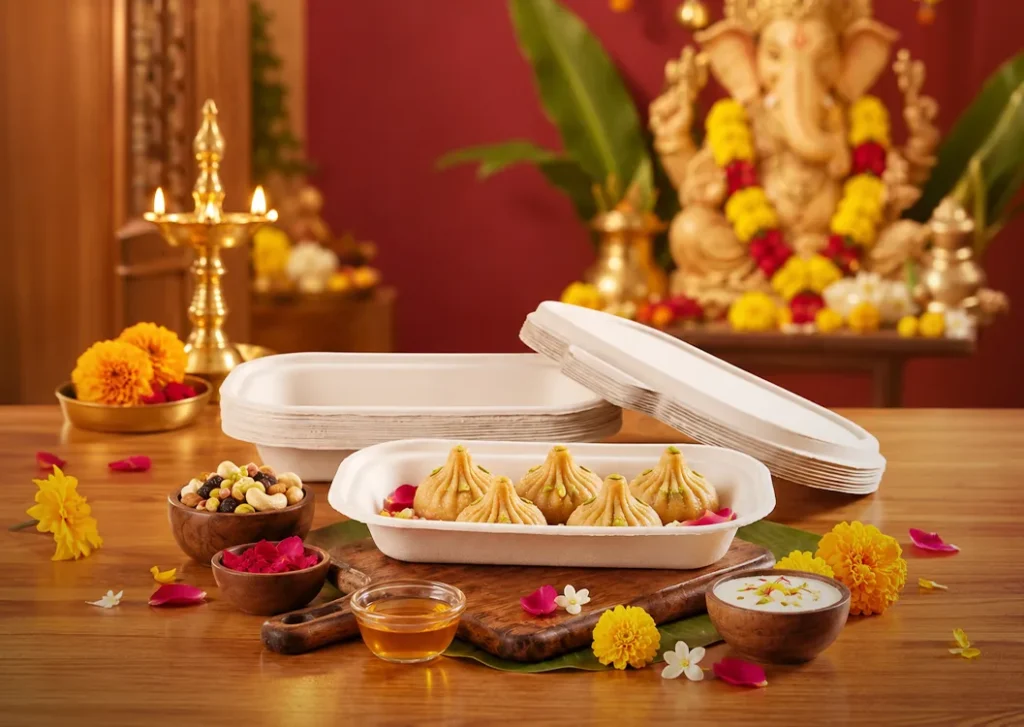
Ganesh Chaturthi 2026 falls on Monday, September 14, and runs for about ten days to Anant Chaturdashi on September 25. For a kitchen, that is not a single busy day. It is a ten-day Ganesh Chaturthi catering window of modak orders, prasad boxes, and pandal bulk meals that most restaurants leave on the table. Here is how to actually capture it.
When is Ganesh Chaturthi 2026, and why should your kitchen care right now?
The festival begins on September 14, 2026, with the sthapana (idol installation) and closes with visarjan around September 25. That spread matters more than the single date. Households, housing societies, and pandals order food on installation day, again over the middle-weekend gatherings, and once more on visarjan day. That is three demand spikes, not one.
If you wait until the week of September 14 to plan your menu, you have already missed the pre-orders. Sweet shops and caterers who publish a modak and prasad order form by the first week of September are the ones who fill their books. Festival food demand in India clusters tightly around these dated windows, and the restaurant trade reliably sees festival weeks beat ordinary ones, but only for businesses that took orders in advance. It is the same thing that makes serving a large festive feast profitable: plan the batch before the crowd arrives, not during it.
What should a Ganesh Chaturthi catering menu actually include?
Lord Ganesha’s favourite offering is modak, and there are at least 21 types of it, so that is your anchor product. But a full Ganesh Chaturthi menu earns more when it wraps the modak in a prasad and meal range that a family or pandal can order in one go. The same discipline that runs a bhog and prasad spread applies here. Keep it satvik, keep it batchable, and price it as bundles.
| Category | Sell as | Why it works |
|---|---|---|
| Modak (ukadiche, fried, chocolate) | Box of 6, 11, 21 | The signature item; odd-number boxes match puja counts |
| Prasad thali | Fixed-price single serve | Easy for pandals to reorder daily |
| Satvik meal box | Combo for 1 / family pack for 4 | Covers the fasting and no-onion-garlic crowd |
| Bulk pandal catering | Per-plate rate, 50+ covers | The highest-margin line if you plan the batch |
| Sweets and namkeen hampers | Gift box | Society gifting and corporate Ganpati orders |
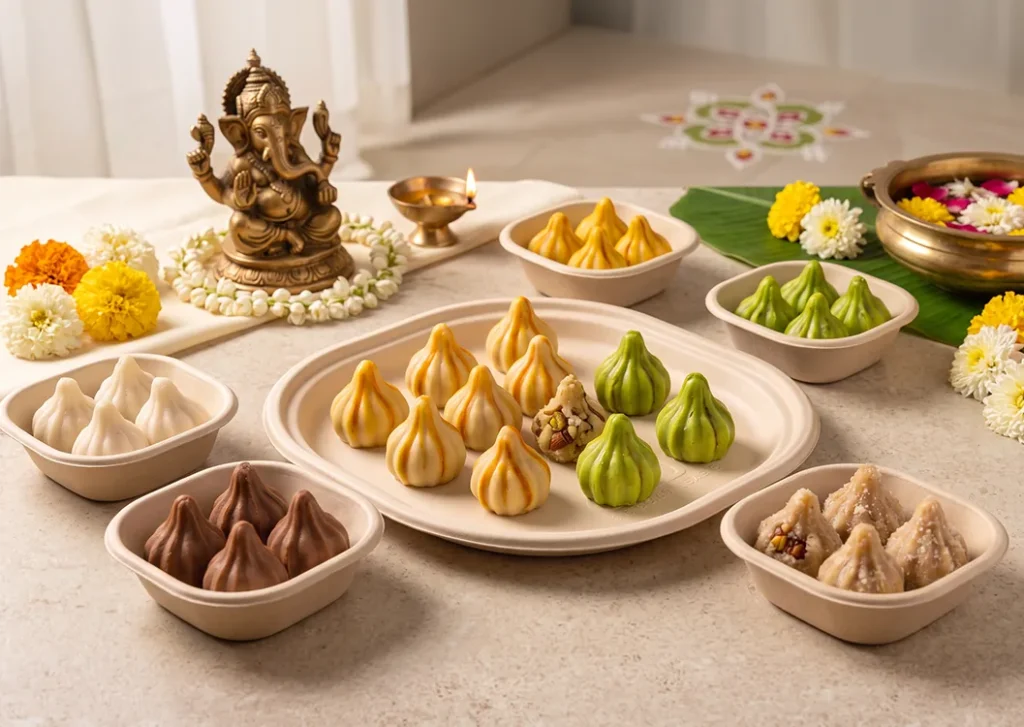
Notice that four of the five lines are pre-packable. That is on purpose. The festival rewards kitchens that can produce ahead and ship in boxes, the same way a well-run catering menu plan does for any occasion.
How do restaurants turn modak into a real profit line?
Modak is the clearest example of a festival item where costing decides everything. A steamed ukadiche modak costs roughly 8 to 14 rupees in ingredients and labour, depending on your rice-flour and jaggery sourcing, and sells inside a festival box at 35 to 60 rupees a piece. The margin is genuinely good, but it only survives if you batch properly. Hand-shaping fifty modak is a pleasant afternoon. Hand-shaping two thousand without a production plan is how kitchens miss deadlines and burn out staff two days before visarjan. The fix is to fix your SKUs early: offer three modak types at most, freeze your recipe grammages so every batch comes out identical, and take orders against a firm cut-off date two days ahead of each demand spike. A small, disciplined modak menu ordered in advance will out-earn a sprawling one made to order, at almost any volume you can name.
Restaurants that already run sweet-box takeaway orders know this pattern in their bones. If bulk and delivery volume is a big part of your plan, the same operational backbone that powers a cloud kitchen business, meaning forecasting, prep batching, and packing lines, is what keeps modak profitable at scale.
How do you package prasad and modak so it survives the journey?
This is where most festival orders quietly lose money. A beautiful box of modak that arrives crushed, oily, or leaking syrup becomes a refund and a bad review. Prasad also carries a purity expectation, so customers want it to look and feel untouched. Your packaging has to hold shape, resist grease and moisture, and still feel clean and festival-appropriate.
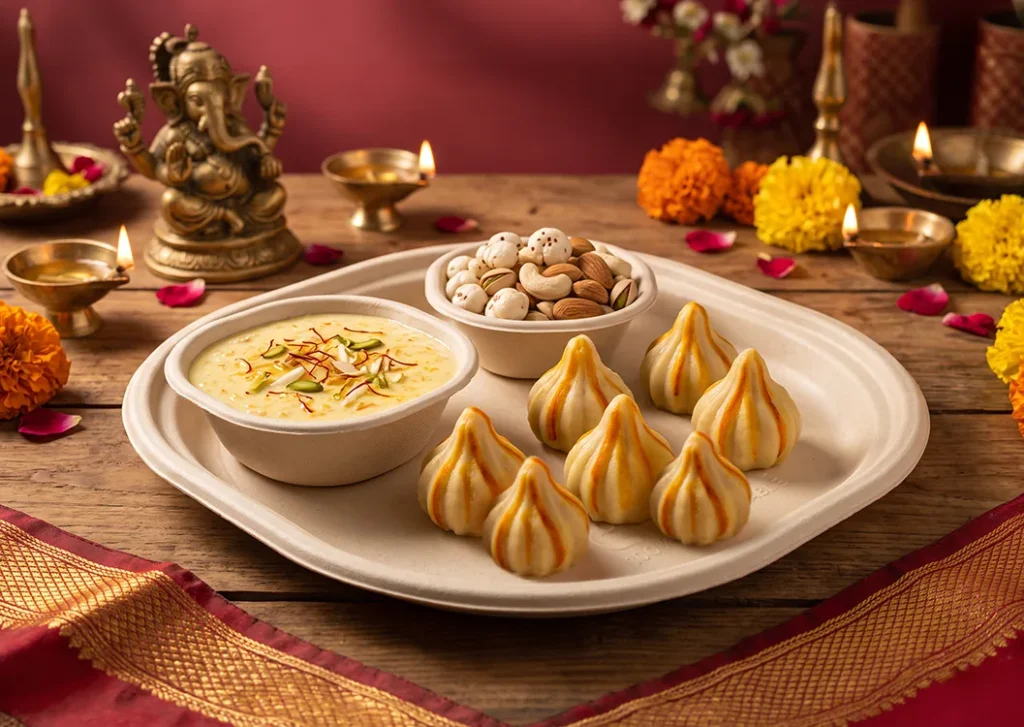
For a festival with a heavy takeaway load and a visarjan-day delivery surge, sturdy compartment trays and rigid containers beat flimsy plastic clamshells every time. A growing number of kitchens now serve prasad thalis and modak boxes in compostable bagasse meal trays and containers (Chuk being one of the brands making them). They hold a multi-item prasad plate without sogging, they do not leak syrup through the base, and they fit the eco-conscious tone that visarjan and green-Ganpati messaging increasingly ask for. Whatever material you land on, make the packaging decision before you take a single order rather than after the first complaint, and read our full guide to packaging takeaway food so it arrives looking like dine-in. Getting this one detail right is often the whole difference between a one-time order and a pandal committee that quietly reorders from you every single year.
What food-safety rules apply to festival prasad?
Selling prasad and sweets commercially is still a food business, and FSSAI rules apply the same way they do the rest of the year. If you are cooking and selling festival food for money, you need a valid FSSAI registration or licence, and your staff handling the food should follow basic hygiene norms. During a high-volume festival week, the risk of a food-safety slip rises simply because you are producing more, faster, often with temporary help.
Two practical steps. First, keep your licence and display details current; the official rules and registration paths live on the FSSAI website. Second, brief your temporary festival staff on cold-chain and handling before day one. If any term here is unfamiliar, such as FSSAI, FoSTaC, or cold chain, our restaurant operations glossary explains them in plain language.
How do you plan for the visarjan-day order surge?
Anant Chaturdashi (around September 25) is the single biggest food day of the festival. Large gatherings, community meals, and last-minute pandal orders all land at once. Plan it like a peak, not a normal day:
- Set an order cut-off 48 hours before visarjan so your kitchen can batch instead of scramble.
- Pre-pack the stable items (modak boxes, dry namkeen, sealed sweets) the night before.
- Staff for the spike. Add packing hands, not just cooks; packing is the real bottleneck on peak days.
- Lock your packaging stock a week early so you never run out of boxes mid-rush.
- Stage deliveries in waves by area to keep drivers efficient and food fresh.
How do you find Ganesh Chaturthi orders without spending on ads?
Most Ganesh Chaturthi catering demand is hyper-local and moves through networks, not search ads. The highest-return channel is the housing-society WhatsApp group. One clean message with your modak box options, prasad thali price, and order cut-off, posted in the societies near your kitchen, will usually out-perform anything you could boost on Instagram for the same effort. Pandal committees are the second channel: they book bulk meals days in advance and reorder across the ten days if you deliver on time, so it is worth walking in and leaving a one-page rate card with the organisers now.
Three more quiet sources. First, your existing regulars, who often want to send sweets to family and just need a nudge that you are taking festival orders. Second, corporate and office Ganpati celebrations, which order hampers and meal boxes in volume. Third, last year’s customers, if you kept their numbers. A single reminder message to a warm list beats a cold campaign nearly every time, and it costs you nothing but the ten minutes it takes to send.
In a Nutshell
Ganesh Chaturthi 2026 (September 14 to 25) is a ten-day catering opportunity, not a one-day rush. Anchor your menu on modak, wrap it in prasad thalis and satvik meal boxes, and price the bulk pandal line for margin. Take pre-orders against clear cut-offs, nail the packaging so prasad arrives clean and intact, keep your FSSAI basics in order, and staff up for the visarjan-day peak. Do the planning in early September and the festival fills your books. Wait until the week of, and you are just catching scraps.
Frequently Asked Questions
When is Ganesh Chaturthi in 2026?
Ganesh Chaturthi 2026 is on Monday, September 14, with the festival running about ten days to Anant Chaturdashi (visarjan) around September 25.
What is the most profitable item to sell for Ganesh Chaturthi?
Modak boxes and bulk pandal catering are the two highest-margin lines. Modak has strong per-piece margins when batched, and per-plate pandal orders scale well if you forecast and prep ahead.
How early should a restaurant start taking Ganesh Chaturthi orders?
Publish your modak and prasad order form by the first week of September. The pre-order window is where the volume is won; kitchens that wait until installation day miss the advance bookings.
Do I need an FSSAI licence to sell prasad and modak commercially?
Yes. Selling festival food for money is a food business, so a valid FSSAI registration or licence and basic hygiene compliance apply just as they do year-round.
Serving Ganesh Chaturthi orders this year?
Pack your modak boxes, prasad thalis, and pandal meals in sturdy compostable bagasse trays and containers that hold shape and keep food festival-fresh. Browse the range, or get a feel for it first.
Shop compartment meal trays & plates |
Order a sample box |
WhatsApp us for pricing