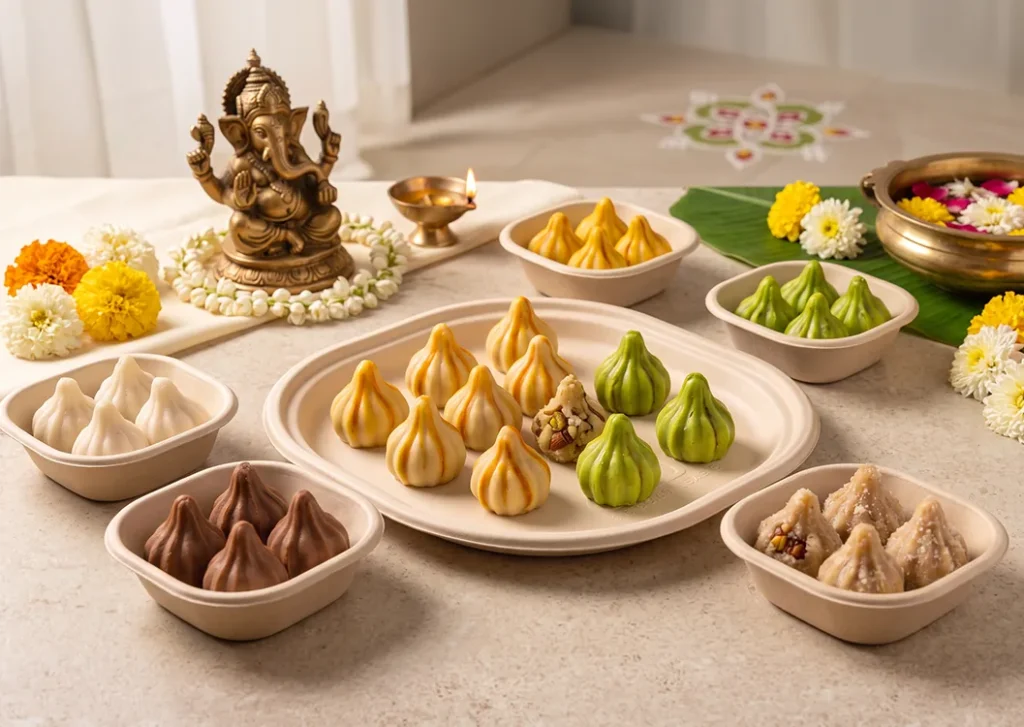
There are at least 21 types of modak made across India, and the full list is below, starting with the steamed ukadiche modak that goes to Bappa first. After the list comes the day-by-day naivedya guide for Ganpati 2026 (14 to 25 September), and what sweet shops, caterers and pandals need to know to serve it all.
What are the 21 types of modak, and which one is offered first?
Ukadiche modak is offered first on sthapana day, in a batch of 21, and everything else on this list is a variation on that original. The table gives each type, how it is made, roughly how long it keeps at room temperature, and where you are most likely to see it.
- Ukadiche modak: steamed rice-flour shell, coconut and jaggery filling, served with a spoon of ghee. The Konkan and Maharashtra original.
- Talniche modak (fried modak): wheat or maida shell around the same coconut-jaggery filling, deep fried. Keeps for days, which is why it travels.
- Mawa modak (khoya modak): reduced milk solids, sugar and cardamom pressed into a mould. The sweet-shop standard across north and west India.
- Kesar modak: mawa modak coloured and scented with saffron, often topped with a few strands.
- Chocolate modak: mawa or condensed milk base with cocoa or melted chocolate. The most ordered flavour after kesar in most city sweet shops.
- Dry fruit modak: dates, figs, almonds, cashews and pistachios ground together with no added sugar. Popular for gifting because it keeps.
- Nariyal modak (coconut modak): desiccated coconut, condensed milk and cardamom, set in a mould. No shell.
- Paneer modak: crumbled paneer cooked with sugar, shaped like a sandesh. A Bengali-influenced version.
- Motichoor modak: motichoor laddoo mixture pressed into the modak shape. Common in Gujarat and Rajasthan sweet shops.
- Besan modak: roasted gram flour, ghee and sugar, the besan laddoo mix shaped differently.
- Rava modak: semolina roasted in ghee, cooked with milk and sugar, moulded. Quick to make at home.
- Malai modak: chhena and cream base, softer and whiter than mawa.
- Kaju modak: cashew paste and sugar, the kaju katli dough shaped into a modak. Often covered with silver varq.
- Pista modak: pistachio paste base, bright green, usually sold alongside kaju modak.
- Gulkand modak: mawa shell with a rose-petal jam centre.
- Mango modak (aamras modak): mango pulp folded into a mawa or coconut base. A seasonal one, since the festival falls after mango season, so it is usually made from pulp.
- Puran modak: chana dal and jaggery puran (the puran poli filling) inside a steamed or fried shell.
- Rasmalai modak: chhena modak soaked in thickened saffron milk. A newer sweet-shop invention.
- Til modak: roasted sesame and jaggery, the tilgul mix in modak form. Also made for Sankranti.
- Oats and jaggery modak: oats, jaggery, nuts and a little ghee. The one people make when someone in the house is watching sugar.
- Nachni modak (ragi modak): ragi-flour shell with the usual coconut-jaggery filling. A Konkan village version that has come back through health-food menus.
| Type | Base | Keeps at room temperature (approx.) | Where you see it most |
|---|---|---|---|
| Ukadiche modak | Steamed rice flour, coconut-jaggery | Same day; refrigerate leftovers | Maharashtra, Goa, Konkan homes and pandals |
| Talniche (fried) modak | Wheat or maida shell, fried | 3 to 4 days | Maharashtra; gift boxes |
| Mawa, kesar, chocolate, gulkand, rasmalai | Milk solids | 1 to 2 days; longer refrigerated | City sweet shops everywhere |
| Kaju, pista, malai, paneer | Nut paste or chhena | 2 to 3 days; refrigerate malai and paneer | Sweet shops, corporate boxes |
| Dry fruit, oats, til, nachni | Dates, nuts, jaggery, grains | 1 to 2 weeks (til and dry fruit) | Gifting, health-food counters |
| Motichoor, besan, rava, nariyal, puran, mango | Laddoo or halwa mixes moulded | 2 to 5 days | Gujarat, Rajasthan, home kitchens |
Shelf life is a working guide for a normal Indian September, not a food-safety rule. Anything with milk solids, chhena or cream should be sold the day it is made or kept in the fridge.
Why 21 modak, and what else goes on the naivedya thali on day one?
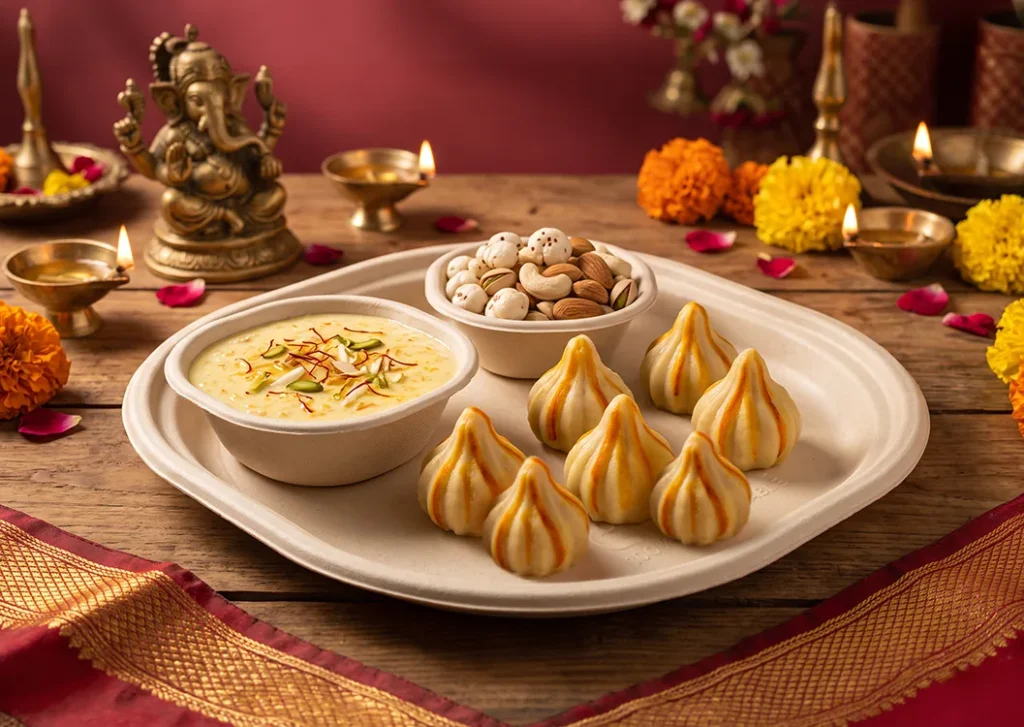
The number 21 comes from the same tradition that gives Ganesha 21 durva grass blades and 21 names in the puja. Households offer 21 modak at sthapana on the first day, and many keep the count for the aarti on visarjan day too. Alongside the modak, the first-day thali in a Maharashtrian home usually carries panchakhadya, which is a five-ingredient prasad of grated dry coconut, jaggery, roasted poppy seeds, chopped dry dates and a little ghee with cardamom. It needs no cooking, keeps for the whole festival, and is what gets handed out to anyone who drops in for darshan. Around those two sit the everyday items: a banana, a few pieces of coconut, a small bowl of kheer or sheera, and a glass of water for the deity. If the modak are ukadiche, a spoon of warm ghee goes on top just before the aarti. That is the whole first-day offering in most homes, and it has not changed much because every item on it can be made that morning.
What is the day-by-day naivedya for the 10 days of Ganpati?
Ganesh Chaturthi 2026 begins on Monday 14 September and ends with Anant Chaturdashi on Friday 25 September, per Drik Panchang. Not every home keeps Bappa for all ten days. A dedh-divas (one and a half day), five-day and seven-day Ganpati are all common, and the visarjan-day menu simply moves earlier. The table below is the ten-day version that most Maharashtrian families follow in some form. Swap days freely; the only fixed points are modak on day one and the full thali on visarjan day.
| Day | Date (2026) | Naivedya | Note |
|---|---|---|---|
| 1 (Sthapana) | Mon 14 Sep | 21 ukadiche modak, panchakhadya, banana, coconut | Modak first, always |
| 2 | Tue 15 Sep | Puran poli with ghee, or a second batch of modak | Dedh-divas homes do visarjan today with the full thali |
| 3 | Wed 16 Sep | Shrikhand and puri | Kesar or elaichi shrikhand |
| 4 | Thu 17 Sep | Motichoor or besan laddoo | Easy to buy in bulk for a housing society |
| 5 | Fri 18 Sep | Sheera (sooji halwa) with banana | Five-day homes do visarjan today |
| 6 | Sat 19 Sep | Coconut barfi or vadi | Weekend darshan crowds start |
| 7 | Sun 20 Sep | Kheer or basundi | Seven-day homes do visarjan today (Gauri visarjan in many households) |
| 8 | Mon 21 Sep | Sabudana khichdi or batata vada for the evening aarti crowd | Savoury is fine for the evening gathering |
| 9 | Tue 22 Sep | Karanji and shankarpali | Fried, so they can be made a day ahead |
| 10 | Wed 23 Sep | Second batch of 21 modak, plus the full thali for homes that finish on the tenth day | Ten days counted from sthapana |
| Anant Chaturdashi | Fri 25 Sep | Full thali: modak, varan-bhaat, puri, batatyachi bhaji, koshimbir, and a dahi-bhaat shidori | Pandal visarjan day; families that keep Bappa till Chaturdashi do the full thali today instead |
The shidori on the last day is a small packet of dahi-bhaat (curd rice) and a few modak, tied in a cloth and carried with the idol to the water. It is the food Bappa takes for the journey home, and most families that do their own visarjan still pack one.
What is the difference between naivedya, prasad and bhog?
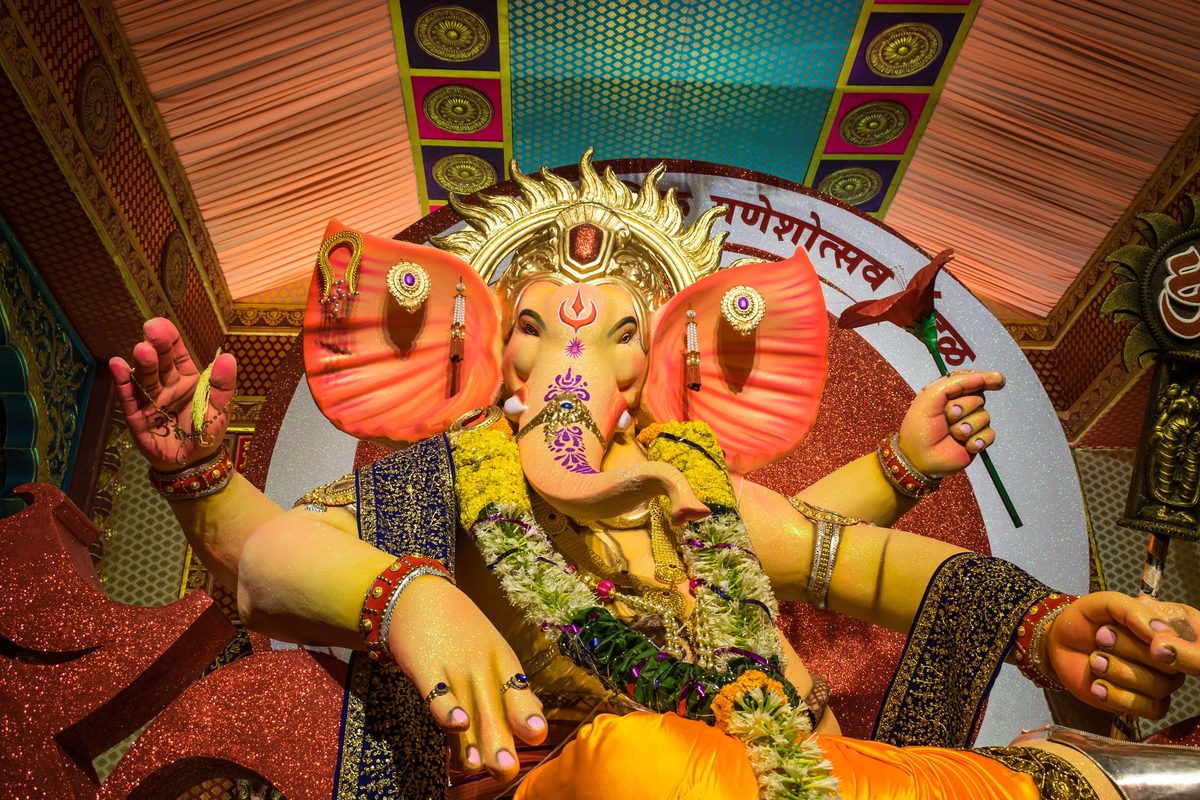
Naivedya is the food placed in front of the deity during the puja. Prasad is that same food after the aarti, when it is shared with everyone present. Bhog is the north Indian and Bengali word for the same idea, and the bhog culture around Janmashtami is where the 56 bhog list comes from. In practice a home makes one thali and it changes name at the aarti. A pandal is different. A big mandal makes prasad in a separate kitchen from the start, in quantities that have nothing to do with the small naivedya plate in front of the idol, and that is where food handling starts to matter. FSSAI runs a hygiene programme for exactly this, called BHOG (Blissful Hygienic Offering to God), which trains the volunteers and cooks at places of worship on basic food safety. Any mandal serving prasad to a few thousand people over ten days should read it, and any sweet shop or caterer taking money for modak needs its normal FSSAI registration in order, because a festival does not change what counts as a food business.
How do sweet shops and caterers keep up with modak demand for ten days?
Three things separate the shops that get through Ganpati calmly from the ones that run out on day two: they batch by type, they take pre-orders, and they decide the packaging before the festival, not during it.
Batching by type means treating the list above as three production lines rather than 21 products. Steamed modak are made fresh each morning and sell the same day. Mawa-based modak (kesar, chocolate, gulkand, pista) come off one base mixture, coloured and flavoured in small lots, and cover most of the counter. Fried and dry-fruit modak are made two or three days ahead and hold the gift-box business. A shop that runs those three lines can offer a dozen flavours without a dozen recipes. Pre-orders do the forecasting. Housing societies and mandals order their sthapana-day modak by count, so a shop knows the day-one volume a week in advance and only guesses the walk-in trade. The catering side of Ganesh Chaturthi, meaning pandal meals and prasad thalis for 200 or 500 people, follows the same logic on a larger scale, and the same shops that did well with Guru Purnima sweet orders earlier in the season already have the order-book habit.
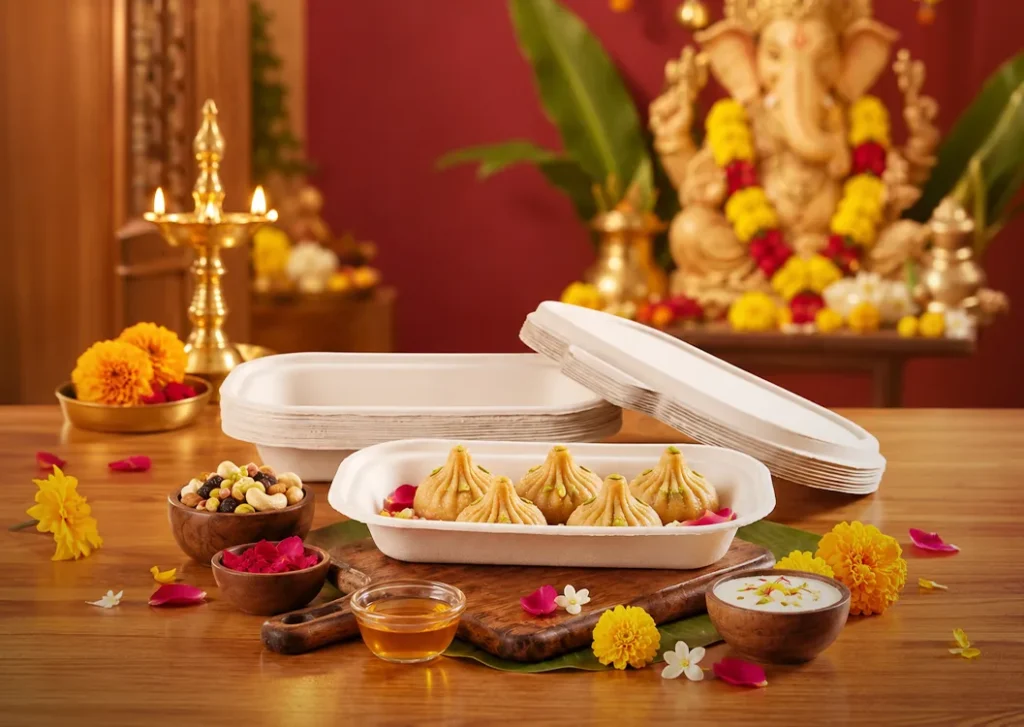
Packaging is where most first-timers get caught. Modak are soft, tall, and stacked badly they arrive as a paste. Steamed modak sweat in a closed plastic box and go soggy within the hour; fried modak stain a paper bag with ghee. What works is a shallow, flat-bottomed container with a lid that does not press down on the tips, one layer deep, with a sheet of butter paper between the box and the sweets. For prasad distribution at a pandal, a small compostable bagasse bowl (Chuk makes these, among a few others) holds two modak and a spoon of panchakhadya, does not leak ghee, and goes into the wet-waste stream with the banana peels and flowers instead of the plastic pile, which matters more in a housing society that is trying to keep its Ganpati green. The general rules for keeping food presentable on the way to the customer are in our takeaway packaging guide, and they all apply to sweets.
What does a pandal need to serve prasad to 500 people a day?
A mid-sized mandal in Mumbai or Pune will see somewhere between a few hundred and a few thousand people at the evening aarti, and every one of them expects prasad. The menu is usually simple: modak or laddoo, panchakhadya, and on the bigger days a full khichdi or pulao meal. The ten-item checklist for the festival covers the puja-side items; on the food side, the checklist is shorter. A separate table for prasad, away from the idol, so the queue does not block darshan. Volunteers with gloves or a serving spoon, never bare hands, which is the first thing the FSSAI BHOG training teaches. Sweets in single-portion bowls rather than a big tray people reach into. Water for hand washing near the counter. A bin for bowls and peels that is emptied every hour, because an overflowing bin next to the prasad table is what visitors remember. And a headcount log per aarti, written down, so the next day’s order to the sweet shop is a number rather than a guess. Mandals that keep that log once usually stop over-ordering the next year. Food waste on the last two days is the other place money leaks, and the fixes in our food waste guide for restaurants apply just as well to a pandal kitchen.
Frequently asked questions
How many modak are offered on Ganesh Chaturthi?
Twenty-one. The count matches the 21 durva blades and 21 names used in the Ganesh puja. Most homes offer 21 ukadiche modak at sthapana on the first day, and many repeat the count on visarjan day.
Which modak is the traditional one?
Ukadiche modak, the steamed rice-flour modak with a coconut and jaggery filling, served with ghee. Every other type on the list is a later variation, mostly from sweet shops.
How long does modak stay fresh?
Steamed modak should be eaten the same day or refrigerated. Mawa-based modak keep one to two days at room temperature. Fried modak keep three to four days, and dry-fruit or til modak keep for a week or two.
What is the difference between naivedya and prasad?
Naivedya is the food offered to the deity during the puja. After the aarti, the same food becomes prasad and is shared with everyone present.
Can a restaurant or sweet shop sell modak without an FSSAI licence?
No. Selling food for money is a food business under FSSAI rules, festival or not, so a valid registration or licence and basic hygiene practice apply. Free prasad at a place of worship is covered by the FSSAI BHOG programme rather than a licence.
In a nutshell
Twenty-one types of modak, one of which, the steamed ukadiche, is the original and goes to Bappa first in a batch of 21. Ganpati 2026 runs from 14 to 25 September, and the naivedya changes daily from modak through puran poli, shrikhand, laddoo, sheera, barfi, kheer, savoury snacks and karanji to the full visarjan thali with a dahi-bhaat shidori for the road. Sweet shops get through the ten days by running three production lines instead of 21 recipes, taking pre-orders by count, and choosing flat, single-layer packaging before day one. Pandals get through it with a separate prasad table, single-portion bowls, hand washing and an hourly bin run.
Serving modak and prasad this Ganpati?
Single-portion compostable bagasse bowls hold two modak and a spoon of panchakhadya without leaking ghee, and go out with the wet waste after the aarti. Browse the range, or try a box first.
Shop disposable bagasse bowls |
Order a sample box |
WhatsApp us for pricing