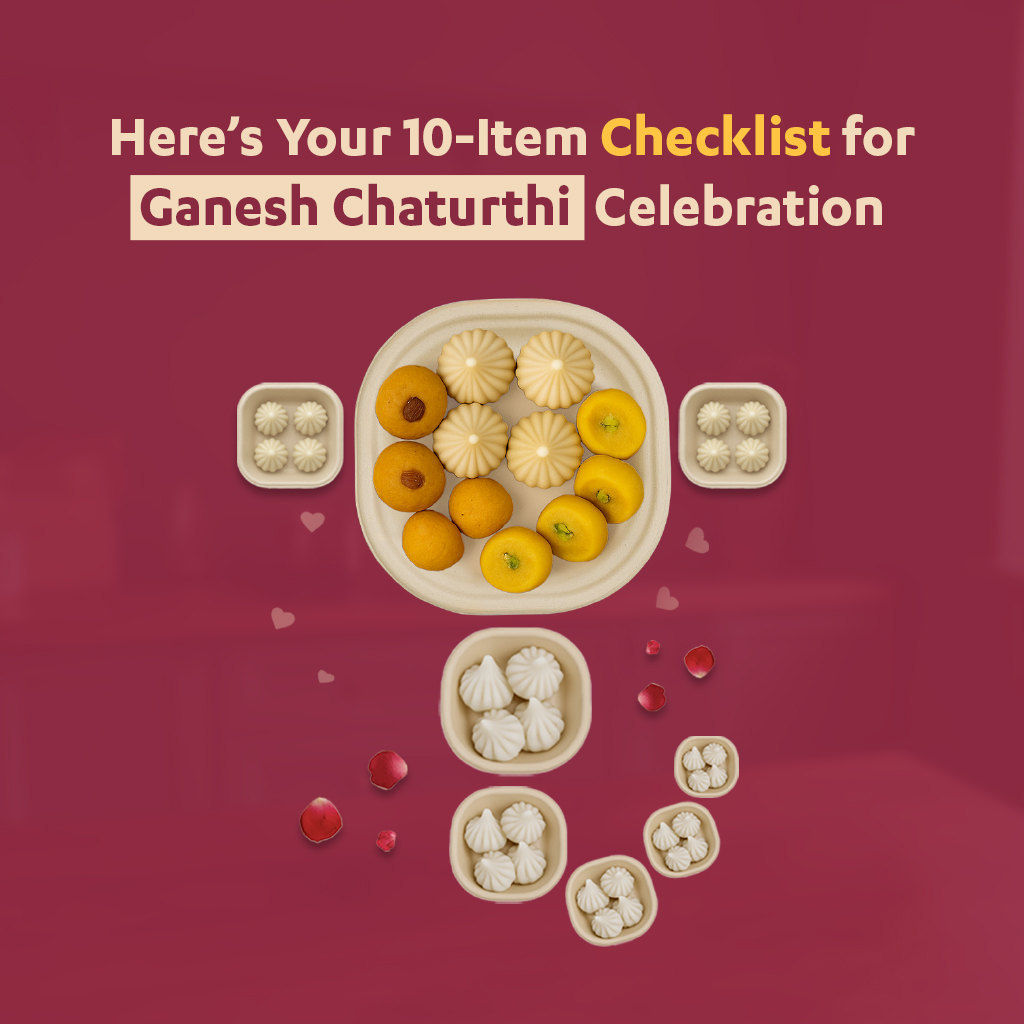
Your complete Ganesh Chaturthi checklist: 10 things every devotee, mandal, and host needs
Ganpati Bappa Morya. Three words that turn entire neighbourhoods into one big family for ten days straight.
Ganesh Chaturthi 2026 begins on Monday, 14 September, with visarjan on Anant Chaturdashi, Wednesday, 23 September. That gives you a ten-day window to plan prasad, decor and eco-friendly serving.
But between booking the idol, coordinating the aarti schedule, sourcing modak ingredients, and figuring out how to serve prasad to a crowd that somehow doubled since last year, things slip through the cracks. The flowers arrive but nobody arranged the rangoli colours. The bhog is ready but there are not enough plates. The mandal decorated the pandal beautifully — and then left a mountain of plastic waste after visarjan.
Whether you are a devotee setting up a home puja, a mandal organizer running a 10-day community celebration, or a host planning a Ganesh Chaturthi gathering for friends and family, a proper checklist saves you from last-minute chaos. More importantly, it helps you make choices that honour what Bappa actually stands for — wisdom, new beginnings, and respect for the natural world.
Here is your complete Ganesh Chaturthi preparation checklist, from the idol to the cleanup.
Key Takeaways
- A structured checklist prevents the last-minute scramble that derails even well-planned Ganesh Chaturthi celebrations
- Eco-friendly idol choices (clay, plantable, paper pulp) dissolve cleanly and some even grow into plants after visarjan
- Natural decorations using marigold, banana leaves, and jute cost less and look more authentic than plastic alternatives
- Compostable disposables made from sugarcane bagasse handle hot modaks, oily prasad, and wet gravies without bending, leaking, or adding to landfill waste
- Planning visarjan and waste segregation in advance is the difference between a clean celebration and a neighbourhood cleanup headache
Why a Ganesh Chaturthi checklist actually matters
Here is the honest truth. Most Ganesh Chaturthi preparations run on memory and good intentions. And most years, something gets missed.
For a home puja, it might be small things — forgetting the organic rangoli colours or realizing you have no containers for distributing prasad to neighbours. For a mandal organizing a public celebration, the stakes are higher. Hundreds of plates, coordinated bhog distribution, aarti booklets, waste management after visarjan — one gap and the whole operation stalls.
A checklist does two things:
- Prevents panic purchases. When you plan ahead, you avoid grabbing whatever is available at the last minute — which is usually plastic.
- Forces better choices. Writing things down gives you time to think about what aligns with the spirit of the festival. Clay idol instead of POP. Marigold instead of plastic flowers. Compostable plates instead of styrofoam.
Think about it this way. Ganpati is the remover of obstacles. Do not let poor planning become the obstacle at his own celebration.
Your complete Ganesh Chaturthi celebration checklist
1. Choose an eco-friendly Ganpati idol
The idol is the heart of every celebration. This is where your choices set the tone for everything that follows.
What to look for:
- Clay idols (shadu mati): The traditional choice. They dissolve cleanly in water during visarjan without releasing toxins. Safe for rivers, lakes, and home immersion buckets.
- Plantable idols: Made from paper pulp, clay, and embedded seeds (tulsi, marigold, neem). After immersion, the seeds sprout into a plant. Your Bappa literally becomes a garden.
- Paper pulp and seed idols: Artisans across cities like Mangaluru and Pune craft these from recycled paper with vegetable, fruit, or tree seeds inside. They decompose in water and the seeds germinate within weeks.
What to avoid:
- Plaster of Paris (POP) idols — they take months to dissolve, release harmful chemicals into water bodies, and are increasingly being restricted by municipal authorities.
- Idols with chemical paints — opt for natural or vegetable-based colours instead.
As a mandal organizer, your idol choice sends a message to the entire community. As a devotee doing a home puja, it is a personal statement about what the festival means to you.
Clay Ganesh idol-making workshops have become popular in many cities. Getting the kids involved in shaping the idol adds a beautiful layer to the celebration.
2. Gather natural decoration materials
Skip the plastic thermocol and synthetic flowers. They look flashy for a day and sit in landfills for decades.
Natural alternatives that look better and cost less:
- Banana leaves for the base and backdrop of the mandap
- Marigold and jasmine garlands for the idol and doorway
- Jute ropes and cloth torans for entrance decoration
- Old sarees or dupattas as colourful backdrops
- Paper lotus garlands made at home with the kids
Some families turn decoration into a group activity — making paper flowers, stringing marigold, arranging the mandap together. It becomes part of the celebration itself rather than just preparation.
If you are a mandal organizer planning a large pandal, talk to local flower vendors early. Bulk marigold and banana leaf orders are cheaper when placed a week in advance rather than the day before.
3. Stock fresh flowers and organic rangoli colours
Nothing welcomes Bappa like a bright rangoli at the doorstep and fresh flowers on the mandap.
For rangoli, go natural:
- Rice flour (the original rangoli base)
- Turmeric powder for yellow
- Beetroot powder for red and pink
- Dried flower petals for texture and colour
- Coloured sand or dal for patterns
These are safer for kids and pets, easier to clean, and — this is the part that matters — they are what rangoli was always made from. Chemical colours are the modern shortcut, not the tradition.
For flowers:
- Marigold strings for the mandap and aarti thali
- Loose jasmine for the evening puja
- Red hibiscus for Ganpati’s garland (traditionally associated with Ganesha)
- Rose petals for rangoli accents
If you are hosting at home, two to three kilograms of loose marigold and a few jasmine strings will cover most decoration needs. For mandals, coordinate with local flower markets for daily fresh deliveries during the 10-day celebration.
4. Prepare reusable puja essentials
Brass thalis. Copper kalash. Mitti diyas. These classics never go out of style — and they should not be replaced with disposable plastic alternatives.
Your puja essentials checklist:
- Brass or steel aarti thali
- Copper kalash with mango leaves and coconut
- Mitti diyas (clay lamps) with cotton wicks
- Incense sticks and dhoop
- Kumkum, chandan, haldi in small steel or ceramic containers
- Durva grass (essential for Ganesh puja)
- Modak mould (if making at home)
- Paan, supari, and coconut for the offering
Avoid: Buying kumkum, chandan, and haldi in single-use plastic packets. Transfer them into small steel containers or ceramic bowls. Looks more thoughtful on the thali and cuts packaging waste.
You can find detailed Ganesh Chaturthi puja vidhi guides online to make sure your ritual setup is complete, but the items above cover the essentials that every home and mandal needs.
5. Sort your prasad and bhog serving plan
This is where most celebrations hit a wall. The food is ready. The devotion is flowing. And then someone asks: what are we serving it on?
The scale of the problem:
- A home puja with 20-30 guests needs plates, bowls, and cups for multiple rounds of prasad and meals.
- A mandal distributing bhog to 200-500 people daily over 10 days needs thousands of serving pieces.
- A Ganesh Chaturthi party with a full meal spread needs containers that can handle everything from steaming modaks to oily puranpoli to wet curries.
Plastic and styrofoam have been the default for years. But they leach chemicals into hot food, they cannot handle oil or moisture without turning soggy, and they sit in landfills long after the festival memories fade.
Compostable disposables solve this cleanly.
Chuk bagasse tableware is made from sugarcane bagasse — the fibrous material left after sugarcane is crushed. Here is why it works for Ganesh Chaturthi:
- Sturdy enough for heavy prasad. Load up the modaks, ladoos, and puri-sabzi. The plate holds its shape.
- Handles hot food safely. Toxin-free and food-grade certified. No chemicals leaching into piping hot halwa or freshly fried modaks.
- Microwave-safe and leak-proof. Oily gravies, wet chutneys, hot chai — nothing seeps through.
- 100% compostable. After the celebration, these plates break down into soil naturally. Just like the flowers on the mandap after visarjan.
Think of it this way. You are offering prasad that was prepared with devotion and purity. The vessel you serve it in should match that intention.
For mandal organizers handling bulk distribution, Chuk offers bulk packs and options through platforms like Swiggy Instamart, Blinkit, and DMart. Plan quantities a week ahead — festival demand spikes fast.
| Serving Need | Recommended Compostable Option | Why It Works |
|---|---|---|
| Modak and ladoo distribution | Compostable round plates (7-inch or 9-inch) | Sturdy enough for multiple sweets, no bending |
| Full bhog meal (puri, sabzi, rice, sweet) | Compartment plates or meal trays | Keeps items separated, handles oil and moisture |
| Chai and thandai for aarti gatherings | Compostable cups (150ml or 250ml) | Heat resistant, no plastic taste |
| Prasad takeaway for neighbours | Clamshell containers with lids | Secure closure, leak-proof, easy to carry |
| Community bhog for 100+ people | Bulk plate and bowl combos | Cost-effective at scale, zero cleanup guilt |
6. Plan traditional sweets and home-cooked meals
Modak is the star. Everything else is supporting cast.
Modak varieties to consider:
- Ukdiche modak — steamed, filled with jaggery and fresh coconut. The classic Maharashtra style.
- Fried modak — crispy outer shell with sweet coconut filling. A crowd favourite.
- Chocolate modak — for the kids (and the adults who pretend they are grabbing one for the kids).
- Dry fruit modak — no-cook version with dates, nuts, and coconut.
Beyond modaks, plan the bhog and daily meals if you are running a 10-day celebration:
- Day 1 (Sthapana): Grand bhog with puri, sabzi, modak, kheer
- Daily aarti meals: Simple prasad plates — poha, upma, sheera, or fruit
- Day 10 (Visarjan): Full meal before the procession
If you are a host planning a Ganesh Chaturthi party, a buffet-style setup with modaks as the centrepiece, a couple of savoury items, and chai works well for most gatherings. Use jaggery and fresh coconut for authentic flavour — guests notice the difference.
7. Prepare music, aarti booklets, and a bhajan playlist
The aarti is the emotional core of Ganesh Chaturthi. Make sure everyone can participate.
What to prepare:
- Printed or digital aarti booklets with Ganesh aarti lyrics (Sukhkarta Dukhharta, Jai Ganesh Deva) so guests can join in
- A Ganpati playlist — mix classic aartis with contemporary devotional tracks. Shankar Mahadevan, Lata Mangeshkar’s renditions, and local Marathi bhajans create the right atmosphere.
- A portable speaker for the mandap area — clear enough for the aarti, not so loud it rattles the neighbours
Some mandals set up small bhajan sessions in the evening where everyone participates. It builds community and gives the 10-day celebration a daily rhythm beyond just the morning and evening aarti.
For home celebrations, a simple Bluetooth speaker with a curated playlist is enough. The point is that nobody is fumbling with their phone trying to find the lyrics mid-aarti.
8. Create a community involvement plan
Ganesh Chaturthi is meant to be shared. Whether you live in an apartment complex, a housing colony, or a standalone home, bringing people together is part of the tradition.
Ideas that work:
- Potluck prasad table: Each family contributes one dish. The variety alone makes it memorable.
- Kids’ activity corner: Clay idol making, rangoli painting, modak shaping — keeps children engaged and teaches them the festival’s meaning.
- Eco-Ganpati idol-making workshop: Organize a community session where everyone shapes their own small clay idol. It becomes a shared experience rather than a solo purchase.
- Bhajan evening: An open-mic style session where anyone can lead a devotional song or share a story about what Ganpati means to them.
- Shared visarjan procession: Coordinating the immersion together as a community is safer, more joyful, and creates less waste than 50 individual trips.
As a mandal organizer, your job is logistics and invitation. As a devotee, your participation makes the difference between a formal event and a genuine gathering.
9. Plan the immersion (visarjan) in advance
Visarjan is the emotional climax of Ganesh Chaturthi — Bappa’s departure until next year. Planning it well ensures the moment stays sacred rather than chaotic.
Your visarjan options:
- Municipal immersion tanks: Most cities now provide temporary tanks specifically for idol immersion. Check your local municipal corporation website or community notice board for locations and timings.
- Home visarjan in a bucket or tub: If you have a small clay idol, immerse it at home in a large bucket or drum. After it dissolves, use the water for your garden plants — the clay enriches the soil.
- Artificial ponds at community centres: Many housing societies set up dedicated ponds. Coordinate with your RWA in advance.
What to carry for visarjan:
- Extra towels and napkins
- A bucket or container if doing home immersion
- Compostable bags for collecting flowers and offerings after immersion
- A plan for what to do with the nirmalya (used flowers and offerings)
The key principle: Use a clay or plantable idol, and immersion becomes a return to nature rather than a pollution event. POP idols can take months to dissolve and release toxins — that is the opposite of what visarjan is meant to symbolize.
If you are a mandal organizer, coordinate the procession route and timing with local authorities early. Late registrations lead to traffic jams and overcrowding at the immersion points.
10. Set up waste segregation and cleanup materials
This is the step that separates a thoughtful celebration from one that leaves a mess.
Set up three bins from day one:
| Bin | What Goes In | Disposal Method |
|---|---|---|
| Compost (green bin) | Flowers, food waste, nirmalya, compostable disposables | Home compost pit or municipal wet waste collection |
| Recyclables (blue bin) | Paper, cardboard, glass bottles | Recycling pickup or local kabadiwala |
| Non-recyclables (red bin) | Any unavoidable plastic, broken items | Municipal dry waste collection |
Practical tips:
- Line bins with newspaper or compostable liners — not plastic bags
- Place bins where people naturally discard items (near the food serving area, at the exit)
- For a 10-day mandal celebration, assign daily cleanup volunteers on a rotation. Calling them “clean-up buddies” makes it feel less like a chore and more like a shared responsibility
- After visarjan, do a thorough sweep of the pandal area and immersion site. Leave no trace.
If you have used compostable disposables throughout the celebration, your compost bin does most of the heavy lifting. Plates, bowls, cups, and containers all go into the green bin along with flowers and food scraps. One stream, one destination — back to the soil.
The complete Ganesh Chaturthi checklist at a glance
| # | Checklist Item | Key Action | Who Needs This Most |
|---|---|---|---|
| 1 | Eco-friendly Ganpati idol | Choose clay, plantable, or paper pulp over POP | Everyone |
| 2 | Natural decoration materials | Source banana leaves, marigold, jute, cloth | Mandal organizers, hosts |
| 3 | Fresh flowers and organic rangoli | Use rice flour, turmeric, petals for rangoli | Everyone |
| 4 | Reusable puja essentials | Brass thali, copper kalash, mitti diyas | Everyone |
| 5 | Prasad and bhog serving plan | Stock compostable plates, bowls, cups, containers | Mandal organizers, party hosts |
| 6 | Traditional sweets and meals | Plan modak varieties and daily bhog menu | Hosts, mandal organizers |
| 7 | Music and aarti booklets | Prepare printed lyrics and a bhajan playlist | Everyone |
| 8 | Community involvement plan | Organize potluck, kids’ corner, group activities | Mandal organizers, RWAs |
| 9 | Visarjan planning | Identify immersion location and logistics | Everyone |
| 10 | Waste segregation and cleanup | Set up three-bin system from day one | Mandal organizers, hosts |
Celebrate Bappa with devotion and responsibility
Ganesh Chaturthi is not just a festival on the calendar. It is ten days of devotion, community, music, food, and the joy of welcoming Bappa into your home or neighbourhood.
Every choice you make during those ten days — from the idol material to the plate the prasad is served on — reflects what the celebration means to you. A clay idol that dissolves cleanly. Flowers that return to the earth. Compostable plates that break down instead of piling up. These are not sacrifices. They are choices that align with what Ganpati himself represents: wisdom, beginnings, and clearing the path forward.
Whether you are a first-time host or a mandal that has been running celebrations for decades, this checklist keeps the focus where it belongs — on Bappa, on community, and on leaving things better than you found them.
Ganpati Bappa Morya.
In a Nutshell
- Start with the idol — clay, plantable, or paper pulp. Your first choice sets the tone for the entire celebration.
- Go natural with decorations. Marigold, banana leaves, and jute look more authentic and cost less than plastic alternatives.
- Plan your prasad serving early. Compostable disposables from sugarcane bagasse handle hot, oily, and wet Indian food without bending, leaking, or adding to landfill waste.
- Music and aarti booklets make the difference between guests watching and guests participating.
- Community involvement turns a family puja into a neighbourhood celebration. Potluck prasad, kids’ activities, and shared visarjan processions create memories.
- Plan visarjan logistics and waste segregation from day one — not as an afterthought on day ten.
- Every sustainable choice you make during Ganesh Chaturthi is a reflection of the festival’s own values. Wisdom. Renewal. Respect for the natural world.
Frequently Asked Questions
When is Ganesh Chaturthi celebrated?
Ganesh Chaturthi falls on the fourth day of Shukla Paksha in the Hindu month of Bhadrapada. This typically places it in August or September each year. The exact date shifts annually because it follows the Hindu lunar calendar. Check the Hindu panchang or your local temple calendar for the specific date each year.
How long does Ganesh Chaturthi last?
The festival runs for either 1.5 days, 5 days, 7 days, or the full 10 days (Anant Chaturdashi), depending on family tradition and regional practice. Most home celebrations run 1.5 to 5 days, while mandal and community celebrations typically go the full 10 days with daily aarti and prasad distribution.
What is the difference between a clay idol and a POP idol for visarjan?
Clay (shadu mati) idols dissolve in water within hours, returning to the earth without releasing toxins. Plaster of Paris (POP) idols take months to break down and release chemicals like calcium sulphate, gypsum, and synthetic paint residues into water bodies. Many municipal authorities now actively encourage or mandate clay idols for cleaner immersion.
Can I do Ganpati visarjan at home?
Yes. If you have a small clay or plantable idol, home visarjan is a practical and respectful option. Immerse the idol in a large bucket, drum, or tub of water. Once it dissolves completely, use the water for your garden. The clay and natural colours enrich the soil. This avoids the crowds and logistical challenges of public immersion points.
What are compostable disposables, and why use them for Ganesh Chaturthi?
Compostable disposables are tableware (plates, bowls, cups, containers) made from natural materials like sugarcane bagasse that break down into compost within 90 to 180 days. Unlike plastic or styrofoam, they do not leach chemicals into food, they handle hot and oily preparations without failing, and they return to the soil after use. For a festival centred on nature and renewal, they are a natural fit.
How many plates and cups should I order for a mandal celebration?
A rough guide: multiply your expected daily footfall by the number of serving occasions per day (morning prasad, afternoon bhog, evening aarti snack), then multiply by the number of celebration days. For a mandal serving 200 people twice daily over 10 days, that is roughly 4,000 plates and an equal number of cups. Order 10-15% extra for spillage and unexpected guests.
What is the best way to dispose of nirmalya (used flowers and offerings) after daily puja?
Collect nirmalya in a separate compostable bag or basket after each puja. Do not mix it with regular garbage. The flowers, durva grass, and food offerings can go directly into a home compost pit or the green (wet waste) bin for municipal collection. If you are running a 10-day celebration, designate a specific nirmalya collection point near the mandap.
How do I organize a community Ganesh Chaturthi celebration in my apartment complex?
Start with a core committee of 4-5 residents. Decide on celebration duration (usually 1.5 or 5 days for apartments), pool funds for the idol, decoration, and prasad, and assign responsibilities — decoration, daily aarti coordination, prasad preparation, cleanup. Share a WhatsApp group for updates. Coordinate with your RWA for pandal space, immersion logistics, and noise guidelines. A shared celebration with potluck contributions keeps costs manageable and builds genuine community spirit.
More festival resources
- Green Ganpati eco-friendly tips
- Janmashtami 56 bhog
- Navratri garba events 2026
- catering business tips
- festival sales strategies
- restaurant operations glossary
Serving a crowd is a volume problem
Serving a crowd is a volume problem. CHUK’s compostable bagasse combo packs cover plates, bowls and cutlery in one order instead of three.
Browse combo packs | Order a sample box | Get pricing on WhatsApp