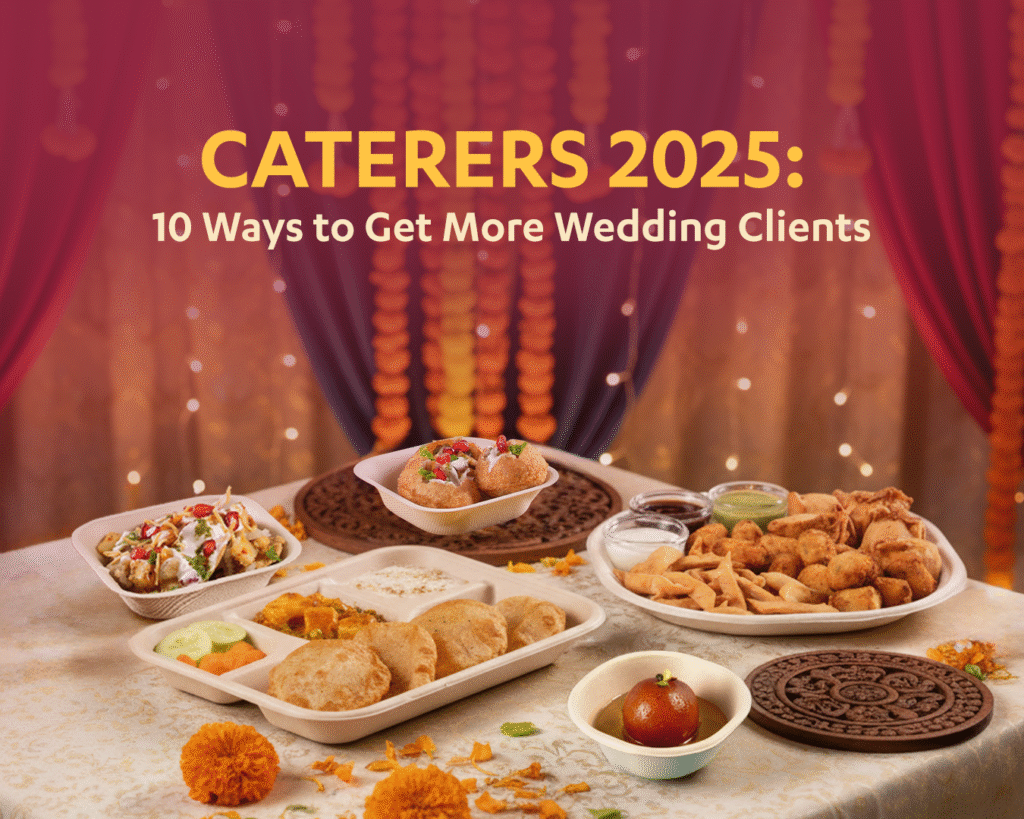
How to Stand Out as a Wedding Caterer: 10 Field-Tested Ways to Get More Clients
The honest truth? Great food alone will not build your catering business.
Updated for 2026. These ten tactics for winning more wedding and event catering clients reflect what is working for Indian caterers heading into the 2026 wedding season.
India hosts over 30 lakh weddings every single year. That is an enormous market. But as a wedding caterer, you already know the other side of that number — thousands of competitors fighting for the same bookings.
The caterers who stay fully booked season after season are not always the ones with the fanciest menus. They are the ones who figured out something most caterers miss: how you present, promote, and partner matters just as much as what you cook.
This guide breaks down 10 practical, no-fluff strategies to help you get more wedding catering clients. No generic advice. No “just be the best” nonsense. Just things that actually work on the ground.
Wedding catering disposables: the quick answer
For wedding catering at Indian scale, disposables have to survive the menu, not just look good next to it: sugarcane bagasse plates and bowls hold oily gravies and live-counter servings without bending or leaking, are compostable after use, and remove the wash-station logistics that rented crockery drags in. That is why serving setup is tactic number one below – what guests eat from shapes how they remember the food.
1. Upgrade Your Serving Setup — Guests Judge You Before They Taste the Food
Here is what they do not tell you about wedding catering: guests form an opinion about your food before they take a single bite.
The buffet setup, the plates, the serving stations — that is your first impression. And in a market where couples are increasingly sharing wedding photos and reels online, your presentation is essentially free advertising (or free anti-advertising, if it looks sloppy).
What works right now:
- Compostable disposables made from bagasse — they look premium, feel sturdy, and photograph beautifully against any decor theme
- Clean, consistent color schemes across plates, bowls, and cutlery
- Matching serveware that complements the wedding’s aesthetic
The days of flimsy white plastic plates at a wedding buffet are fading fast. Couples actively search for caterers who use compostable disposable plates because it signals that you pay attention to detail.
The business case: Switching to compostable disposables does not just look better. It gives you a genuine talking point that separates you from every other caterer quoting on the same event.
2. Make Your Buffet Look Like a Five-Star Spread (Without the Five-Star Budget)
You do not need a massive budget to make your buffet look grand. You need systems and consistency.
Here is a simple framework that works every time:
| Element | Budget Move | Premium Impact |
|---|---|---|
| Table linen | Neutral whites/creams (bulk buy) | Clean, elegant base |
| Dish labels | Printed cards on small stands | Professional, organized |
| Lighting | Warm LED string lights | Instant ambiance upgrade |
| Serveware | Compostable plates and bowls in earth tones | Modern, cohesive look |
| Station layout | Organized flow with clear spacing | Reduces crowding, looks intentional |
The caterers who nail buffet presentation follow three rules:
- Consistent color palette — do not mix random serveware
- Clear dish labeling — every single dish gets a name card
- Intentional spacing — crowded buffets look chaotic, spaced ones look curated
As a caterer, your buffet is your stage. Invest 30 minutes in layout planning before each event. That small effort will get you more phone calls than any ad.
3. Add One Surprise Menu Item Every Season
The honest truth about wedding menus: most caterers serve nearly identical food. Same paneer dishes, same starters, same dessert counter.
The ones who get talked about? They add one unexpected element that gives guests something to remember (and post about).
Ideas that are working right now:
- Regional street food counters — chaat stations, dosa bars, or momos live counters bring nostalgia and excitement
- Millet-based starters — health-conscious options that are trending hard across Indian metros
- Live cooking stations — pasta, stir-fry, or dosa counters where guests watch the food being made
- Fusion twists — Indian-Italian, Indian-Japanese, or Indo-Mexican small bites that become conversation starters
You do not need to overhaul your entire menu. Add one new item per season, test it at a couple of events, and if guests respond well, make it a signature offering.
The caterers who never update their menus blend into the background. The ones who bring even one surprise element get remembered — and recommended.
4. Be Ready Before the First Guest Arrives
This sounds obvious. It is not.
A shocking number of catering setups are still being assembled when guests start arriving. Tables half-dressed, staff scrambling, food containers still sealed. As a wedding caterer, the moment even one guest sees your setup incomplete, your professional image takes a hit.
What “being ready” actually looks like:
- Arrive 2+ hours before the event — not 1 hour, not 90 minutes
- Test all heating and cooling equipment before plating
- Brief your staff on roles — who serves what, who handles refills, who manages the dessert counter
- Have backup supplies ready — extra compostable plates, bowls, cutlery, and napkins packed separately
Wedding planners and event coordinators notice who is set up first and who is rushing. That observation directly influences whether they recommend you for future events.
The rule is simple: if the first guest can walk up to a fully set, beautifully lit, impeccably organized buffet — you have already won half the battle.
5. Document Everything and Post It Online
As a caterer, your Instagram feed is your portfolio. Not your printed brochure, not your WhatsApp status — your consistently updated social media presence.
Here is the reality: the majority of couples today discover and shortlist vendors through Instagram, Pinterest, and Google searches. If your catering work is not visible online, you are invisible to a massive chunk of potential clients.
What to document and post:
- Buffet setup shots — wide angles showing the full spread
- Close-up food photos — especially plated dishes on your compostable serving bowls
- Behind-the-scenes clips — your team prepping, the kitchen in action
- Guest reactions — candid moments of people enjoying your food (with permission)
- Event recap reels — 15-30 second videos showing setup to service
Posting Strategy That Actually Works
- Use location tags for every city you serve in
- Tag the venue, wedding planner, photographer, and decorator in every post
- Post consistently — even two posts a week beats sporadic posting
- Use relevant hashtags like #WeddingCatering, #CateringSetup, #IndianWeddingFood
Cross-promotion tip: Collaborate with freelance photographers and makeup artists at the same event. Tag each other. Their followers become your potential clients, and vice versa.
6. Hygiene Is Not Optional — It Is Your Brand
Here is something caterers often overlook: hygiene is the fastest way to either build or destroy your reputation.
Couples and their families notice. Wedding planners notice. Event photographers capture it in the background of every shot. And post-pandemic, the expectations around cleanliness in food service have permanently shifted upward.
Non-negotiable hygiene standards for wedding catering:
- Clean, matching uniforms for all serving staff (not just the head chef)
- Gloves and hair nets — visible and consistent
- Sanitizing stations near the buffet area
- Covered serving setups — lids, cloches, or sneeze guards on every dish
- Separate waste stations — clearly marked bins for compostable waste and non-compostable items
When a wedding planner is deciding which caterer to recommend for a premium event, the caterer with visible hygiene standards wins. Every time.
Think about it this way: your hygiene practices are not a cost center. They are your most visible quality signal.
7. Build Relationships with Wedding Planners, Photographers, and MUAs
Want to know where most consistently booked caterers get their leads? Not from ads. Not from websites. From referrals within the wedding vendor network.
The honest truth is that wedding planners, photographers, and makeup artists meet the couple long before the caterer does. They are asked for recommendations. If you are not on their list, you are not in the conversation.
How to build genuine vendor relationships:
- Introduce yourself at events — not with a sales pitch, but with genuine appreciation for their work
- Share their work on your social media — tag them, credit them, amplify their brand
- Offer referral incentives — a commission structure or special package pricing for clients they send your way
- Send a thank-you after events — a brief message or small gesture goes a long way
- Create a vendor WhatsApp group — share leads, coordinate logistics, and stay top of mind
In cities like Delhi, Mumbai, Bangalore, and Hyderabad, a significant portion of wedding catering orders now come through vendor networks rather than direct inquiries. As a caterer, your network is your net worth.
8. Collect Reviews Like Your Business Depends on It (Because It Does)
Here is the math that most caterers ignore: the vast majority of couples check reviews before booking any vendor.
That means a caterer with 50 genuine Google reviews and a 4.5-star rating will consistently beat a caterer with better food but zero online presence. Fair? Maybe not. Reality? Absolutely.
Your review collection system should look like this:
- Ask for a review within 48 hours of every event — while the experience is fresh
- Make it easy — send a direct Google review link via WhatsApp
- Post positive reviews on your Instagram stories, Google Business profile, and website
- Respond to every review — positive and negative — with professionalism
- Create a testimonial highlight on your Instagram profile
Where Reviews Matter Most
| Platform | Why It Matters |
|---|---|
| Google Business | Shows up in local search results when couples search “wedding caterer near me” |
| Social proof in the feed where couples actively browse vendors | |
| WeddingWire / WedMeGood | Wedding-specific platforms where serious couples compare vendors |
| WhatsApp Status | Quick, visible social proof for your existing contact network |
A single heartfelt testimonial from a happy client is more convincing than any advertisement you could run. Start collecting them systematically.
9. Keep Innovating — One New Thing Every Season
The catering business rewards adaptability. What impressed clients three seasons ago might feel stale today.
The most successful caterers treat every wedding season as an opportunity to test something new:
- A new serving style — live counters, grazing tables, or plated service for smaller events
- A new presentation element — custom-branded compostable food containers with the couple’s initials or wedding hashtag
- A new menu category — a dedicated healthy options counter, or a regional cuisine spotlight
- A new service add-on — morning-after breakfast service, late-night snack stations, or pre-wedding menu tastings
- A sustainability upgrade — switching entirely to compostable disposables and promoting it as part of your brand story
Here is the thing: you do not need to reinvent your entire operation every season. One meaningful addition or improvement per season keeps your brand fresh and gives you new content for your social media.
The caterers who stay stagnant lose clients to the ones who keep evolving. It really is that straightforward.
10. Use Compostable Disposables as a Competitive Differentiator
Most caterers treat serveware as an afterthought. That is a missed opportunity.
Here is what the wedding market looks like right now: couples, families, and planners are actively seeking vendors who align with sustainability values. Not because of guilt — because it is becoming a status marker for premium weddings.
How compostable disposables give you a competitive edge:
- Visual appeal — bagasse-based plates and bowls have a natural, earthy texture that photographs well and fits modern wedding aesthetics
- Strength and functionality — leak-proof, heat-resistant, and sturdy enough for heavy Indian dishes like curries, biryanis, and gravies
- Conversation starter — guests notice and comment on them, which reflects well on both you and the couple
- Waste management — compostable disposables simplify post-event cleanup and reduce the waste footprint of the wedding
- Marketing angle — “We use 100% compostable serveware” is a powerful line on your brochure, website, and social media bios
As a wedding caterer, your serveware choice is visible to every single guest. Making a deliberate choice — and communicating it — positions you as a forward-thinking, detail-oriented professional.
Explore the full range of compostable plates, bowls, and food containers to find options that match your typical event scale.
In a Nutshell
Getting more wedding catering clients is not about one magic trick. It is about stacking small, smart decisions that compound over time.
Here is your cheat sheet:
- Presentation first — your buffet setup and serveware are your first impression; invest in compostable disposables that look premium and signal quality
- Professionalism always — arrive early, brief your team, have backup supplies, and maintain impeccable hygiene standards
- Visibility online — document your work, post consistently, and collaborate with other wedding vendors for cross-promotion
- Relationships over ads — build genuine connections with wedding planners, photographers, and MUAs; referrals beat paid marketing
- Reviews are currency — systematically collect and showcase testimonials on Google, Instagram, and wedding platforms
- Stay fresh — add one new element to your offering every season; stagnation is the silent killer of catering businesses
- Sustainability sells — framing your compostable disposable use as a deliberate brand choice gives you a genuine differentiator
The caterers who combine great food with smart presentation, strong networks, and consistent visibility are the ones who stay booked. That is the honest truth.
Frequently Asked Questions
How can I get more wedding catering bookings without spending on ads?
The most reliable free channel is building relationships with wedding planners, photographers, and makeup artists. These professionals are asked for caterer recommendations constantly. Pair that with a strong Instagram presence and consistent Google reviews, and you create a referral engine that generates leads without ad spend.
What type of plates should I use for wedding buffet catering?
Compostable disposable plates made from bagasse are increasingly preferred for wedding catering. They are sturdy enough for heavy Indian dishes, look premium in event settings, and align with the growing demand for sustainable wedding practices. They also simplify post-event cleanup significantly compared to traditional options.
How do I make my buffet setup look premium on a limited budget?
Focus on three things: consistent color scheme (matching serveware and linen), clear dish labeling (printed name cards on small stands), and intentional spacing (avoid overcrowding the buffet table). Adding warm LED lighting and using earth-toned compostable plates and bowls creates an elegant look without a massive investment.
Is it worth switching to compostable disposables for catering?
Yes, and the reason is more practical than ideological. Compostable disposables from brands like Chuk are leak-proof, heat-resistant, and visually appealing. They give you a genuine differentiator when pitching to couples who care about sustainability — which is a growing segment of the wedding market. Plus, waste management after the event becomes significantly easier.
How important are online reviews for a catering business?
Extremely important. The majority of couples today check online reviews before booking any wedding vendor. A caterer with a strong Google Business profile and visible testimonials on Instagram and wedding platforms like WedMeGood will consistently win bookings over competitors with no online presence, regardless of how good the food is.
What food trends should wedding caterers focus on?
Live cooking stations, regional street food counters, millet-based starters, and Indian fusion dishes are consistently popular. The key is not to overhaul your entire menu but to add one standout element each season. A chaat counter, a dosa bar, or a fusion small-bites station gives guests something memorable to talk about.
How do I build a referral network with other wedding vendors?
Start by genuinely engaging with their work — share their posts, tag them in your event photos, and introduce yourself at events without a sales pitch. Offer referral commissions or special pricing for clients they send your way. Over time, create a vendor WhatsApp group to share leads and coordinate logistics. Consistency in these small gestures builds trust and keeps you on their recommendation list.
Internal link suggestions:
– Disposable Plates for Weddings and Events
– Compostable Bowls for Food Service
– Food Containers for Catering
– Wedding Season with Eco-Friendly Products
– How to Identify the Best Disposable Plates
– Tips for Hosting Eco-Friendly Events with Compostable Tableware