An Onam sadya is a traditional Kerala vegetarian feast served on a banana leaf, with Kerala Tourism noting that the spread can reach 28 dishes. For restaurants, the winning play is simple: fix the menu early, price it per leaf, and build a kitchen line that can plate the same spread at volume without chaos.
This year, Thiruvonam falls on Wednesday, 26 August 2026, with Kerala’s official public-holiday calendar also listing First Onam on 25 August, Third Onam on 27 August and Fourth Onam on 28 August. That gives restaurants several high-demand days to plan around.
Below is exactly what to serve, what to charge, and how to get a full leaf to a customer’s table or doorstep still intact.
What exactly is an Onam sadya, and why should your restaurant care?
A sadya, meaning “banquet”, is the traditional vegetarian feast of Kerala. It is served on a plantain leaf, with rice, curries, savouries, pickles and desserts arranged in a specific order. Kerala Tourism notes that the spread can go up to 28 dishes, while another Kerala Tourism guide describes Onasadya as a feast with around 40 vegetarian dishes. The exact count therefore varies by region, household and occasion rather than following one universal number.
The leaf is traditionally placed with its tapering end pointing to the diner’s left, and the dishes have defined positions. Rice is placed on the lower part of the leaf, followed by parippu with ghee, sambar and other curries, with payasams served towards the end of the meal.
For a restaurant, the appeal is volume with a fixed menu. Every customer eats the same broad spread, so your prep, costing and plating become more predictable than à la carte service.
The catch is scale. A sadya is dozens of small preparations served in a strict order, and demand lands in a concentrated lunch window. Get the mise en place and plating line right and you turn tables faster than on a normal day. Get it wrong and one slow leaf backs up the whole floor. The same discipline that makes Eid al-Adha catering or a big festival mithai push profitable applies here. It is a production problem, not a recipe problem.
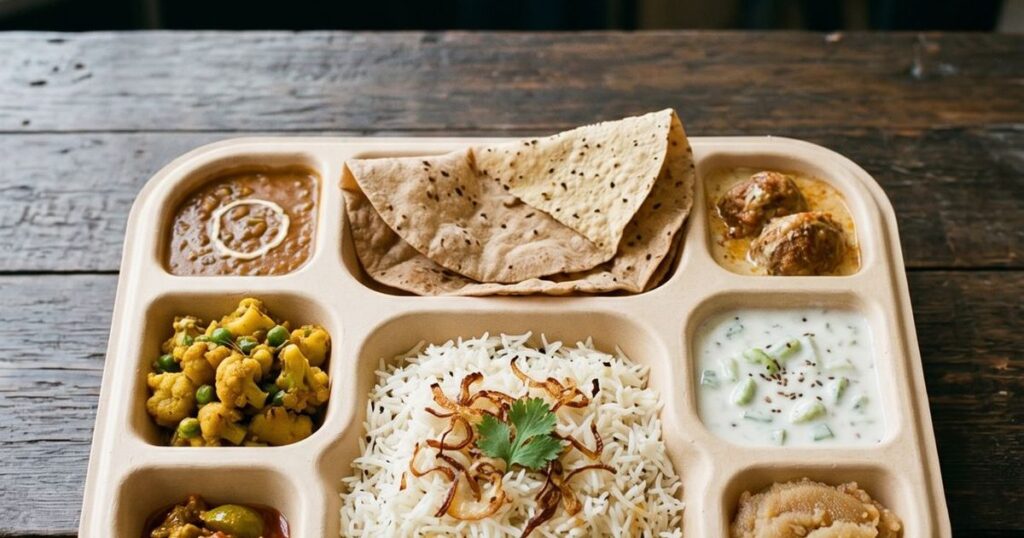
A compartment meal tray keeps a multi-dish sadya organised, on the same logic as a banana leaf.
How many dishes are in an Onam sadya, and which ones actually sell?
You do not need to cook every dish associated with a traditional sadya to build a restaurant-friendly menu. You need the anchors right and the accompaniments generous.
Kerala Tourism lists core sadya components including parippu, sambar, kaalan, rasam, moru, aviyal, thoran, erissery, olan, kichadi, pachadi, kootu curry, pickles, banana chips, sharkara varatti and payasams. The number of payasams can vary from one or two to more.
Here is the practical structure most restaurants can build a sadya menu around:
| Role on the leaf | Core dishes | Kitchen note |
| Rice + first course | Matta/parboiled rice, parippu (dal) with ghee, sambar | Rice is served more than once; parippu-ghee comes first |
| Signature curries | Avial, olan, kaalan, erissery, pulissery | Avial is a key dish customers judge you on, so do not cut it |
| Thoran + sides | Cabbage/beans thoran, kichadi, pachadi | High-yield sides help fill the leaf visually |
| Pickles + crunch | Inji puli, mango/lime pickle, pappadam, banana chips, sharkara upperi | Small portions add variety and perceived value |
| Finish | Rasam, moru (buttermilk), 1–2 payasams | Payasam is a key part of the traditional finish |
A tight, well-executed 20–22 dish leaf can be a better restaurant operation than attempting the full traditional spread. If you are new to the format, start there and add harder-to-execute curries in future editions.
For any Kerala terms your team is unsure of, the restaurant operations glossary is a quick reference during briefing.
What is the correct Onam sadya serving order?
Serving order matters. Malayali guests notice immediately if it is wrong, and a fixed sequence is also what makes a plating line fast.
Kerala Tourism describes a defined sequence for the Sadya, beginning with the items arranged around the leaf and followed by rice, parippu, sambar and the subsequent courses. The tapering end of the leaf traditionally points to the diner’s left.
The practical restaurant flow is:
- Salt, pickles, inji puli and sharkara upperi along the top edge
- Banana chips, pappadam and the dry sides such as thoran
- Rice mounded in the centre, with parippu and ghee served first
- Sambar followed by wet curries such as avial, olan and kaalan
- A second serving of rice with rasam, followed by moru
- Payasam last, served in a small bowl or leaf cup
Print this on a laminated card for the pass. A three-person plating line following a fixed order will out-serve a five-person free-for-all every single time.
How should you handle Onam sadya meal pricing?
Price the sadya per leaf as a fixed thali, never à la carte. That is the whole point of the format.
Most restaurants can run three tiers: a standard sadya, a premium one with extra payasam or curries, and a corporate or bulk rate for offices and associations.
Cost it the way you would any fixed menu. Total your ingredient cost across all dishes, divide by covers, and hold food cost around 30–35% so labour and the one-day surge in prep still leave a real margin.
Because the menu is fixed, you can lock in vegetable and rice prices with your supplier ahead of service and know your approximate plate cost before orders come in, which is much harder to achieve with normal à la carte service. A disciplined approach to managing food costs without cutting quality is what separates a sadya that prints money from one that just prints tickets.
Two pricing levers are specific to a sadya. The pickles, pappadam and chips are relatively low-cost additions that increase perceived value, while payasam is the dish people remember, so it is worth protecting its quality. Bundle a takeaway sadya box at a small premium over dine-in to cover packaging and protect your delivery margin.
How do you run Onam feast catering and bulk orders?
Onam feast catering is where the fixed-menu format can really work for restaurants. Offices, apartment associations and families can order sadyas in bulk around the 25–28 August Onam period, which corresponds with Kerala’s First Onam, Thiruvonam, Third Onam and Fourth Onam public holidays.
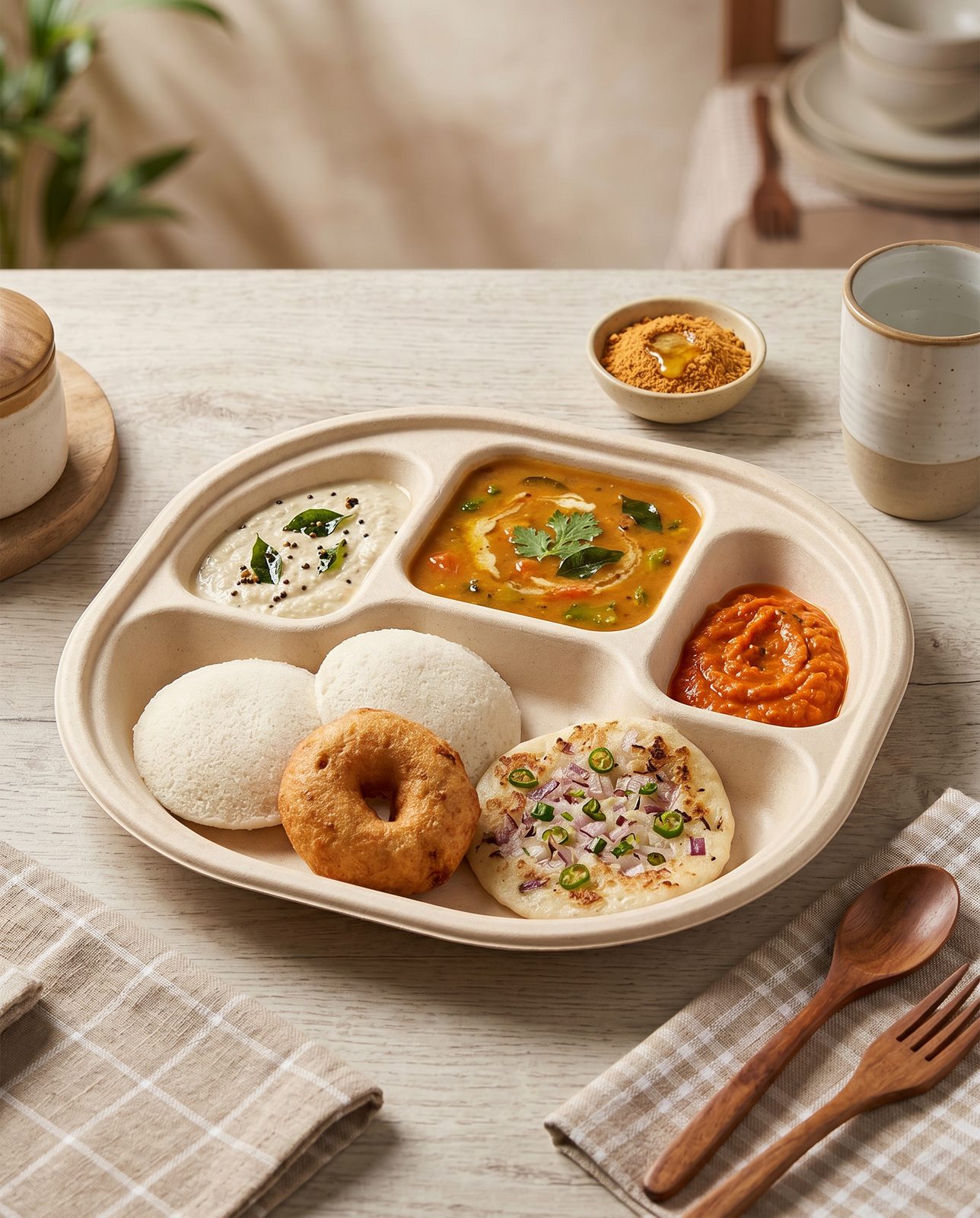
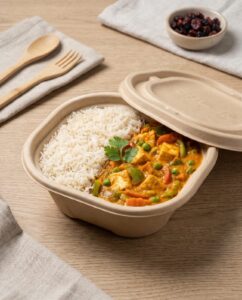
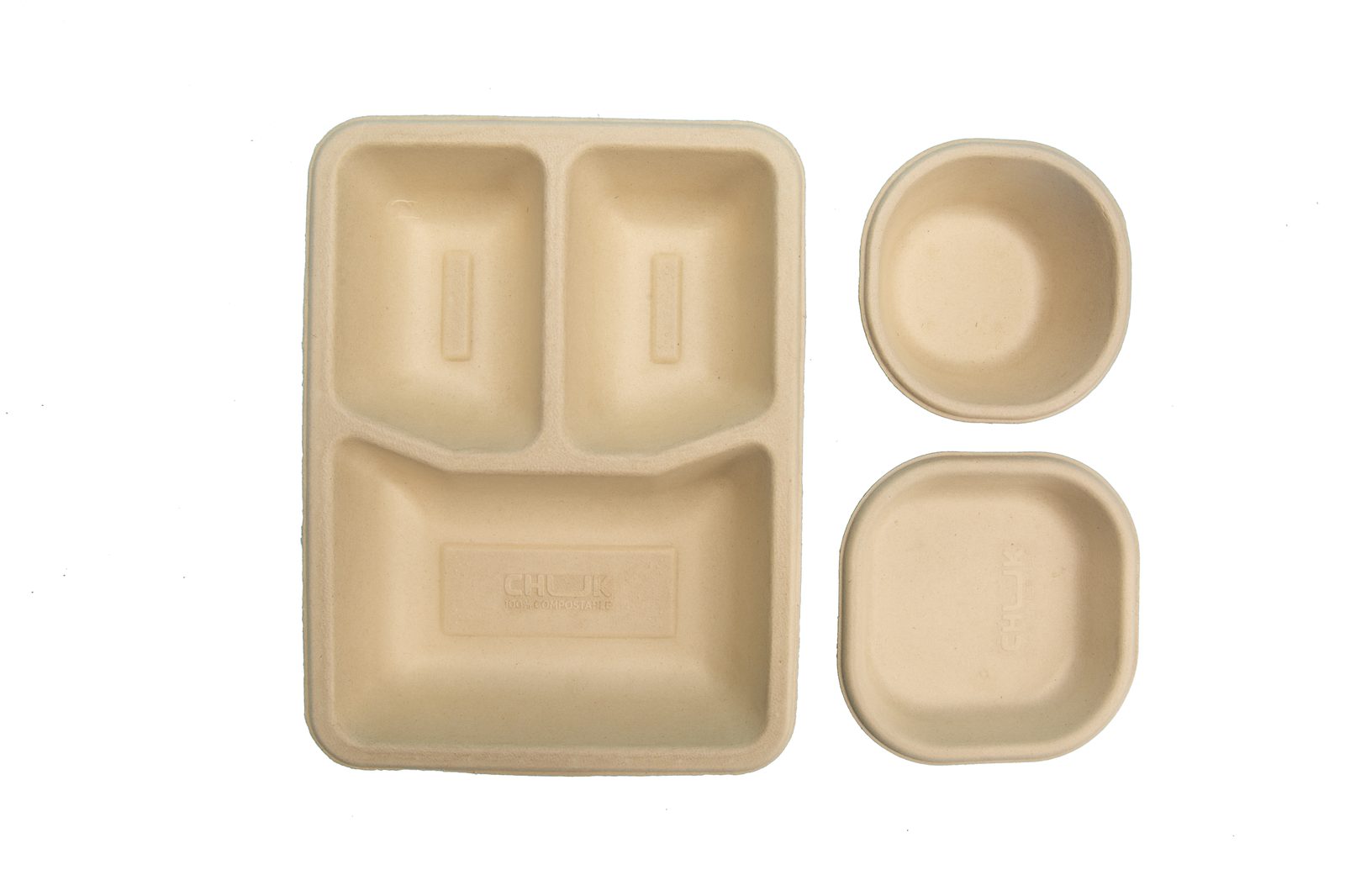
The operational risk is transport. A sadya is a wet, multi-component meal, and a banana leaf alone will not survive a delivery bag. Most caterers plate the full spread into compartment meal trays so the sambar does not drown the thoran and the payasam stays put.
A few brands, Chuk among them, make compostable bagasse meal trays designed for food-service use. If you are using compostable packaging, make sure the specific product’s performance and disposal claims are supported by the manufacturer’s specifications and local waste-management infrastructure.
For bulk, take orders and payment 3–4 days ahead so your prep is known, cap the number of leaves per slot, and stagger pickup or delivery times. If you are pushing sadya boxes through delivery apps, the same packaging and listing discipline from our takeaway food packaging guide applies.
Presentation on arrival is what earns the repeat order next Onam.
What goes on an Onam special menu beyond the sadya?
Not every guest wants a full traditional spread, so an Onam special menu should also carry lighter options.
A mini-sadya — rice, four curries and one payasam — works well, as does a payasam-only takeaway. Ada pradhaman and palada are traditional payasam options, while a Kerala snack box of banana chips and sharkara upperi is easy to gift.
These smaller SKUs capture the customer who is celebrating but not hosting, and they can move through delivery when the dine-in floor is full. If your kitchen also ran a Janmashtami vrat menu earlier this month, you already know how a well-scoped festival SKU can beat a sprawling one.
Food safety deserves a line of its own. A bulk vegetarian spread cooked in the morning and held for a lunch service is exactly the scenario that requires disciplined temperature control and food-safety practices. Keep hot food at the temperatures required by applicable food-safety guidance, minimise time in the temperature danger zone, and make sure your paperwork is current.
Our FSSAI licence renewal checklist and the FSSAI guidance both cover the basics that matter most when volume is high.
Frequently asked questions about Onam sadya for restaurants
How many dishes should a restaurant sadya have?
There is no single fixed number. Kerala Tourism says a Sadya can go up to 28 dishes, while another Kerala Tourism guide describes an Onasadya with around 40 vegetarian dishes. For restaurant operations, a focused 20–22 dish menu can be easier to execute consistently.
When is Onam 2026?
Thiruvonam, the main Onam day, is Wednesday, 26 August 2026. Kerala’s official 2026 public-holiday list also marks First Onam on 25 August, Third Onam on 27 August and Fourth Onam on 28 August.
How do I price an Onam sadya meal?
Price it per leaf as a fixed thali, hold food cost around 30–35%, and offer standard, premium and bulk tiers. Add a small premium for takeaway boxes to cover packaging without eroding your delivery margin.
What is the best packaging for a takeaway Onam sadya?
Use compartment meal trays that keep wet curries separate and can withstand transport. Compostable bagasse trays can be considered where their specifications suit the food being packed and appropriate composting/disposal facilities are available.
In a Nutshell
An Onam sadya is a fixed-menu, high-volume opportunity that rewards preparation over improvisation. Lock a 20–22 dish operational menu early, price it per cover with a healthy margin, run a fixed-order plating line, and pack bulk and takeaway orders in sturdy compartment trays. Do that and Onam can become one of your most profitable festival services instead of your most stressful one.
Serving sadya this Onam? Pack it so it travels as well as it tastes.
Chuk’s compostable bagasse meal trays are designed for food-service applications where multiple dishes need to travel together. Browse the range, order a sample box, or message us for bulk festival pricing.
Explore compostable meal trays |
Order a sample box |
WhatsApp us for pricing