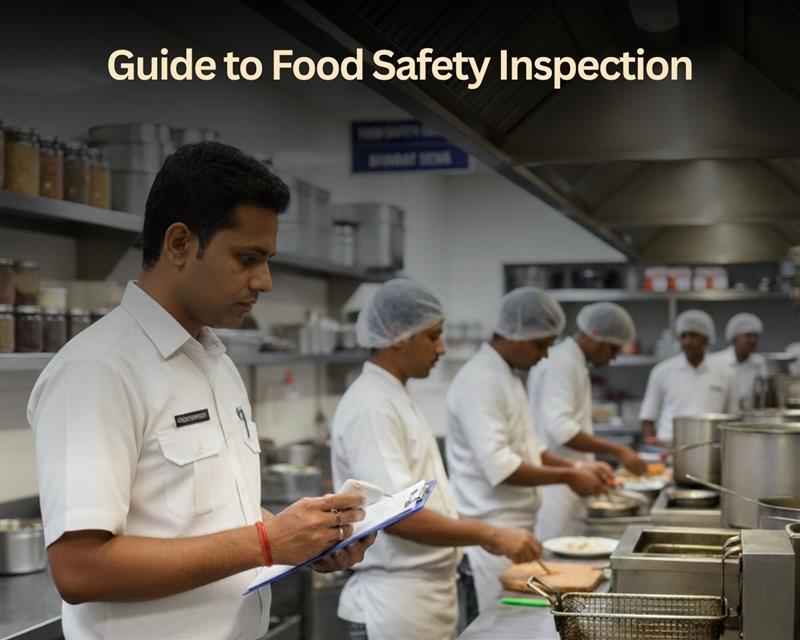
What Happens During a Surprise Food Safety Inspection? The Honest Restaurant Owner’s Guide
You are slammed on a Friday night. Orders are flying, the kitchen is at full tilt, your delivery queue is stacking up. And then someone walks through the door who is definitely not a customer.
They flash an ID card. They want to see your kitchen. Right now.
That is a surprise food safety inspection. And the honest truth? Most restaurant owners are not ready for it. Not because they run dirty kitchens, but because nobody ever told them exactly what happens during one of these visits, step by step.
As a restaurant owner, you deserve to know what is coming. So here is the real breakdown — no sugarcoating, no legal jargon, just what actually happens and what you can do about it starting today.
Who Shows Up and Why They Are There
Every surprise food safety inspection in India is conducted by authorised officers under the Food Safety and Standards Authority of India (FSSAI). These are not random visitors. They carry official identification, and they have the legal authority to walk into any food establishment without prior notice.
Why no notice? Because the whole point is to see your kitchen as it operates every day — not a version you cleaned up overnight after getting a tip-off.
Here is what they don’t tell you: most FSSAI inspections are triggered by one of three things:
- Routine surveillance — your area is simply on the schedule
- Consumer complaints — someone reported a hygiene issue
- Follow-up checks — a previous inspection flagged something that needs re-verification
The inspection is not personal. It is about public health accountability. But understanding the trigger helps you stay one step ahead.
The First 5 Minutes: How It Starts
When the officer arrives, here is the sequence:
- They present official identification and state the purpose of the visit
- They record your outlet’s basic details — name, FSSAI licence number, address
- They request a senior person to accompany them through the inspection
This first interaction matters more than you think. Officers are human. If you are calm, transparent, and cooperative, the entire inspection tends to go smoother. Panic, hostility, or attempts to delay only raise red flags.
Pro tip: Assign one senior kitchen manager or supervisor as your “inspection point person.” This person should know where every document is stored and be able to walk the officer through your operations without fumbling.
The Documentation Check: Where Most Restaurants Stumble
Here is the honest truth that catches many restaurant owners off-guard: the most common reason for failing an FSSAI inspection is not a dirty kitchen. It is missing paperwork.
Officers will ask for:
- Valid FSSAI licence — visibly displayed at the premises
- Cleaning and sanitation schedules — documented, dated, signed
- Pest control records — regular service reports from a licensed provider
- Staff medical certificates — health clearances for all food handlers
- Water testing reports — especially if you use borewells or tanker water
- Supplier invoices and traceability records — proof of where your raw materials come from
Documentation Readiness Checklist
| Document | Frequency | Common Mistake |
|---|---|---|
| FSSAI Licence Display | Permanent | Expired licence still on wall |
| Cleaning Schedule | Daily log | Missing signatures or gaps in dates |
| Pest Control Records | Monthly/Quarterly | Expired service contract |
| Staff Medical Certificates | Annual | New hires not covered |
| Water Testing Reports | Quarterly | No record of testing at all |
| Supplier Invoices | Ongoing | Invoices not matched to stock |
Keep a dedicated “inspection folder” near your front desk or manager station. When the officer asks for documentation, you should be able to hand it over within two minutes. That kind of preparedness sends a strong signal.
The Kitchen Walkthrough: What Inspectors Actually Look At
This is the part that makes most restaurant owners nervous. The kitchen hygiene inspection is thorough, detailed, and covers areas you might not expect.
Surfaces and Structure
Officers examine:
- Floors, walls, and ceilings — looking for cracks, grease buildup, peeling paint, or signs of water damage
- Work surfaces and prep stations — must be clean, non-porous, and free of contamination
- Exhaust and ventilation systems — adequate airflow is a food safety requirement, not optional
- Drainage — blocked or slow drains are a serious red flag
Equipment Condition
Every piece of kitchen equipment is fair game:
- Refrigerators and freezers — correct temperature ranges, no frost buildup, proper door seals
- Cutting boards — separate boards for raw meat, vegetables, and cooked food (colour-coded is ideal)
- Utensils and cookware — clean, undamaged, stored properly
- Grinders, mixers, and processors — checked for residue buildup in hard-to-reach parts
Storage Practices
This is where cross-contamination risks get flagged. Officers pay close attention to:
- Raw and cooked food separation — stored on different shelves, clearly labelled
- FIFO (First In, First Out) — older stock should be in front, newer stock behind
- Dry storage — grains, spices, and dry goods must be in sealed, labelled containers off the floor
- Temperature logs — regular monitoring of refrigerator and freezer temperatures
What they don’t tell you is that a single unlabelled container of raw chicken stored above ready-to-eat food can result in a serious observation — even if your kitchen is otherwise spotless.
Staff Behaviour Under the Microscope
Inspectors do not just look at your kitchen. They watch your people.
Here is what gets observed:
- Uniforms and protective clothing — clean aprons, hair nets or caps, closed-toe footwear
- Handwashing habits — do staff wash hands before handling food, after touching raw items, after breaks?
- Glove usage — particularly for handling ready-to-eat food items
- General awareness — staff may be asked basic questions about food handling, storage temperatures, or cleaning routines
This last point catches many restaurants off-guard. If your line cook cannot explain why raw meat goes on the bottom shelf, it signals a training gap that the inspector will note down.
Regular staff training sessions — even brief 15-minute refreshers once a month — dramatically improve how your team performs during an inspection. The investment in training pays for itself many times over.
Serving and Packaging: The Area Most Restaurants Overlook
Here is something that does not get enough attention: your serving and packaging materials are inspected too.
Officers evaluate whether the plates, bowls, cutlery, and takeaway containers you use are safe for food contact. This is especially critical for hot and oily food, where cheap or non-food-grade packaging can leach harmful substances.
What does this mean for you as a restaurant owner?
- Avoid unbranded, ungraded disposable containers — they may not meet food contact safety standards
- Compostable disposables made from natural materials like sugarcane bagasse are inherently food-safe and chemical-free, eliminating this risk entirely
- Keep packaging supplier certifications on file — if an inspector asks where your containers come from, you should have an answer
Switching to compostable disposables is not just a sustainability play. It is a practical compliance move. When your takeaway packaging is plant-based and certified food-safe, that entire section of the inspection becomes a non-issue. That is one less thing to worry about on the day that matters.
For more on how packaging choices affect food safety, check out our guide on choosing the right disposable containers for food delivery.
Sample Collection: When Things Get Serious
In some inspections, officers will collect samples of food, water, or ice. This usually happens when:
- There is a specific consumer complaint about food quality
- The officer visually identifies something suspicious
- It is part of a broader surveillance programme
Here is how the process works:
- The officer selects the sample in your presence
- The sample is sealed and labelled with your restaurant details
- You or your representative signs the sample collection form
- The sample is sent to an accredited laboratory for testing
The honest truth about sample collection: it does not automatically mean you have failed. Many samples come back clean. But if results show contamination — bacterial, chemical, or otherwise — enforcement action follows.
The best defence is maintaining consistent food safety standards every single day, not just during inspections.
The Inspection Report: What Happens After
Once the walkthrough is complete, the officer will typically:
- Share verbal feedback on what they observed
- Issue a written report with observations, ratings, or corrective action requirements
- Set timelines for fixing any issues found
Most surprise food safety inspections in India are corrective, not punitive. The system is designed to help restaurants improve, not shut them down. Minor observations usually come with a reasonable timeline for corrective action.
However, serious violations — adulteration, use of banned substances, repeated non-compliance — can lead to:
- Financial penalties
- Licence suspension
- Closure orders in extreme cases
Prompt corrective action after an inspection is your strongest move. If you fix flagged issues quickly and document the corrections, it reflects positively in future inspections and builds your compliance track record.
Building a Daily Food Safety System (Not Just an Inspection-Day Scramble)
The restaurants that breeze through surprise inspections are not scrambling when the officer walks in. They have built food safety into their daily operations.
Here is a practical daily food safety checklist that works:
Morning Opening Checks
- Verify refrigerator and freezer temperatures and log them
- Check that all staff have clean uniforms and hair restraints
- Confirm cleaning schedule for the previous night was completed and signed
- Inspect prep stations and ensure sanitiser stations are stocked
During Service
- Monitor food holding temperatures (hot food above 60 degrees C, cold food below 5 degrees C)
- Ensure raw and cooked items remain separated at all times
- Verify handwashing compliance, especially during rush hours
- Use clean, food-safe serving and packaging materials for every order
End of Day
- Deep clean all cooking surfaces, equipment, and floors
- Dispose of expired or leftover prepared food properly
- Restock sanitiser and handwash stations
- Update cleaning log with signatures
Weekly and Monthly
- Conduct internal mini-audits using a simplified version of the FSSAI checklist
- Review and reorder food-safe packaging supplies — compostable disposables with proper certifications
- Refresh staff training on one food safety topic per week
- Verify pest control schedule and service records
When this system runs daily, a surprise inspection is just another day. The officer sees a kitchen that operates at inspection-ready standards all the time, not one that was hastily prepared.
The Business Case: Why Food Safety Is a Competitive Advantage
Let us talk about what food safety preparedness actually does for your business — beyond avoiding penalties.
- Customer trust: Diners increasingly check FSSAI ratings before choosing a restaurant. A strong compliance record translates directly to customer confidence
- Delivery platform visibility: Aggregators like Swiggy and Zomato are tightening hygiene standards. Restaurants with documented food safety practices get preferential treatment
- Lower waste and cost: Proper storage, temperature control, and FIFO practices reduce food spoilage. That is money saved every single week
- Staff retention: Kitchens with clear hygiene protocols and training programmes tend to have lower staff turnover. People want to work in well-run operations
- Brand protection: One food safety incident on social media can cause irreparable damage. Prevention costs a fraction of crisis management
As a restaurant owner, food safety compliance is not a box to tick. It is a business investment that pays returns across every area of your operation.
For more on building a restaurant that runs efficiently, explore our posts on FSSAI compliance essentials and sustainable restaurant practices.
Common Mistakes That Lead to Failed Inspections
Based on patterns across FSSAI inspections, here are the mistakes that trip up restaurants most often:
- Expired FSSAI licence — renewal was overlooked or delayed
- No cleaning schedule documentation — the kitchen is clean, but there is no proof
- Raw and cooked food stored together — even temporarily during a busy service
- Staff without medical fitness certificates — especially new hires who started recently
- Non-food-grade packaging materials — cheap containers that cannot be traced to a certified supplier
- No pest control records — service happens, but nobody keeps the paperwork
- Broken cold chain — refrigerator door left open during rush, temperatures spiking unnoticed
Every single one of these is preventable with a daily system. None of them require expensive equipment or major renovation. They require discipline and documentation.
In a Nutshell
A surprise food safety inspection is not something to fear — it is something to prepare for every single day. Here is what you need to remember:
- FSSAI officers can inspect any food establishment without notice — and they check everything from documentation to kitchen hygiene to packaging safety
- Documentation failures cause more problems than dirty kitchens — keep your inspection folder current and accessible
- Kitchen hygiene, storage practices, and staff behaviour are all evaluated — consistency matters more than a one-time deep clean
- Your serving and packaging materials must be food-safe and traceable — compostable disposables made from natural materials eliminate this concern entirely
- Sample collection does not mean failure — stay calm and cooperate
- Daily food safety systems make surprise inspections routine — build compliance into operations, not into last-minute panic
- Food safety is a business advantage — it drives customer trust, delivery platform rankings, waste reduction, and brand protection
The restaurants that thrive are the ones where food safety is not a special event. It is just how the kitchen runs.
Frequently Asked Questions
How often do FSSAI surprise inspections happen?
There is no fixed schedule for surprise food safety inspections. The frequency depends on your area, the type of food establishment, and whether there have been consumer complaints. Some restaurants go years between inspections, while others in high-traffic areas may be visited more frequently. The only reliable strategy is to operate at inspection-ready standards every day, regardless of when the next visit might happen.
What are the penalties for failing a food safety inspection in India?
Penalties vary based on the severity of the violation. Minor non-compliance typically results in a warning and a corrective action timeline. Moderate violations can attract financial penalties under the Food Safety and Standards Act. Serious issues — such as adulteration, use of banned substances, or repeated non-compliance — can lead to licence suspension or even closure. Most inspections are corrective in nature, and prompt action after receiving observations goes a long way.
Can I refuse a surprise food safety inspection?
No. Under the Food Safety and Standards Act, 2006, authorised FSSAI officers have the legal right to enter and inspect any food establishment without prior notice. Refusing entry or obstructing an inspection is a punishable offence and will escalate the situation significantly. The best approach is to cooperate fully, assign a senior staff member to accompany the officer, and be transparent throughout the process.
What documents should I always have ready for an FSSAI inspection?
At a minimum, you should have your valid FSSAI licence displayed prominently, along with cleaning and sanitation schedules, pest control service records, staff medical fitness certificates, water testing reports, and supplier invoices with traceability information. Keep all of these in a single, easily accessible folder. Missing or outdated documentation is the single most common reason restaurants receive observations during food safety inspections.
How do compostable disposables help during a food safety inspection?
Compostable disposables made from natural materials like sugarcane bagasse are inherently food-safe and free from chemical coatings or synthetic additives. When an inspector evaluates your serving and packaging materials, having certified compostable disposables with clear supplier documentation means that entire checkpoint becomes straightforward. There is no concern about harmful substances leaching into hot or oily food, and you have a clear paper trail from supplier to service. It is one of the simplest compliance moves a restaurant can make.
What is the difference between an FSSAI audit and an FSSAI inspection?
An FSSAI inspection is typically an unannounced visit by an authorised officer to check compliance at your premises. An audit, on the other hand, is usually a more structured and sometimes scheduled review that may involve deeper evaluation of your food safety management systems. Both assess compliance with FSSAI guidelines, but inspections are more focused on real-time conditions while audits may examine systems, processes, and documentation more comprehensively.
How can I train my staff to handle a surprise inspection confidently?
Start with monthly 15-minute training sessions covering one food safety topic at a time — proper handwashing, storage temperatures, cross-contamination prevention, and so on. Run internal mock inspections quarterly where a senior manager walks through the kitchen using the FSSAI checklist. Make sure every team member knows where the documentation folder is stored and can answer basic questions about their daily hygiene responsibilities. Confidence during an inspection comes from daily practice, not last-minute preparation.