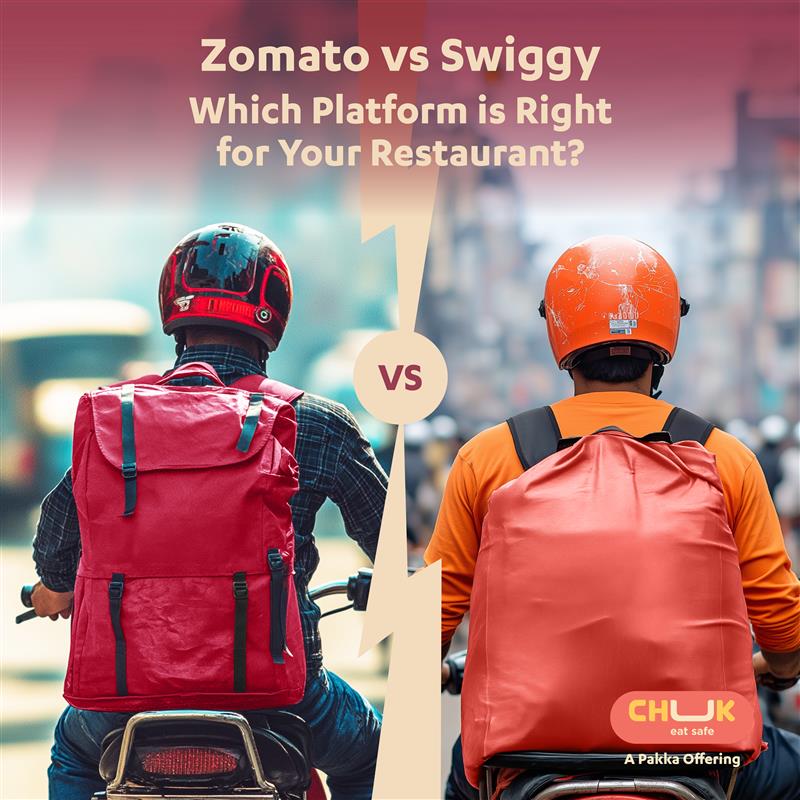
Zomato vs Swiggy: Which Platform is Right for Your Restaurant?
Here is the honest truth: as a restaurant owner in India, choosing between Zomato and Swiggy is not really about which platform is “better.” It is about which one fits your restaurant’s location, food type, customer base, and growth goals.
Both platforms will happily sign you up. Both will take a commission on every order. But the way they work, the customers they attract, and the tools they give you are meaningfully different. And what they don’t tell you during onboarding is that your choice of platform — and how you operate on it — directly affects whether you make money or just stay busy.
This is the comparison you actually need. No fluff, no corporate jargon. Just what matters when you are deciding where to put your energy and your marketing budget.
Key Takeaways
- Zomato covers 1,000+ cities and is stronger for brand building, dine-in discovery, and detailed reviews
- Swiggy operates in 500+ cities with a sharper focus on delivery speed and repeat ordering behaviour
- Commission rates for both platforms range from 18-25%, but the real cost difference lies in ad spend and promotional commitments
- Most successful restaurants use both platforms but allocate budget and effort differently based on their strengths
- Your packaging and presentation on these platforms directly affects ratings, visibility, and repeat orders
- The platform you choose matters less than how consistently you manage your listing, reviews, and operations on it
Why This Decision Actually Matters
You might think signing up on a food delivery platform is a formality. List your menu, upload a few photos, wait for orders. But the reality is far more strategic than that. And the choice is no longer only Zomato versus Swiggy: quick-commerce apps now run their own food services too, which we cover in what Bistro by Blinkit is and how it works.
Your delivery platform is your second storefront. For many restaurants, especially cloud kitchens and QSRs, it is the primary storefront. The platform you prioritise determines:
- Which customers find you — Zomato and Swiggy attract different user behaviours
- How much you pay per order — commission structures, ad costs, and promotional requirements vary
- How your restaurant is perceived — reviews, ratings, and badges shape your brand in ways you cannot fully control
- Whether you grow or plateau — platform algorithms reward specific behaviours, and understanding them is a real competitive advantage
Let us break down exactly what each platform offers, where they differ, and how you can make a decision that actually helps your bottom line.
Zomato vs Swiggy: The Detailed Comparison
Here is a side-by-side breakdown of the factors that matter most to restaurant owners. We have kept this practical — these are the things that affect your daily operations and monthly revenue.
Head-to-Head Comparison Table
| Factor | Zomato | Swiggy |
|---|---|---|
| City Coverage | 1,000+ cities across India | 500+ cities, concentrated in metros and tier-1 |
| Commission Range | 18-25% per order | 18-25% per order |
| Average Delivery Time | 35-40 minutes | 28-32 minutes |
| Subscription Programme | Zomato Gold (dine-in + delivery perks) | Swiggy One (free delivery + discounts) |
| Dine-In Discovery | Strong — restaurant search, reviews, table booking | Limited — primarily a delivery platform |
| Review System | Detailed food + ambiance reviews with photos | Delivery-focused ratings (speed, accuracy, packaging) |
| Restaurant Marketing Tools | Paid search ads, banner promotions, Hyperpure integration | In-app banners, offer promotions, Swiggy Instamart cross-promotion |
| Delivery Fleet | Zomato-managed riders | Swiggy-managed riders |
| Analytics Dashboard | Order trends, customer demographics, peak hours | Order data, delivery metrics, customer retention |
| Sustainability Badges | Eco-friendly restaurant badges available | Green packaging recognition in some cities |
| Best For | Brand building, dine-in + delivery, new restaurant discovery | Speed-focused delivery, repeat orders, metro city reach |
Where Zomato Wins
Brand Discovery and Visibility
Zomato started as a restaurant discovery platform before it became a delivery app. That DNA still shapes how it works. Customers browsing Zomato are often in discovery mode — searching for new restaurants, reading reviews, comparing menus.
This matters if:
- You are a new restaurant trying to build awareness
- You offer dine-in and want both walk-in and delivery traffic
- Your restaurant has a strong visual identity (interiors, plating, packaging) that photographs well
- You are in a smaller city or town where Zomato’s wider geographic coverage gives you more reach
The Review Ecosystem
Zomato’s review system is one of the most detailed in Indian food tech. Customers leave written reviews, rate food quality and ambiance separately, and upload photos. For restaurants that consistently deliver great food, this system becomes a powerful growth engine.
The flip side? Negative reviews are equally detailed and visible. Your packaging, your presentation, your portion sizes — everything gets scrutinised.
Pro tip for restaurant owners: Invest in how your food looks when it arrives. Compostable disposables with clean, professional presentation photograph better than flimsy plastic containers. When customers post photos of your food in well-designed containers, it becomes free marketing.
Zomato Gold and Dine-In Traffic
Zomato Gold subscribers are a high-value customer segment. They dine out frequently, spend more per visit, and are willing to try new restaurants for the subscription perks. If your restaurant has a dine-in component, this programme can drive consistent footfall.
Where Swiggy Wins
Delivery Speed and Reliability
Swiggy built its reputation on fast delivery. Their average delivery time consistently beats Zomato’s, and their logistics network in metro cities is tightly optimised.
This matters if:
- You sell food that needs to arrive hot and fresh (biryani, pizza, tandoori items, soups)
- Your primary revenue comes from delivery, not dine-in
- You operate in a metro city where Swiggy’s delivery infrastructure is strongest
- Speed of fulfilment is a key differentiator for your cuisine
Repeat Order Behaviour
Swiggy One subscribers tend to order more frequently than Zomato Gold users when it comes to delivery. The free delivery benefit removes friction from repeat ordering, which means your regulars order more often.
For restaurants with a strong delivery menu and consistent food quality, Swiggy’s subscriber base can become a reliable revenue stream.
Operational Focus
Swiggy’s rating system focuses on what matters most for delivery — was the order accurate, did it arrive on time, was the packaging intact? This is simpler to manage than Zomato’s more subjective review system.
If your strength is operational consistency rather than ambiance or visual presentation, Swiggy’s metrics play to your advantage.
What They Don’t Tell You: The Hidden Costs
Commission rates are just the starting point. Here is what actually eats into your margins on both platforms.
Promotional Pressure
Both Zomato and Swiggy push restaurants to run discounts and offers. “Buy 1 Get 1,” “20% off on orders above Rs 500,” “Free delivery” — these promotions drive order volume but compress your margins.
The honest truth? Restaurants that refuse to run any promotions see lower visibility. Platforms algorithmically prioritise restaurants with active offers. You need to find the sweet spot between running enough promotions to stay visible and maintaining healthy margins.
Ad Spend
Both platforms offer paid advertising to boost your listing’s visibility. This can range from Rs 5,000 to Rs 50,000+ per month depending on your city and competition level.
- Zomato ads work well for discovery — getting new customers to find you
- Swiggy ads work well for conversion — appearing when customers are ready to order
Budget accordingly. If you are a new restaurant, Zomato ads may deliver better ROI for awareness. If you are established and want to increase order frequency, Swiggy ads may be more effective.
The Packaging Factor Nobody Talks About
Here is something most platform comparison guides completely ignore: your packaging directly affects your ratings, refund rates, and long-term platform performance.
Every leaked container generates a complaint. Every cold delivery triggers a refund. Every crushed box costs you a customer. And both platforms track these metrics.
As a restaurant owner, switching to compostable disposables is not just a sustainability play — it is a platform performance strategy:
- Fewer spillage complaints — bagasse containers with tight-fitting lids hold up better during transit than thin plastic
- Better thermal retention — compostable containers maintain food temperature across standard delivery windows
- Higher customer perception — diners increasingly notice and appreciate sustainable packaging, and some mention it in reviews
- Platform badges — both Zomato and Swiggy are rolling out eco-friendly badges that improve your listing visibility
The cost difference between flimsy plastic and quality compostable disposables is marginal per order. The difference in customer satisfaction and platform performance is not.
How to Decide: A Framework for Your Restaurant
Instead of asking “which platform is better,” ask these five questions about your specific restaurant:
1. Where Are You Located?
- Metro city (Delhi, Mumbai, Bangalore, Hyderabad, Chennai, Kolkata): Both platforms are strong. Use both, but lean into Swiggy for delivery volume.
- Tier-1 city: Both platforms operate here, but Zomato typically has deeper penetration.
- Tier-2 or smaller city: Zomato likely has more users in your area. Start there.
2. What Is Your Primary Revenue Model?
- Dine-in + delivery: Zomato’s discovery features and Gold programme drive both.
- Delivery-only or cloud kitchen: Swiggy’s speed-focused infrastructure and repeat order behaviour are more valuable.
- Catering or bulk orders: Neither platform is ideal for this. Focus on Google Business Profile and direct channels.
3. What Type of Food Do You Serve?
- Time-sensitive items (biryani, pizza, tandoori, soups): Swiggy’s faster delivery times protect food quality.
- Snacks, desserts, beverages: Both platforms work equally well.
- Premium or experience-driven food: Zomato’s review ecosystem helps build the brand story.
4. What Is Your Marketing Budget?
- Minimal budget (under Rs 10,000/month): Focus on one platform and do it well. Organic growth through consistent quality and review management.
- Moderate budget (Rs 10,000-30,000/month): Use both platforms. Run targeted ads on the one where you see more traction.
- Aggressive budget (Rs 30,000+/month): Full presence on both. Dedicated ad campaigns, promotional offers, and premium listing features.
5. What Are Your Packaging Standards?
This question matters more than most restaurant owners realise. If your current packaging leads to spillage, temperature loss, or poor presentation, your ratings will suffer on any platform.
Before investing heavily in platform marketing:
- Audit your current delivery packaging for leaks, temperature retention, and visual appeal
- Switch to compostable containers that hold up during transit
- Standardise your packaging so every order goes out consistently
- Train your kitchen staff on proper packing procedures for delivery
Your packaging is the last thing your restaurant controls before the customer experience begins. Get it right, and your platform ratings improve naturally.
The Smart Move: Using Both Platforms Strategically
Most successful restaurants do not choose one platform exclusively. They use both, but differently.
Here is a practical approach:
- List on both Zomato and Swiggy to maximise your customer reach
- Run promotions on the platform where you see higher order volume — do not split your promotional budget evenly
- Use Zomato for brand building — encourage detailed reviews, upload high-quality photos regularly, keep your listing information current
- Use Swiggy for operational efficiency — focus on speed, accuracy, and packaging consistency
- Track your numbers weekly — compare order volume, average order value, commission costs, refund rates, and net revenue per platform
- Invest in packaging that performs on both platforms — compostable disposables that prevent leaks, maintain temperature, and present your food professionally
The restaurants that grow fastest on delivery platforms are not the ones with the biggest marketing budgets. They are the ones with the most consistent operations — food quality, packaging quality, and responsiveness to reviews.
Common Mistakes Restaurant Owners Make on Delivery Platforms
Ignoring Reviews
Every unanswered review — positive or negative — is a missed opportunity. Both Zomato and Swiggy algorithms factor in response rates. Respond to every review within 24 hours.
Using the Same Photos from Launch Day
Customers and algorithms both reward freshness. Update your menu photos quarterly. Shoot in natural light. Show the actual portion size. And make sure your delivery packaging is visible in photos — it signals professionalism.
Running Unsustainable Discounts
A 50% discount might spike your orders for a week. But if it attracts discount-hunters who never order at full price, you have lost money without gaining loyal customers. Run strategic promotions, not desperate ones.
Neglecting Packaging Quality
This is worth repeating: as a restaurant owner, your packaging is your silent salesperson on delivery platforms. A beautifully cooked dish arriving in a leaking, flimsy container is a one-star review waiting to happen.
Switching to compostable disposables from a reliable manufacturer solves multiple problems simultaneously — food safety compliance, temperature retention, professional presentation, and sustainability credentials that both platforms increasingly reward.
Internal link suggestions:
– Food Delivery Platforms and Packaging: What Restaurants Need to Know
– How to Boost Your Restaurant’s Online Presence
– How to Choose the Right Compostable Delivery Container for Your Business
– Packaging Your Food for Delivery: Tips and Tricks
– How to Create a Unique Brand Identity for Your Restaurant
In a Nutshell
- Zomato covers 1,000+ cities and is stronger for restaurant discovery, dine-in traffic, and detailed brand-building through reviews. Swiggy covers 500+ cities with a tighter focus on delivery speed and repeat ordering.
- Commission rates are broadly similar (18-25%) on both platforms, but the real cost differences emerge in ad spend, promotional requirements, and packaging-related refund rates.
- Choose Zomato if your priority is brand visibility, dine-in customers, and presence in tier-2 or smaller cities. Choose Swiggy if your priority is fast delivery, operational consistency, and metro city order volume.
- The smartest approach for most restaurants is to use both platforms but allocate time, budget, and promotions based on where you see stronger performance.
- Your delivery packaging directly affects your ratings and visibility on both platforms. Switching to compostable disposables reduces spillage complaints, improves customer perception, and earns you sustainability badges that boost your listing.
- Track your numbers weekly. Compare revenue per platform, not just order count. Adjust your strategy based on data, not assumptions.
Frequently Asked Questions
Should I list my restaurant on both Zomato and Swiggy, or just one?
If you have the operational capacity to manage both, list on both. Each platform reaches a somewhat different customer base, and being on both maximises your visibility. However, if you are just starting out and resources are limited, pick the platform that has stronger presence in your specific area. You can always add the second platform once your operations are stable.
How much commission do Zomato and Swiggy charge restaurants?
Both platforms charge between 18-25% commission per order, depending on your agreement, city, and order volume. This rate is negotiable for high-volume restaurants. Beyond commissions, factor in the cost of running promotions and ads, which can add another 5-15% to your effective platform cost per order.
Which platform is better for a new restaurant with no reviews?
Zomato tends to be better for new restaurant discovery because of its search and review ecosystem. Customers actively browse Zomato to find new places. On Swiggy, discovery is more algorithm-driven, which means new restaurants without order history may take longer to gain visibility. Start by building your Zomato profile with quality photos, complete menu details, and encouraging early customers to leave reviews.
Does my delivery packaging really affect my platform ratings?
Absolutely. Both Zomato and Swiggy track complaint patterns, and packaging-related issues (leaks, cold food, crushed items) directly lead to lower ratings and reduced listing visibility. Switching to quality compostable disposables with proper sealing, thermal retention, and structural strength reduces these complaints measurably. Some restaurants see a 15-20% drop in packaging-related refunds after upgrading their containers.
How do Zomato Gold and Swiggy One differ for restaurant owners?
Zomato Gold attracts diners who eat out frequently and are open to trying new restaurants for membership perks. This benefits restaurants with dine-in operations. Swiggy One subscribers get free delivery on orders above a threshold, which encourages frequent repeat ordering. This benefits delivery-focused restaurants with a strong, consistent menu. Both programmes bring in higher-value customers, but through different behaviours.
What is the most cost-effective way to advertise on these platforms?
Start small. Allocate Rs 5,000-10,000 per month on one platform, track your cost per new customer, and scale based on results. On Zomato, search ads work well for reaching customers who are actively looking for your cuisine type. On Swiggy, banner promotions work well for boosting order volume during slow hours. Avoid spending on ads before your listing is optimised — good photos, complete menu, and consistent reviews should come first.
Are there advantages to using compostable disposables on delivery platforms?
Yes, and they are increasingly tangible. Both Zomato and Swiggy are introducing sustainability badges and eco-friendly restaurant filters. Restaurants using compostable disposables get improved visibility through these features. Beyond platform benefits, compostable containers from bagasse (sugarcane fibre) perform better during delivery — they retain heat, resist leaks, and present food more professionally than thin plastic alternatives. The per-unit cost difference is minimal, but the impact on ratings and customer loyalty is significant.
The container decides whether the customer orders again
Once the order leaves the kitchen the container is the only thing protecting it. CHUK’s compostable bagasse delivery containers hold heat, resist leaks and keep you clear of single-use plastic rules.
Browse delivery containers | Order a sample box | Get pricing on WhatsApp