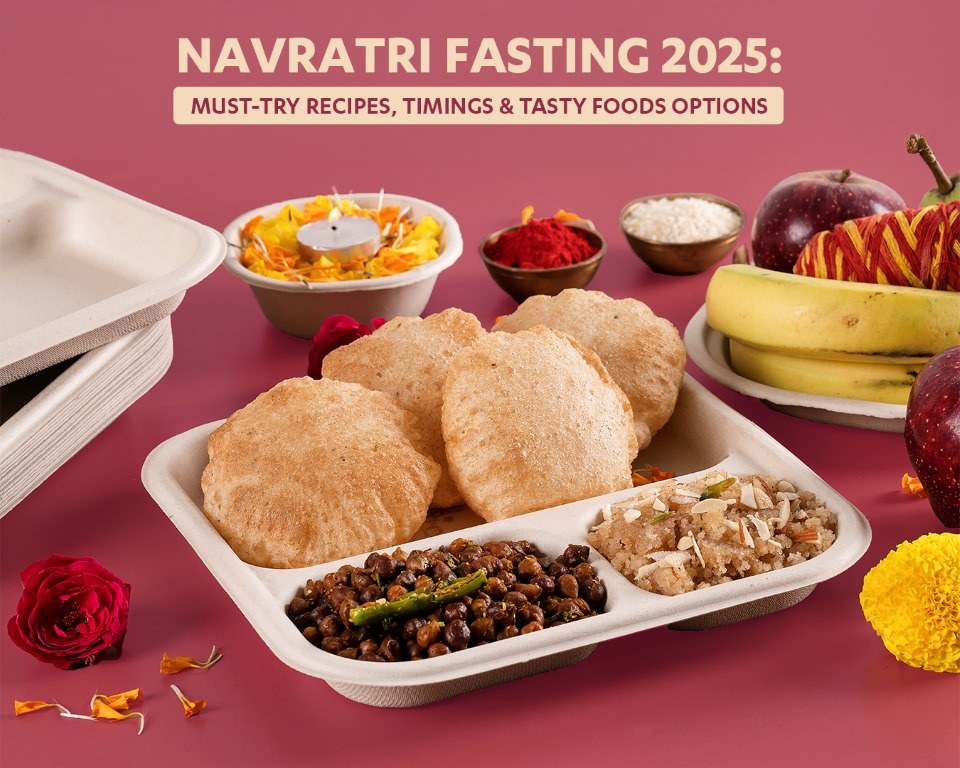
Navratri Fasting: Must-Try Vrat Recipes, Timings & Sattvic Food Options for Every Devotee
Nine nights. Nine forms of Maa Durga. And nine days of fasting that test the devotion, patience, and meal-planning skills of millions across India.
Sharad Navratri 2026 runs from Sunday, 11 October to Monday, 19 October, with Dussehra on Tuesday, 20 October. Nine days of vrat means planning falahari food that stays interesting from the first fast to the last.
Here is the honest truth about Navratri fasting: most people end up eating the same sabudana khichdi and dry fruit mix on repeat until day nine feels like a survival exercise. The fast is meant to purify body and spirit. It should not drain your energy, bore your palate, or leave you reaching for the same two dishes every single meal.
Whether you are a devotee observing the full nine-day vrat at home, a caterer handling Navratri special orders, or a food stall owner near a pandal, this guide gives you everything you need. Recipes that actually taste good. Fasting timings that keep your body aligned. And a few things they do not tell you about keeping your Navratri food truly pure — right down to the plate it sits on.
Key Takeaways
- Sharad Navratri spans nine days honouring each form of Maa Durga, with fasting timings anchored to Amrit Vela and Pradosh Kaal
- Sattvic, vrat-friendly ingredients like kuttu, singhara, samak rice, and makhana form the foundation of Navratri fasting — and they are far more versatile than most people realise
- Diabetics, bachelors, working professionals, and bulk caterers each need a different fasting strategy — one size does not fit all
- The purity of your food extends beyond ingredients to what you serve it on — plastic and styrofoam compromise the very sanctity fasting is meant to preserve
- Compostable disposables made from sugarcane bagasse handle hot, oily vrat food without leaking, bending, or adding chemicals to your meal
The Spiritual Backbone: Why Navratri Fasting Matters
Navratri is not a diet trend. It is one of the most sacred periods in the Hindu calendar, observed twice a year during Chaitra (spring) and Sharad (autumn). Each of the nine nights is dedicated to a specific form of Maa Durga, and the fasting that accompanies the festival is designed to cleanse, purify, and align the body with the divine energy of the occasion.
The food you eat during Navratri vrat is sattvic — pure, light, and free of tamasic (heavy, impure) ingredients. This means no onion, no garlic, no wheat, no rice (regular), no lentils, and no non-vegetarian food.
What you can eat:
- Kuttu ka atta (buckwheat flour)
- Singhare ka atta (water chestnut flour)
- Samak ke chawal (barnyard millet, also called vrat rice)
- Sabudana (tapioca pearls)
- Makhana (foxnuts / lotus seeds)
- Sendha namak (rock salt — regular salt is avoided)
- Fresh fruits, milk, curd, paneer
- Dry fruits and nuts
- Potatoes, sweet potatoes, raw banana, pumpkin
The restrictions are not arbitrary. They are rooted in Ayurvedic principles about what keeps the body light, the mind clear, and the spirit receptive during days of worship and meditation.
Navratri Fasting Timings: When to Start and Break Your Fast
Getting the timings right matters as much as what you eat. Fasting is not just skipping meals — it is an intentional rhythm that aligns your body with the spiritual practices of each day.
Daily Fasting Schedule
| Time | Activity | Details |
|---|---|---|
| ~5:00 – 5:30 AM | Start of fast (Amrit Vela) | Begin the day with water, prayer, and a light sattvic snack if needed |
| 12:00 – 2:00 PM | Midday meal | Main vrat meal — samak rice khichdi, kuttu puri with potato sabzi, or sabudana preparations |
| 6:00 – 7:30 PM | Pradosh Kaal (break fast) | Most auspicious time for evening puja and breaking the fast with fruits, curd, boiled potatoes, or a full vrat thali |
Muhurat Timings for Puja and Fasting
The Pradosh Kaal window (roughly 6:00 PM to 7:30 PM) is considered the most auspicious time for Navratri puja and for breaking the fast. Always check your local Panchang for exact timings, as they vary by city and region.
Pro tip for caterers and food stall owners: Your peak demand window is 5:30 PM to 8:00 PM. If you are running a Navratri food counter near a pandal or garba venue, plan your prep accordingly. The evening rush is real, and running out of vrat food during Pradosh Kaal means missed revenue and disappointed devotees.
The Nine Days: Each Form of Maa Durga and What She Represents
Each day of Navratri honours a different manifestation of the Goddess. Understanding this is not just culturally important — as a food stall owner or caterer, it helps you plan themed menus and connect with devotees on a deeper level.
- Day 1 — Pratipada: Maa Shailputri (Daughter of the Mountain)
- Day 2 — Dwitiya: Maa Brahmacharini (The Ascetic One)
- Day 3 — Tritiya: Maa Chandraghanta (The Fierce Protector)
- Day 4 — Chaturthi: Maa Kushmanda (Creator of the Universe)
- Day 5 — Panchami: Maa Skandamata (Mother of Skanda)
- Day 6 — Shashti: Maa Katyayani (The Warrior Goddess)
- Day 7 — Saptami: Maa Kalaratri (The Dark Night)
- Day 8 — Ashtami: Maa Mahagauri (The Fair One) — Kanjak puja and Ashtami prasad
- Day 9 — Navami: Maa Siddhidatri (Bestower of Supernatural Powers)
Ashtami and Navami are the most significant days for prasad distribution. If you are a caterer or temple kitchen manager, these two days will see your highest volumes. Plan your ingredient sourcing, prep schedules, and serving supplies at least a week in advance.
Top Navratri Vrat Recipes That Actually Taste Good
The honest truth? Most Navratri recipe lists online are the same ten dishes recycled with different stock photos. Here are recipes organised by who is actually making them and what they need.
Simple Staples Everyone Should Master
These are the foundation of any Navratri kitchen — whether home or commercial:
- Sabudana Khichdi: Soaked sabudana, roasted peanuts, cumin, green chillies, sendha namak. The key most people get wrong: soak sabudana overnight in just enough water so each pearl is separate, not clumpy.
- Kuttu Aloo Puri: Buckwheat flour dough with mashed potato, deep-fried until golden. Pairs brilliantly with mint-coriander chutney made with curd.
- Singhare Ki Puri: Water chestnut flour puris — lighter than kuttu, slightly sweet, crisp when fried right.
- Samak Rice Khichdi: Barnyard millet cooked with cumin, peanuts, and potato. A complete one-pot meal.
Quick Recipes for Working Professionals and Bachelors
If you have 15 minutes and a single pan, these work:
- Sabudana Vada: Mix soaked sabudana with boiled potato and peanut powder. Shallow fry. Done.
- Sweet Potato Chaat: Boiled sweet potato cubes tossed with sendha namak, lemon juice, pomegranate seeds, and roasted makhana.
- Fruit Smoothie Bowl: Banana, mango (seasonal), curd, honey, topped with foxnuts and sliced almonds.
- Makhana Stir Fry: Dry roast foxnuts in ghee, toss with black pepper and sendha namak. A five-minute snack that keeps you full for hours.
Modern Twists on Traditional Vrat Food
For food stall owners and caterers looking to stand out from the stall next door:
- Vrat Smoothie Bowls: Thick fruit base topped with granola made from makhana, coconut flakes, and pumpkin seeds. Instagram-friendly. Sells fast at garba venues.
- Kuttu Pancakes: Buckwheat batter with grated paneer and herbs. Serve with curd dip. Works as a grab-and-go option.
- Singhare Ki Chaat: Water chestnut flour crisps topped with sweet potato, pomegranate, and tamarind-free chutney (use dates instead).
- Samak Rice Pulao: Barnyard millet cooked pilaf-style with cashews, raisins, saffron, and ghee. A premium offering for Navratri thali caterers.
Navratri Fasting Foods for Diabetics: What They Do Not Tell You
Here is what most guides skip: a significant number of devotees managing diabetes observe the full nine-day fast. The standard advice of “eat fruits and dry fruits” can spike blood sugar faster than a regular meal if you are not careful.
Low-GI Vrat Foods That Work for Diabetics
- Samak rice — Lower glycaemic index than regular rice, digests slowly
- Kuttu (buckwheat) — Rich in fibre, helps regulate blood sugar
- Makhana (foxnuts) — Low calorie, low GI, high in protein relative to other vrat snacks
- Singhare ka atta — Moderate GI, best when combined with protein (paneer, curd)
- Fresh fruits: Stick to apples, berries, papaya. Avoid mango, banana, and grapes in large quantities.
Diabetic-Friendly Vrat Recipes
- Samak Rice Khichdi with extra vegetables (pumpkin, raw banana) — adds fibre, slows glucose absorption
- Kuttu Pancakes with paneer filling — protein balances the carbs
- Makhana Roast with black pepper and ghee — satisfying, stable energy
- Singhare Ki Chaat with curd — protein-carb combination keeps blood sugar steady
Key Nutrition Tips
- Combine carbs with protein at every meal (curd, paneer, nuts)
- Avoid deep-fried items — opt for roasting or shallow frying in ghee
- Skip jaggery and honey in large amounts — they are still sugar
- Monitor blood sugar twice daily during fasting
- Break the fast immediately if you feel dizzy, shaky, or unusually fatigued
- Consult your doctor or nutritionist before starting the nine-day fast
What They Do Not Tell You: The Purity Problem on Your Plate
You have spent time sourcing sendha namak, organic kuttu, and fresh paneer. You have followed every vrat rule to the letter. Your food is sattvic, pure, and prepared with devotion.
Then you serve it on a plastic plate.
Here is what most people overlook: the concept of purity in Navratri extends beyond ingredients. Plastic plates leach chemicals into hot food. Styrofoam reacts with oil and acid. Even the “food-grade” label on cheap disposable plates does not guarantee they are free of BPA, phthalates, or other endocrine disruptors.
If you are fasting to purify your body and align with the divine, the vessel matters too.
Why Compostable Disposables Make Sense During Navratri
This is not a sales pitch. It is a practical reality for anyone serving vrat food — at home, at a temple, at a pandal, or at a food stall.
- Made from sugarcane bagasse — a natural, plant-based material. No plastic, no chemicals, no synthetic coatings.
- Handles hot food — vrat puris fresh from the kadhai, piping hot samak rice, boiling chai. Compostable plates and bowls handle temperatures up to 120 degrees Celsius without warping.
- Oil and liquid resistant — kuttu ki puri dripping with ghee, curd-based chaats, fruit juices. No leaks, no soggy bottoms, no collapse.
- Returns to the earth — composts within 90-180 days. After Navratri, your plates do not sit in a landfill for centuries. They break down naturally.
As a devotee, this keeps your food’s purity intact. As a caterer or food stall owner, this is a business advantage — your customers increasingly notice and value the choice, especially at religious events where purity expectations are highest.
Explore compostable plates for your Navratri setup
Browse compostable bowls for vrat food service
Practical Navratri Meal Plan: A Full-Day Fasting Timetable
Planning your meals in advance eliminates the “what do I eat now?” panic that hits every afternoon of a nine-day fast. This timetable works for individuals, and scales easily for caterers and food stall owners planning daily menus.
Sample Full-Day Vrat Meal Plan
| Meal | Time | Options |
|---|---|---|
| Early morning | 5:30 – 6:00 AM | Warm water with lemon, a handful of dry fruits, or a glass of milk with saffron |
| Breakfast | 8:00 – 9:00 AM | Kuttu aloo paratha with curd, OR sabudana khichdi, OR fruit bowl with foxnuts |
| Midday meal | 12:30 – 1:30 PM | Samak rice khichdi with raita, OR singhare ki puri with aloo sabzi, OR vrat thali |
| Evening snack | 4:00 – 5:00 PM | Makhana roast, sweet potato chaat, or a banana-curd smoothie |
| Dinner (post-puja) | 7:00 – 7:30 PM | Light meal: fruits with curd, boiled potato chaat, or samak rice pulao |
Meal Prep Tips for the Full Nine Days
- Batch prep on Day 0: Soak sabudana, boil potatoes and sweet potatoes, roast makhana in bulk, grind kuttu atta fresh
- Store smartly: Soaked sabudana lasts 2 days refrigerated. Boiled potatoes last 3 days. Roasted makhana stays crisp for a week in an airtight container.
- Rotate your base: Alternate between samak rice, kuttu, singhara, and sabudana so you do not burn out on any single grain by day five.
- Prep chutneys: A batch of mint-coriander chutney (no onion-garlic, curd-based) and a date-tamarind-free sweet chutney last the entire nine days.
Do’s and Don’ts of Navratri Fasting
What to Avoid
- Regular wheat, rice, lentils, and pulses
- Onion, garlic, and non-veg (including eggs)
- Table salt (use sendha namak only)
- Non-vrat flours (maida, besan, corn flour)
- Processed or packaged snacks (most contain prohibited ingredients)
- Excessive fried food — it defeats the purpose of a purifying fast
- Plastic and styrofoam serving ware for prasad and vrat meals
Smart Substitutions
| Regular Ingredient | Vrat Substitute |
|---|---|
| Wheat atta | Kuttu ka atta, singhare ka atta |
| Regular rice | Samak ke chawal (barnyard millet) |
| Table salt | Sendha namak (rock salt) |
| Sugar | Jaggery, honey, dates (in moderation) |
| Regular oil | Ghee or peanut oil |
| Corn flour (for binding) | Arrowroot powder |
| Besan | Singhare ka atta (for pakoras) |
Energy Management Tips
- Hydrate constantly — water, coconut water, lemon water with sendha namak
- Balance every meal with carbs + protein + healthy fat
- Do not skip the midday meal, even if you are not hungry
- Light physical activity is fine; avoid intense workouts
- Listen to your body. If you feel unwell, break the fast. Maa Durga values your health over rigid rules.
For Caterers and Food Stall Owners: Navratri Is Business Season
If you run a food stall during Navratri melas, serve vrat thalis at a restaurant, or handle bulk prasad orders for temples, this section is for you.
The Business Opportunity
- Navratri generates massive footfall at garba venues, temple complexes, and pandals across India
- Devotees actively seek vrat-friendly food options outside their homes
- Premium Navratri thalis and modern vrat food can command higher margins than regular menus
- The nine-day window is predictable and plannable, unlike ad-hoc catering
Operational Checklist
- Source vrat ingredients in bulk at least 10 days before Navratri starts. Kuttu atta, sendha namak, and sabudana prices spike once the festival begins.
- Plan a rotating menu — devotees eating out for nine days do not want the same three dishes daily. Offer variety.
- Use compostable disposables — at religious events, customers notice what their food is served on. Plastic at a puja-adjacent food stall sends the wrong message. Compostable plates, bowls, and containers from sugarcane bagasse align with the spiritual expectations of your customers and eliminate the post-event waste disposal headache.
- Prep for the Ashtami/Navami surge — these two days see the highest volumes for prasad distribution and vrat meals. Staff up and stock up.
- Offer takeaway packaging — compostable clamshell containers work for packed vrat thalis and prasad boxes. They keep food warm, do not leak, and look professional.
See the full range of compostable serving options
Pricing Your Navratri Menu
The honest truth: you can price vrat food at a premium. The ingredient costs are higher (kuttu atta costs more than regular wheat atta), and customers expect and accept that. A well-presented Navratri thali on a compostable plate, with clear labelling of vrat-compliant ingredients, can command 20-40% higher margins than a regular thali.
The compostable tableware adds maybe INR 2-4 per serving to your costs. It removes the “cheap plastic” perception and positions your stall or restaurant as one that understands the sanctity of the occasion. That is a business advantage, not just a feel-good choice.
Internal Links to Explore
- How to Choose the Right Compostable Delivery Container for Your Business
- Melamine vs Compostable Bagasse Tableware
- Wedding Season with Eco-Friendly Products
- Dona Pattal at Ayodhya Ram Mandir’s Consecration Ceremony
- How Restaurants Can Embrace a Circular Economy
In a Nutshell
Navratri fasting is one of the most deeply personal spiritual practices in India. It asks you to simplify, purify, and connect with the divine energy of Maa Durga across nine sacred nights.
The food you eat during vrat should support that intention — sattvic, nourishing, and genuinely pure. That means going beyond the usual sabudana-and-dry-fruit routine to explore the full range of vrat-friendly grains, flours, and ingredients available. It means planning your meals so you stay energised from day one to day nine. And it means thinking about what your food is served on, not just what is in it.
For devotees at home, swap out the plastic plates for compostable ones. The cost difference is negligible. The purity difference is real.
For caterers, food stall owners, and temple kitchens, Navratri is a nine-day window where everything you do — your menu, your ingredients, your presentation, your serving ware — communicates respect for the occasion. Compostable disposables made from sugarcane bagasse handle every vrat dish, from kuttu puri dripping with ghee to steaming samak rice khichdi, without compromising on performance. They align with the spiritual expectations of your customers and decompose naturally after use, instead of piling up in landfills.
Serve with intention. Fast with purpose. And let every part of your Navratri — including your plate — reflect the purity the festival calls for.
Frequently Asked Questions
Can compostable plates handle hot, oily Navratri vrat food like kuttu puri and sabudana vada?
Yes. Compostable plates and bowls made from sugarcane bagasse withstand temperatures up to 120 degrees Celsius. They handle deep-fried puris straight from the kadhai, oily sabzis, ghee-laden dishes, and curd-based preparations without leaking, warping, or going soggy. They perform identically to — or better than — conventional plastic or styrofoam disposables.
What is the difference between sendha namak and regular table salt for Navratri fasting?
Sendha namak (rock salt) is unprocessed and considered pure or sattvic, which is why it is permitted during vrat. Regular table salt is processed with additives like iodine and anti-caking agents, which are classified as tamasic (impure) in the context of Navratri fasting. The taste difference is subtle, but the spiritual and Ayurvedic distinction is significant.
How can diabetics safely observe the full nine-day Navratri fast?
Focus on low-GI vrat foods: samak rice, kuttu (buckwheat), makhana, and fresh fruits like apples and berries. Combine every carb source with protein (paneer, curd, nuts) to prevent blood sugar spikes. Avoid large quantities of jaggery, honey, or high-sugar fruits. Monitor blood sugar at least twice daily, and break the fast immediately if you feel dizzy or unwell. Always consult your doctor before beginning an extended fast.
Why should food stall owners and caterers use compostable disposables during Navratri?
Three reasons. First, devotees at religious events have heightened expectations of purity — serving prasad or vrat food on plastic sends the wrong signal. Second, compostable disposables eliminate post-event waste disposal problems. They break down in 90-180 days instead of sitting in landfills for centuries. Third, the marginal cost increase of INR 2-4 per serving is easily offset by the premium positioning it gives your stall or restaurant during the festival season.
What are the key ingredients to stock up on before Navratri begins?
Kuttu ka atta (buckwheat flour), singhare ka atta (water chestnut flour), samak ke chawal (barnyard millet), sabudana (tapioca pearls), makhana (foxnuts), sendha namak (rock salt), ghee, peanuts, fresh paneer, curd, potatoes, sweet potatoes, and seasonal fruits. Buy these at least 7-10 days before Navratri starts — prices spike once the festival begins, and stock runs out fast at local markets.
Is it okay to break the Navratri fast if I feel unwell?
Absolutely. The fast is a voluntary spiritual practice, not a test of endurance. If you experience dizziness, severe weakness, nausea, or any health concern, break the fast with something light — a glass of milk, a banana, or fruit juice. Maa Durga’s blessings come from devotion and intention, not from pushing your body beyond its limits. You can resume fasting the next day or observe the fast in a modified way (one meal a day instead of a full-day fast).
How do I make sabudana khichdi that is not clumpy or sticky?
The secret is in the soaking. Wash sabudana thoroughly, then soak it in just enough water to cover the pearls — not submerge them. Let it sit for 4-6 hours or overnight. Each pearl should be swollen but separate when you press it between your fingers. Drain any excess water before cooking. Roast peanuts separately, temper cumin in ghee, add the sabudana, and cook on medium heat without stirring too much. Clumpy khichdi almost always means too much water during soaking.
More festival guides
- Navratri Garba events guide
- Janmashtami 56 bhog list
- festival sales strategies
- eco-friendly serving options
- restaurant operations glossary
Serving a crowd is a volume problem
Serving a crowd is a volume problem. CHUK’s compostable bagasse combo packs cover plates, bowls and cutlery in one order instead of three.
Browse combo packs | Order a sample box | Get pricing on WhatsApp