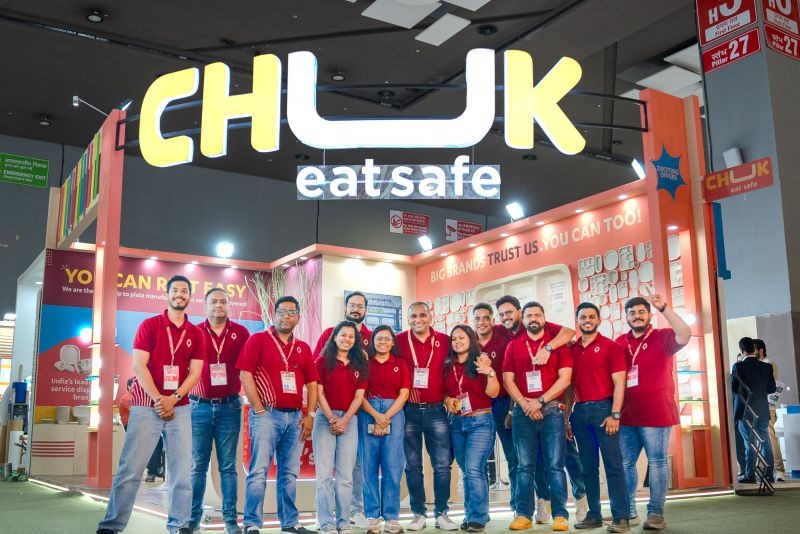
AAHAR Food Fair: What Every Restaurant Owner Needs to Know About Packaging
AAHAR is India’s largest food and hospitality trade fair, held annually at Pragati Maidan in New Delhi. Thousands of restaurant owners, cloud kitchen founders, QSR procurement heads, and HoReCa distributors walk through those halls every year looking for one thing — an edge.
But here is the honest truth. Most visitors walk in without a plan, get overwhelmed by flashy booths, collect a bag full of brochures, and leave without making a single decision that actually moves their business forward.
If you are a restaurant owner or food business operator planning to attend AAHAR, this guide breaks down exactly what to look for in the packaging halls — and how to evaluate what you see so you walk out with solutions, not just pamphlets.
Key Takeaways
- AAHAR is the best opportunity in India to compare food packaging solutions side by side, live and in person
- Packaging has shifted from a back-office expense to a brand-defining decision for restaurants
- Compostable disposables are the fastest-growing packaging category at the fair, driven by regulation and customer demand
- As a food business owner, you should evaluate containers on four criteria: compostability, structural strength, leak-proof performance, and brand presentation
- Delivery packaging directly impacts your aggregator ratings, refund rates, and repeat orders
- Going in with a supplier evaluation checklist saves you weeks of post-event confusion
Why packaging is now the most important category at food trade fairs
Five years ago, packaging was a footnote at AAHAR. You walked past the packaging stalls on your way to the kitchen equipment section. Not anymore.
Here is what changed:
- Delivery volumes exploded. India’s online food delivery market has grown at over 25% year on year. If you run a restaurant today, 30-60% of your revenue likely comes from delivery. That means your packaging is the first physical touchpoint your customer has with your food.
- Plastic bans got teeth. Government regulations around single-use plastics have moved from advisory to enforceable. As a restaurant owner, non-compliance is no longer a risk you can ignore.
- Customer expectations shifted. Your customers now notice packaging. They photograph it. They mention it in reviews. A soggy, leaking container does not just lose you one meal — it loses you the next ten orders from that customer.
- Refund disputes are eating margins. If your container leaks during transit, that refund comes out of your pocket. Aggregator platforms do not absorb that cost.
Packaging is no longer an operational expense you minimise. It is a strategic investment you optimise.
What to expect in the packaging halls at AAHAR
The packaging section at AAHAR has grown significantly. As a visitor, you will find exhibitors across several sub-categories:
| Packaging Category | What You Will See | Who It Is For |
|---|---|---|
| Compostable disposables | Molded fiber plates, bowls, containers made from sugarcane bagasse and other plant fibers | Restaurants, QSRs, cloud kitchens, caterers |
| Delivery containers | Leak-proof, stackable containers designed for food transit | Cloud kitchens, delivery-heavy restaurants |
| Dine-in tableware | Compostable plates, bowls, and cutlery for eat-in service | Casual dining, event caterers, institutional kitchens |
| Takeaway packaging | Clamshells, meal trays, compartment containers | QSRs, fast casual chains, kiosks |
| Custom branded packaging | Printed containers with restaurant branding | Restaurant chains, franchise operations |
| Conventional plastics | Traditional plastic and foam containers | Budget-focused operations (but declining in demand) |
The honest truth is that the conventional plastics section shrinks every year. The growth is in compostable disposables and performance-focused delivery packaging. That is where you should spend your time.
The four things you must evaluate at every packaging stall
As a food business owner, you probably evaluate ten different suppliers for every major purchase. Packaging should be no different. Here is a framework that cuts through the marketing noise.
1. Compostability — is it real or is it greenwashing?
This is the big one. Every packaging company now claims to be “green” or “sustainable.” What they do not tell you is that many so-called green products are just conventional plastics with a thin plant-based coating. They look compostable. They are not.
What to ask at the stall:
- Is this product certified compostable? Ask for the specific certification (IS/ISO 17088 or equivalent).
- What is it made from? Sugarcane bagasse, bamboo fiber, and wheat straw are genuinely compostable materials. If the answer involves “bio-plastic” or “PLA lining,” dig deeper.
- Does it break down in a home composting setup, or does it need an industrial facility?
- Is it completely plastic-free — including the lid, the coating, and any lamination?
Compostable disposables that are genuinely plastic-free give you a clean compliance story. No worries about future regulation changes. No risk of a customer calling you out on social media.
2. Structural strength — can it survive Indian delivery conditions?
Here is what they do not tell you at trade fairs. A container that looks perfect on a display shelf might collapse the moment a delivery rider tosses it into a bag with three other orders.
Indian delivery conditions are uniquely brutal:
- Potholes and speed bumps during transit
- Containers stacked 3-4 high inside delivery bags
- Riders tilting bags at sharp angles on two-wheelers
- Extreme temperature variations across seasons
At the stall, do this: pick up the container, press the sides firmly, try to flex the base. If it gives easily, it will not survive a 7 km delivery ride. Ask if they have a stress-testing zone where you can simulate real conditions.
3. Leak-proof performance — the make-or-break for delivery
If you run a cloud kitchen or a restaurant with heavy delivery volume, this is the single most important criterion. A leaking container does not just ruin the food. It triggers a refund, tanks your rating, and guarantees that customer never orders again.
What to check:
- Lid seal quality. Does the lid click shut, or does it just rest on top? A secure closure mechanism is non-negotiable for delivery.
- Gravy and sauce resistance. Ask specifically about hot, oily curries. Indian food is not salad. Your container needs to handle dal makhani sitting in it for 45 minutes during transit.
- Microwave safety. Can your customer reheat in the same container? If not, that is a friction point you are adding to their experience.
- Oil and grease resistance. Even if it does not leak, does the container stain or go translucent when holding oily food? That affects presentation.
4. Brand presentation — does it make your food look good?
Your packaging is your restaurant’s uniform for delivery orders. When a customer opens that bag, the container is the first thing they see — before they see your food.
Ask yourself:
- Does the container look premium or does it look cheap?
- Is the surface smooth and clean, or rough and unfinished?
- Can it be custom-printed with your logo and brand colours?
- Does it hold temperature well enough that food still looks appealing on arrival?
A well-designed compostable container actually elevates the unboxing experience. Customers associate clean, sturdy, plant-based packaging with food quality. That perception translates directly into higher ratings and repeat orders.
Who should attend AAHAR (and what to bring)
AAHAR is not just for founders. If packaging decisions affect your business, the right person from your team should be walking those halls.
This event is especially relevant for:
- QSR procurement heads evaluating new suppliers
- Cloud kitchen founders scaling their delivery operations
- Restaurant chain operations managers standardising packaging across locations
- HoReCa distributors looking to expand their compostable product range
- Catering company owners planning for wedding and event season
- Export buyers sourcing molded fiber packaging from Indian manufacturers
What to bring with you:
- A list of your current packaging SKUs and what you spend on each
- Samples of your current containers (so you can compare side by side)
- Your top 3 packaging pain points written down (leaking? breaking? customer complaints?)
- Business cards (obvious, but people forget)
- A structured evaluation sheet to score each supplier you visit
Going in prepared means you make decisions at the fair instead of spending three weeks after the fair trying to remember which stall had the better container.
The business case for switching to compostable disposables
Let us talk numbers, because as a restaurant owner, sustainability only matters if it also makes business sense. And here is where compostable disposables actually surprise most people.
Reduced refund losses. If your current containers leak and you lose even 2-3% of delivery orders to refunds, that cost adds up fast. A cloud kitchen doing 200 orders a day at an average order value of INR 350 loses INR 2,100-6,300 per day on refunds from packaging failure alone. Switch to leak-proof compostable containers and that number drops significantly.
Better aggregator ratings. Zomato, Swiggy, and other platforms factor packaging quality into their restaurant scoring. Customers who receive food in sturdy, clean, well-sealed containers rate higher. Higher ratings mean better visibility on the platform, which means more orders.
Regulatory compliance. Single-use plastic bans are expanding. As a food business owner, switching to compostable disposables now means you are ahead of compliance requirements rather than scrambling to catch up when enforcement tightens.
Customer perception and loyalty. When your customer sees a clean, plant-based container instead of a flimsy plastic box, they associate that quality with your food. It is not a conscious decision. It is instinctive. Better packaging equals better food in the customer’s mind.
Long-term cost stability. Plastic prices fluctuate with crude oil markets. Compostable disposables made from agricultural waste (like sugarcane bagasse) have more predictable pricing because the raw material supply is abundant and renewable.
How to evaluate packaging suppliers at trade fairs: a checklist
Use this framework when you walk through the packaging halls. Score each supplier on a scale of 1-5 for each criterion.
| Evaluation Criterion | What to Check | Why It Matters |
|---|---|---|
| Material composition | Is it genuinely compostable and plastic-free? | Regulatory compliance, brand trust |
| Structural integrity | Can it handle stacking, pressure, and delivery stress? | Reduces breakage and refund losses |
| Leak-proof performance | Does the lid seal properly? Can it handle curries and gravies? | Directly impacts customer satisfaction and ratings |
| Temperature resistance | Does it handle hot food without warping or sweating? | Food presentation on arrival |
| Microwave compatibility | Can the customer reheat in the same container? | Customer convenience |
| Customisation options | Can you print your branding on it? | Brand identity for delivery orders |
| Minimum order quantities | What is the MOQ and can it work for your volume? | Cash flow and storage considerations |
| Certifications | Does the supplier have compostability certifications? | Proof of claims, audit readiness |
| Delivery timelines | How quickly can they fulfil reorders? | Operational continuity |
| Price per unit | What is the per-piece cost at your expected volume? | Direct impact on food cost percentage |
Print this table, take it with you, and fill it out at every stall you visit. It makes your post-event comparison infinitely easier.
What most people get wrong about food trade fairs
Here is what they do not tell you about attending AAHAR or any food industry trade fair.
Mistake 1: Visiting without a specific goal. If you walk in saying “I want to explore,” you will leave with nothing actionable. Decide before you go: are you there to find a new delivery container supplier? To evaluate compostable alternatives? To compare pricing? Specificity saves time.
Mistake 2: Only talking to the person at the front of the stall. The person handing out brochures is usually a marketing representative. Ask to speak with someone from the product or technical team. They can answer the real questions about material composition, performance testing, and customisation.
Mistake 3: Collecting brochures instead of testing products. If a supplier will not let you physically test their product at the stall — pour water in it, press on it, stack it — that tells you something. The best packaging companies actively encourage hands-on testing because they know their product performs.
Mistake 4: Ignoring total cost of ownership. A container that costs INR 1 less per piece but leaks on 5% of orders is not cheaper. It is more expensive. Always calculate the total cost including refunds, customer churn, and brand damage.
Mistake 5: Not following up within 48 hours. Every serious buyer at AAHAR plans to follow up “next week.” The ones who actually close good deals follow up the same evening or the next morning. Suppliers remember the people who move fast.
Packaging trends shaping the food service industry
Beyond what you will see at AAHAR specifically, these broader trends are reshaping how restaurants think about packaging:
- Molded fiber is replacing foam and plastic. Containers made from sugarcane bagasse and other agricultural fibers are now structurally competitive with plastic. The performance gap has closed.
- Compartment containers are growing. Indian meals are complex — a thali has multiple items. Compartment containers that keep items separated without cross-contamination are in high demand.
- Delivery-specific design is a category now. Packaging designed specifically for food delivery (not just repurposed dine-in packaging) accounts for the fastest-growing segment. Features like anti-spill lids, stackable profiles, and ventilation control are standard.
- Custom branding is becoming accessible. What used to require 50,000-piece minimum orders for custom printing is now available at much lower MOQs. Even single-location restaurants can get branded compostable containers.
- Regulations are tightening, not loosening. Every year brings new restrictions on single-use plastics. The direction is clear. Moving to compostable disposables now is not early adoption — it is timely preparation.
Internal link suggestions
- How to choose the right compostable delivery container for your business
- Benefits of switching to compostable delivery containers
- How restaurants can embrace a circular economy
- Chuk for every dish delivery
- How to boost your restaurant’s online presence
- Packaging your food for delivery: tips and tricks
In a Nutshell
AAHAR is the single best opportunity for Indian food business owners to evaluate packaging solutions in person. But the value you get from attending depends entirely on how prepared you are.
Here is the summary:
- Packaging has moved from back-office expense to front-of-brand decision. Your container is your customer’s first impression on every delivery order.
- Compostable disposables are the fastest-growing category because they solve multiple problems at once — compliance, performance, brand perception, and cost predictability.
- Evaluate every supplier on four non-negotiable criteria: genuine compostability, structural strength, leak-proof performance, and brand presentation.
- Go in with a checklist, test products physically at the stall, and follow up within 48 hours.
- The real cost of packaging is not the price per piece. It is the total cost including refunds, ratings impact, and customer retention.
If you treat packaging as a strategic investment rather than an expense to minimise, your food business will be better positioned for the next several years of growth.
Frequently Asked Questions
What is AAHAR and when does it take place?
AAHAR is India’s largest food and hospitality trade fair, organised by the India Trade Promotion Organisation (ITPO). It takes place annually in March at Pragati Maidan, New Delhi. The event brings together food service professionals, equipment manufacturers, and packaging suppliers under one roof. Registration details are typically available on the official ITPO website a few months before the event.
What types of packaging exhibitors can I expect to find at AAHAR?
You will find exhibitors covering the full spectrum of food packaging — from conventional plastics to compostable disposables made from sugarcane bagasse and other plant fibers. Categories include delivery containers, dine-in tableware, takeaway clamshells, compartment meal trays, and custom-branded packaging. The compostable and molded fiber category has grown significantly in recent editions.
How do I identify genuinely compostable packaging versus greenwashing?
Ask for specific compostability certifications such as IS/ISO 17088. Check whether the product is fully plastic-free, including lids, coatings, and laminations. Genuinely compostable disposables are made from materials like sugarcane bagasse, bamboo fiber, or wheat straw. If the product contains PLA lining or “bio-plastic” coatings, it may not be fully compostable in all conditions. A reliable supplier will have documentation ready and will not hesitate to share it.
Why should restaurant owners prioritise packaging at food trade fairs?
As a restaurant owner, packaging directly affects your delivery ratings, refund rates, customer retention, and regulatory compliance. A trade fair gives you the rare opportunity to compare multiple suppliers side by side, physically test containers, and negotiate pricing in person. Given that delivery now accounts for 30-60% of revenue for most restaurants, packaging is one of the highest-impact operational decisions you can make.
What should I look for in food delivery containers specifically?
Focus on five criteria: leak-proof lid closure (especially for gravies and curries), structural strength under stacking and transit stress, temperature retention so food arrives looking appetising, microwave compatibility for customer convenience, and genuine compostability for regulatory compliance. Test containers physically at the stall by pressing, stacking, and tilting them. If a supplier discourages hands-on testing, that is a red flag.
Are compostable disposables more expensive than plastic containers?
The per-piece price of compostable disposables has dropped significantly and is now competitive with mid-range plastic containers. More importantly, the total cost of ownership is often lower when you factor in reduced refund losses from better leak-proof performance, improved customer ratings leading to more orders, and regulatory compliance that avoids potential penalties. The honest truth is that the cheapest container per piece is rarely the cheapest container per order when you account for everything.
How can small restaurants with low order volumes benefit from attending AAHAR?
Even if you run a single-location restaurant, AAHAR lets you discover suppliers who offer lower minimum order quantities than you might find online. Many manufacturers at the fair are open to trial orders, especially for new customers. You can also connect with HoReCa distributors who aggregate demand across multiple small restaurants, giving you access to better pricing without committing to large volumes yourself.