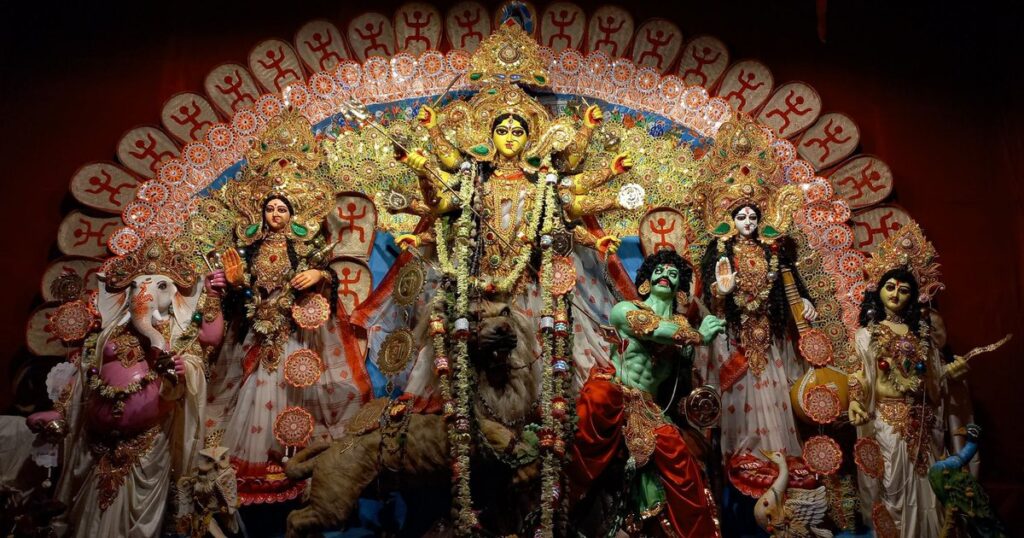
Durga Puja 2026 runs from Friday, 16 October to Wednesday, 21 October, and the bhog, the vegetarian community meal offered to the Goddess and then shared as prasad, is served at scale on Ashtami and Navami. The classic Durga Puja bhog list is bhoger khichuri, labra, beguni, tomato chutney and payesh, with basanti pulao and dum aloo on Navami. The full list is right below, and how pandals cook and serve it to hundreds follows it.
What is on the Durga Puja bhog list?
Bhog is the food offered to Maa Durga during the puja and then distributed to everyone present as prasad. In most pandals and in the Bengali household tradition, the bhog is strictly niramish (satvik, no onion and no garlic), and the meal is built around one dish: bhoger khichuri, a soft khichuri cooked with gobindobhog rice and roasted moong dal. Around that centrepiece sit a fixed set of accompaniments that barely change from one pandal to the next. Here is the complete Durga Puja bhog list, item by item.
| Bhog item | What it is | Usually served |
|---|---|---|
| Bhoger khichuri | Soft khichuri of gobindobhog rice and roasted moong dal, the centrepiece | Saptami, Ashtami, Navami |
| Labra | Slow-cooked mixed five-vegetable curry (panch mishali), no onion or garlic | Ashtami, Navami |
| Beguni | Batter-fried aubergine (brinjal) fritters | Ashtami, Navami |
| Tomato khejur chutney | Sweet-tangy chutney of tomato, date and aamsotto (mango leather) | Ashtami, Navami |
| Payesh | Bengali rice kheer cooked with gobindobhog rice, milk and jaggery or sugar | Ashtami, Navami |
| Papor bhaja | Crisp fried papad | All bhog days |
| Basanti pulao | Sweet yellow pulao with ghee, cashew and raisins | Navami (in place of khichuri at many pandals) |
| Niramish dum aloo | Baby potatoes in a no-onion, no-garlic tomato-ginger gravy | Navami |
| Luchi | Puffed white-flour fried bread | Navami / Bijoya |
| Mishti (sandesh, rosogolla, naru) | Bengali sweets and coconut naru offered and shared | All days, especially Dashami |
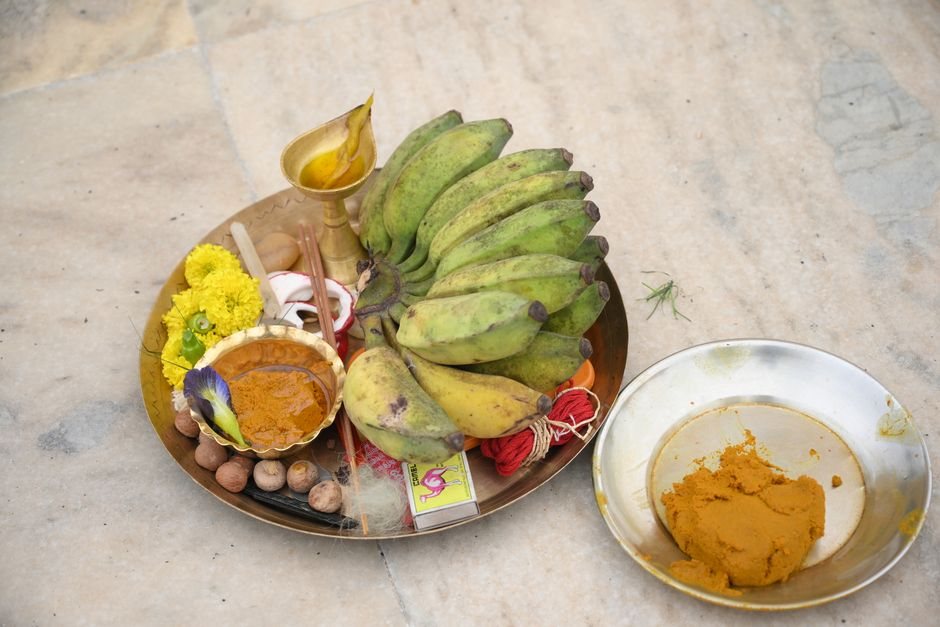
| Fol (fruit) | Banana, coconut, seasonal fruit offered raw as naivedya | Daily naivedya |
The tithi timings shift by a day between the Bengali (para-viddha) and the all-India (purva-viddha) panchang this year, so confirm your local dates on a source like Drik Panchang before you lock a Sandhi Puja or Kumari Puja bhog slot. If you have already run the numbered 56 bhog list for Janmashtami or the 9 bhog list for Navratri, this is the same idea, a devotional list people search for by name and want in full.
What is served on Saptami, Ashtami and Navami?
The bhog is not the same every day. It builds from Saptami, peaks on Ashtami, and turns into a fuller feast on Navami. Here is the day-by-day Durga Puja prasad list, in order.
- Maha Saptami: khichuri bhog begins. The first proper bhog is offered after the puja. It is usually khichuri, labra, a fried item (beguni or aloo bhaja) and chutney, kept simple.
- Maha Ashtami: the big niramish bhog. This is the most important bhog day. The full spread goes out, bhoger khichuri, labra, beguni, tomato khejur chutney, payesh and papad, all strictly no-onion no-garlic, served after Ashtami Anjali and Sandhi Puja to everyone at the pandal.
- Maha Navami: pulao and dum aloo. Many pandals switch the khichuri for basanti pulao with niramish dum aloo, luchi and a chutney, plus payesh and sweets. It is the richest bhog of the four days.
- Bijoya Dashami: sweets and Bijoya. The food turns to mishti, sandesh, rosogolla and naru, shared with sindoor khela and Bijoya greetings as the Goddess is bid farewell.
So when someone searches “ashtami bhog items”, they mean the Ashtami spread specifically, khichuri, labra, beguni, chutney, payesh, and when they search “navami bhog” they usually mean the pulao-and-dum-aloo version. Keep the two menus separate on your board and in your order form, because a family booking bhog prasad for their society pandal will ask for one or the other by name.
Why is Durga Puja bhog strictly vegetarian (niramish)?
The pandal bhog offered to the Goddess is always niramish, cooked without onion and without garlic, because it is naivedya first and food second, it is offered to the deity before it is eaten. That single rule shapes the whole kitchen. Labra is built on pumpkin, potato, brinjal, beans, radish and pointed gourd rather than a bhuna onion base; the dum aloo gets its body from tomato, ginger and whole spices; and the khichuri leans on ghee, bay leaf and roasted moong dal for flavour. If a term on this list is new to your floor staff, our restaurant operations glossary defines niramish, naivedya, satvik and the rest. The one place operators slip is assuming “vegetarian” is enough, a diner keeping the Ashtami fast will not touch bhog cooked with onion or garlic, so keep the niramish bhog on its own station with its own utensils, well away from any regular à la carte line.
How do pandals cook and serve bhog to 500+ people?
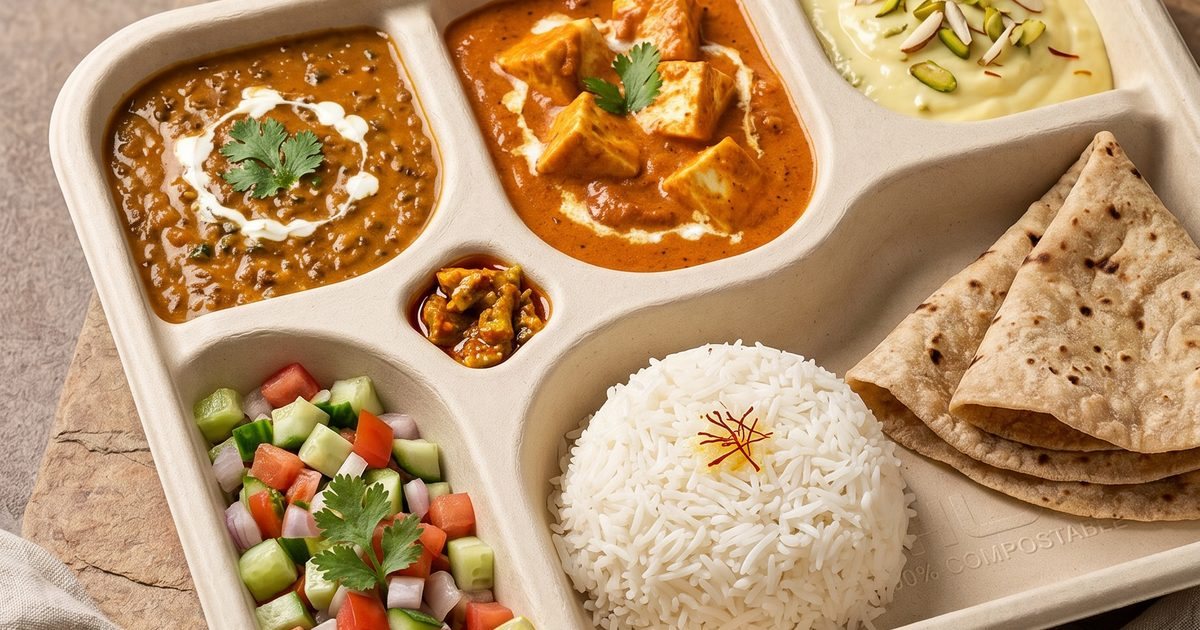
Durga Puja bhog is community cooking at a scale most restaurants never touch, a mid-size Kolkata or Delhi pandal can serve khichuri bhog to 500 to 2,000 people across Ashtami and Navami. It is cooked in giant handis over open flame, ladled fresh, and served in continuous sittings as devotees file through after anjali. The classic serving ware was the sal-leaf plate (shal patar thala) and the leaf bowl, and that instinct, warm food, no plastic, compostable afterwards, still guides most committees. A growing number of pandals and the caterers who supply them now serve the khichuri-labra bhog on compostable bagasse plates and bowls (Chuk being one of the options) because they hold hot, wet khichuri and runny chutney without going soggy, stack fast for volunteers, and go into the same compost stream as the leaf plates they replace.
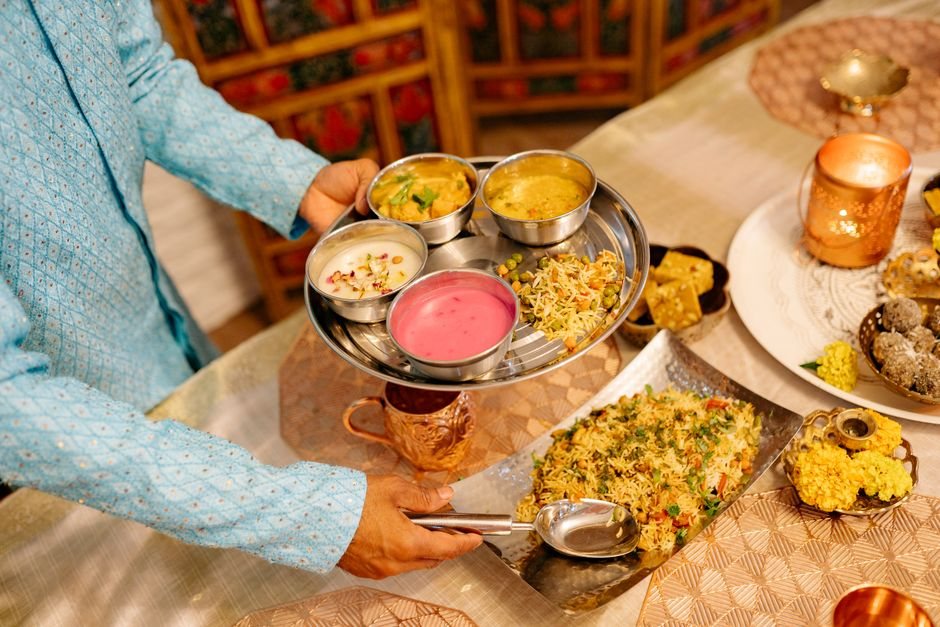
If you are catering bhog this year, three things decide whether the day runs smoothly. First, portioning: one standard bhog serve is roughly a scoop of khichuri, two spoons of labra, one beguni, a spoon of chutney and a small payesh, fix that plate before Ashtami and your rice-and-dal indent stops being guesswork. Second, holding: khichuri thickens as it sits, so cook in batches through the sitting rather than one giant pot at dawn. Third, packaging for the takeaway share, because plenty of families collect bhog to carry home to elderly relatives who could not come to the pandal. Our takeaway food packaging guide covers leak-proof choices for wet items like khichuri and payesh, and the way we broke down serving a 26-dish Onam sadya for restaurants applies directly to running a high-volume festival meal.
Prep and pricing, in short
Price a bhog catering order on ingredient cost plus a festival premium: gobindobhog rice, ghee and good aamsotto cost more than everyday staples, and a niramish spread that cooks slowly ties up your kitchen for the day. A compact, well-run bhog menu, khichuri, labra, beguni, chutney and payesh, beats a sprawling one: less waste, tighter inventory, and faster serving on your busiest sittings. Caterers taking bulk pandal or society orders should confirm their FSSAI registration is current, since the festival is a common inspection window, and our FSSAI licence renewal checklist covers the timeline so a lapsed licence does not stop a festival order.
In a Nutshell
Durga Puja 2026 is 16 to 21 October. The bhog is the niramish (no onion, no garlic) community meal offered to the Goddess and shared as prasad. The core Durga Puja bhog list is bhoger khichuri, labra, beguni, tomato khejur chutney and payesh, with basanti pulao and niramish dum aloo taking over on Navami, and sweets on Dashami. Ashtami carries the biggest bhog. For caterers and pandal committees, the wins are a fixed niramish station, a tight menu portioned before Ashtami, cook-through-the-sitting batching, and compostable serving ware that survives hot khichuri and the takeaway share.
FAQ
What is on the Durga Puja bhog list?
The classic Durga Puja bhog list is bhoger khichuri (gobindobhog rice and moong dal), labra (mixed five-vegetable curry), beguni (fried aubergine), tomato khejur chutney and payesh, with papad, basanti pulao, niramish dum aloo, luchi and sweets on the fuller days. It is all vegetarian and cooked without onion or garlic.
What are the Ashtami bhog items?
Maha Ashtami carries the biggest bhog: bhoger khichuri, labra, beguni, tomato khejur chutney, payesh and papad, served niramish (no onion, no garlic) after Ashtami Anjali and Sandhi Puja. It is the most important bhog day of Durga Puja.
What is served as Navami bhog?
Navami bhog is usually richer than Ashtami: many pandals serve basanti pulao (sweet yellow pulao) with niramish dum aloo, luchi and chutney, along with payesh and sweets, in place of the Ashtami khichuri.
Is Durga Puja bhog vegetarian?
Yes. The bhog offered to the Goddess and shared as prasad is strictly niramish, vegetarian and cooked without onion or garlic, because it is naivedya offered to the deity before it is eaten. Non-vegetarian dishes cooked at home during Navami are separate from the pandal bhog.
What is bhoger khichuri made of?
Bhoger khichuri is made with gobindobhog rice (a short-grain aromatic Bengal rice) and roasted moong dal, cooked with ghee, ginger, bay leaf, cumin and whole spices, and often a few vegetables. It is softer and richer than everyday khichuri because it is festival bhog.
Catering Durga Puja bhog this year? Move your khichuri, labra and payesh onto compostable bagasse plates, bowls and trays that hold hot, wet bhog without leaks or plastic, the same compost stream as the leaf plates they replace. See CHUK plates and bowls, order a sample box to test before the pandal rush, or WhatsApp us for festival pricing.