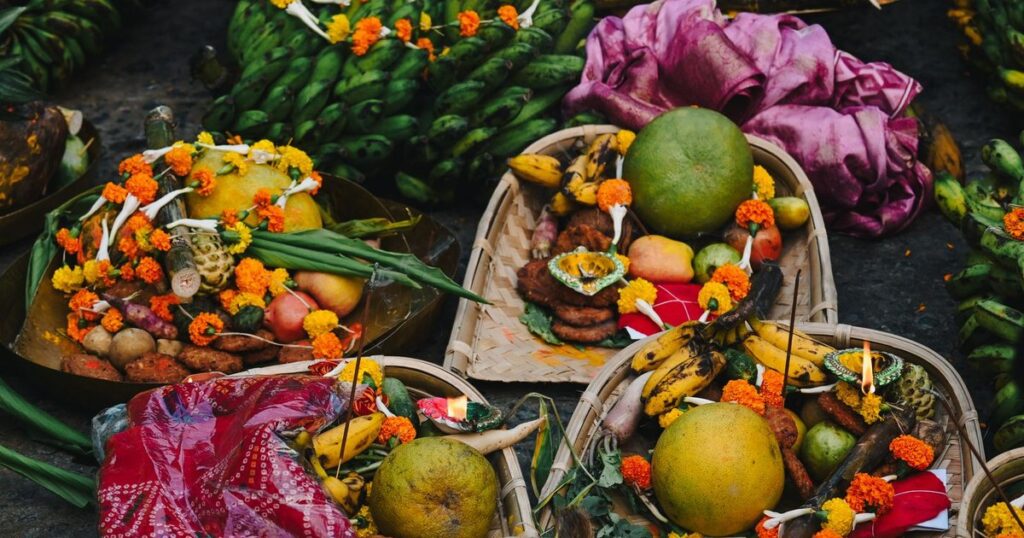
Chhath Puja 2026 runs from Nahay Khay on Friday, 13 November to Usha Arghya on Monday, 16 November. The core Chhath puja prasad list is thekua, kasar (rice laddoo), the Kharna kheer called rasiya, and a bamboo soop of seasonal produce: bananas, sugarcane, coconut, gagal lemon, sweet potato and singhara.
What is the complete Chhath Puja prasad list?
Chhath prasad is offered to Surya and Chhathi Maiya in a soop, a flat bamboo winnowing basket, and carried to the ghat in a larger basket called a daura. Every item is vegetarian, made without onion or garlic, and most families cook the prasad themselves in a freshly cleaned kitchen. Nearly everything on it is seasonal, from winter fruit and fresh roots to sweets made of wheat, rice and jaggery. Households differ a little, but these are the items you will find in almost every soop from Patna to Delhi to Mumbai.
| # | Prasad item | Type | What it is |
|---|---|---|---|
| 1 | Thekua (khajur) | Sweet | Wheat flour, jaggery and ghee, pressed in a wooden mould and fried. The main Chhath prasad |
| 2 | Kasar (kasar laddoo) | Sweet | Roasted rice flour bound with jaggery and ghee into balls |
| 3 | Rasiya (gud ki kheer) | Kharna prasad | Rice cooked in milk with jaggery instead of sugar |
| 4 | Roti or puri with ghee | Kharna prasad | Eaten with rasiya to break the Kharna fast |
| 5 | Banana bunch (kela ghaur) | Fruit | A whole raw bunch, often smeared with sindoor |
| 6 | Sugarcane (ganna) | Fruit | Whole stalks with leaves, also used to build the kosi canopy |
| 7 | Coconut with husk | Fruit | The jata wala nariyal, kept whole |
| 8 | Gagal or dabh nimbu | Fruit | The large citron that sits in the middle of most soops |
| 9 | Sweet lime and orange | Fruit | Mausambi and santara, whatever is in season |
| 10 | Apple | Fruit | Usually one or two per soop |
| 11 | Custard apple (sharifa) | Fruit | In season in November and common in Bihar soops |
| 12 | Guava | Fruit | Another winter fruit found in many baskets |
| 13 | Pomegranate | Fruit | Added by many families, though not essential |
| 14 | Singhara (water chestnut) | Fruit | Fresh, in the green or dark shell |
| 15 | Sweet potato (shakarkand) | Root | Raw, whole |
| 16 | Suthni | Root | A small local yam, easy to find in Bihar markets in Chhath week |
| 17 | Fresh turmeric plant | Root | Kachchi haldi with its leaves |
| 18 | Fresh ginger plant | Root | Adrak with leaves, also eaten at paran |
| 19 | Radish (mooli) | Vegetable | With the leaves on |
| 20 | Cucumber | Vegetable | Whole, often a local variety |
| 21 | Makhana | Dry offering | Fox nuts, used by some families |
| 22 | Paan leaf and supari | Puja item | Betel leaf and areca nut |
| 23 | Akshat (unbroken rice) | Puja item | Raw arwa rice for the puja |
If you only remember five, they are thekua, kasar, a banana bunch, sugarcane and coconut. People look up Chhath the same way they look up the 56 bhog list for Janmashtami or the Durga Puja bhog list: they want the full list first and the details after. Chhath also comes exactly a week after Diwali, so many sweet shops move straight from the Diwali sweets list to thekua orders.
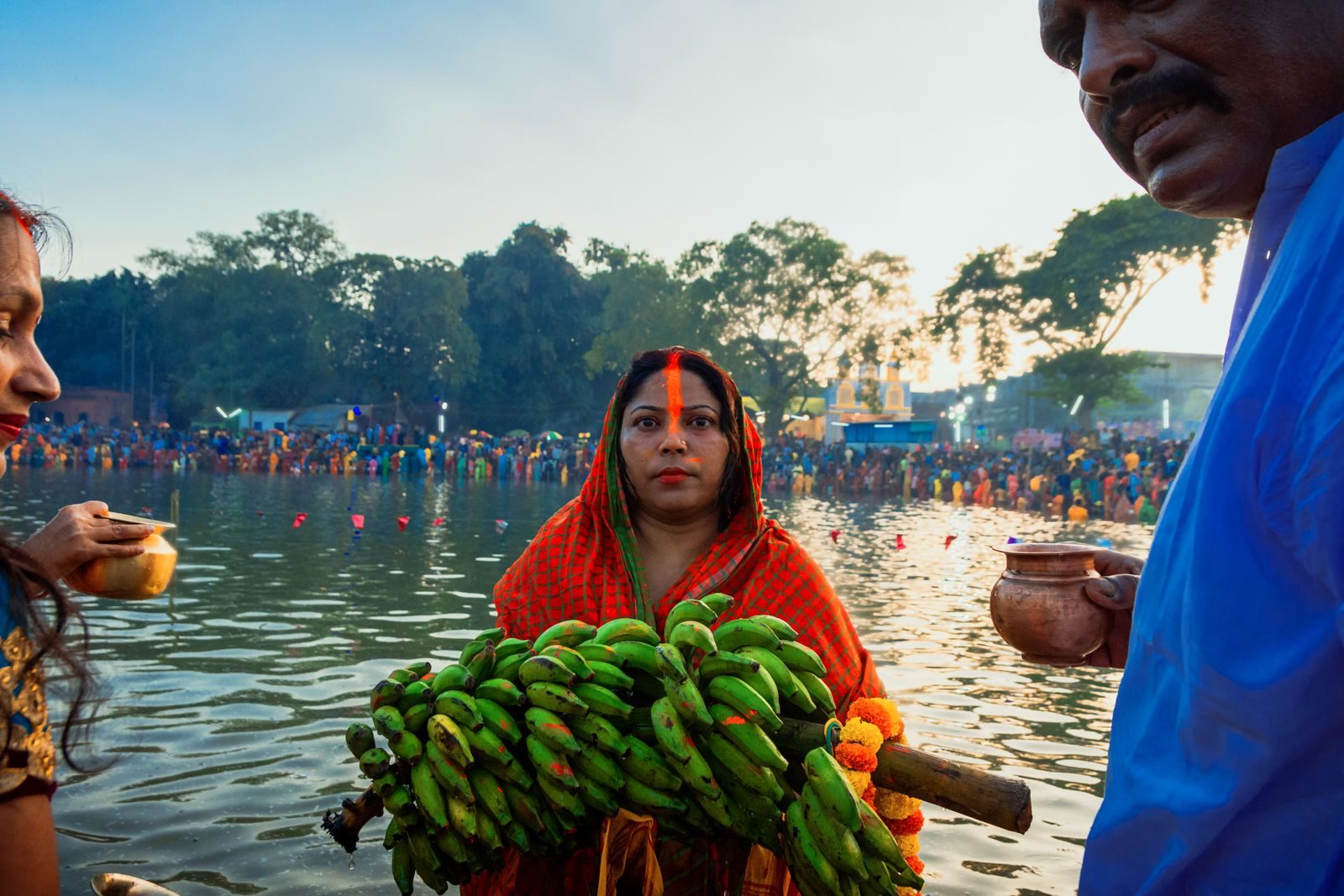
What are the 4 days of Chhath Puja in 2026, and what is eaten each day?
Chhath is a four-day vrat that falls on Kartik Shukla Shashthi. In 2026 the main day, Sandhya Arghya, is Sunday, 15 November, according to Drik Panchang. The person keeping the fast, called the vratin or parvaitin, eats once on the first day and once on the second evening. After that comes a nirjala fast of about 36 hours, without food or water, which ends only after the offering to the rising sun on the fourth morning. On every day the food is satvik and kept apart from the family’s usual cooking. Many homes cook the Kharna prasad on a new clay chulha over mango wood, and use brass or fresh utensils that have never touched non-vegetarian food. The day-by-day table below gives the 2026 dates and what is cooked or offered on each, so you can plan the shopping and the cooking.
| Day | Date (2026) | Ritual | Food and offering |
|---|---|---|---|
| 1. Nahay Khay | Friday, 13 November | Holy bath, house cleaned | Kaddu bhaat: lauki with chana dal and arwa rice, cooked in ghee, eaten once |
| 2. Kharna (Lohanda) | Saturday, 14 November | Day-long fast, broken after sunset | Rasiya, roti or puri and banana, then shared as prasad |
| 3. Sandhya Arghya | Sunday, 15 November | Evening offering to the setting sun at the ghat | The full soop: thekua, kasar, fruits, roots. Sunset 5:28 PM in New Delhi |
| 4. Usha Arghya | Monday, 16 November | Offering to the rising sun, then paran | Fast broken with prasad, ginger and water. Sunrise around 6:45 AM in New Delhi |
Sunrise and sunset come earlier in Patna and Kolkata than in Delhi, so check a panchang for your city before you plan ghat timings.
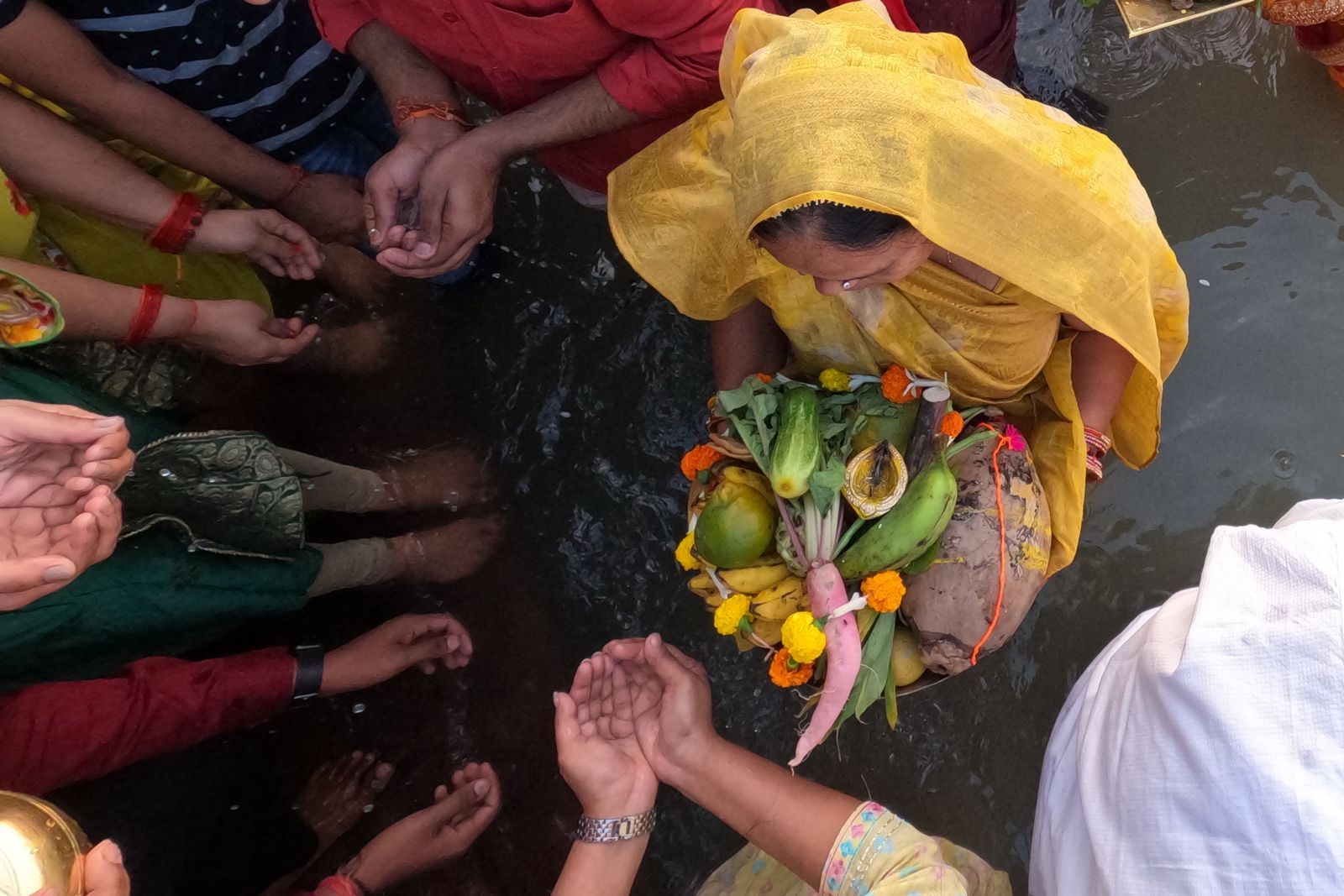
How is thekua made, and how long does it keep?
Thekua is the one prasad item every Chhath soop carries. It is a hard, crisp wheat cookie sweetened with jaggery, and it is made in large quantities because it goes to the ghat, to neighbours and to relatives in other cities. The base recipe uses whole wheat flour, jaggery melted in a little water, ghee for the dough and grated dry coconut, with fennel or cardamom for flavour. The dough is kept stiff, pressed into a wooden mould called a sancha to give it the pattern, and fried slowly in ghee until it turns deep brown. Fried slowly enough, thekua stays crisp for about two weeks in an airtight tin, which is why families post it across the country after the festival. Kasar is simpler. Rice flour is roasted until fragrant and mixed with jaggery and ghee, sometimes with sesame, then rolled into balls by hand.
What goes in the Chhath puja samagri list?
Beyond the food, the vratin needs a fixed set of puja items, and the bamboo ones sell out in city markets during Chhath week:
- Soop: bamboo winnowing baskets, one per arghya, sometimes brass
- Daura: a large bamboo basket for carrying the soops to the ghat
- Lota: brass or copper pot for offering water or raw milk to the sun
- Clay diyas, ghee and cotton wicks
- Sindoor and new clothes for the vratin (often a yellow or orange sari) and a yellow cloth
- Incense and marigold garlands
- Kosi set: sugarcane stalks, a clay elephant and diyas, for families who fill the kosi on Sandhya Arghya night
If your staff are new to words like soop, bhog or prasad, the restaurant operations glossary covers the common terms.
What should sweet shops and caterers prepare for Chhath Puja food orders?
Most vratins make their own prasad, and many will not eat prasad made by anyone else. Your Chhath business is the people around them: families who cannot cook that much thekua in a city flat, relatives sending thekua to Bihar from Delhi, Mumbai or Bengaluru, and the Chhath committees that hand out prasad and tea at the ghat. In cities with large Bihari and Purvanchali communities, demand for thekua starts in the week after Diwali.
A sweet shop has three jobs here. First, say plainly how the batch was made: whole wheat, jaggery, desi ghee, no onion or garlic, and a kitchen kept separate from savoury cooking. Second, put a best before date on the box. FSSAI has required a best before date on loose sweets since October 2020, and if your licence is up for renewal, the FSSAI licence renewal checklist is worth a look before the rush. Third, pack thekua dry and airtight. It is the easiest sweet of the season to ship, so offer 500 g and 1 kg tins for courier orders.
Ghat committees and caterers deal with crowds of thousands on a riverbank or pond, handing out prasad by hand after Usha Arghya. Small portions travel best: a piece of thekua, a little kasar and cut fruit in a dona. Plastic plates and cups left on the bank easily end up in the water, so more committees now hand out prasad in leaf donas or compostable bagasse donas and bowls (Chuk is one of the options), which can go into the compost with the flower waste. Our guide to the single-use plastic ban covers what is and is not allowed, and the takeaway food packaging guide explains how to pack orders that travel.
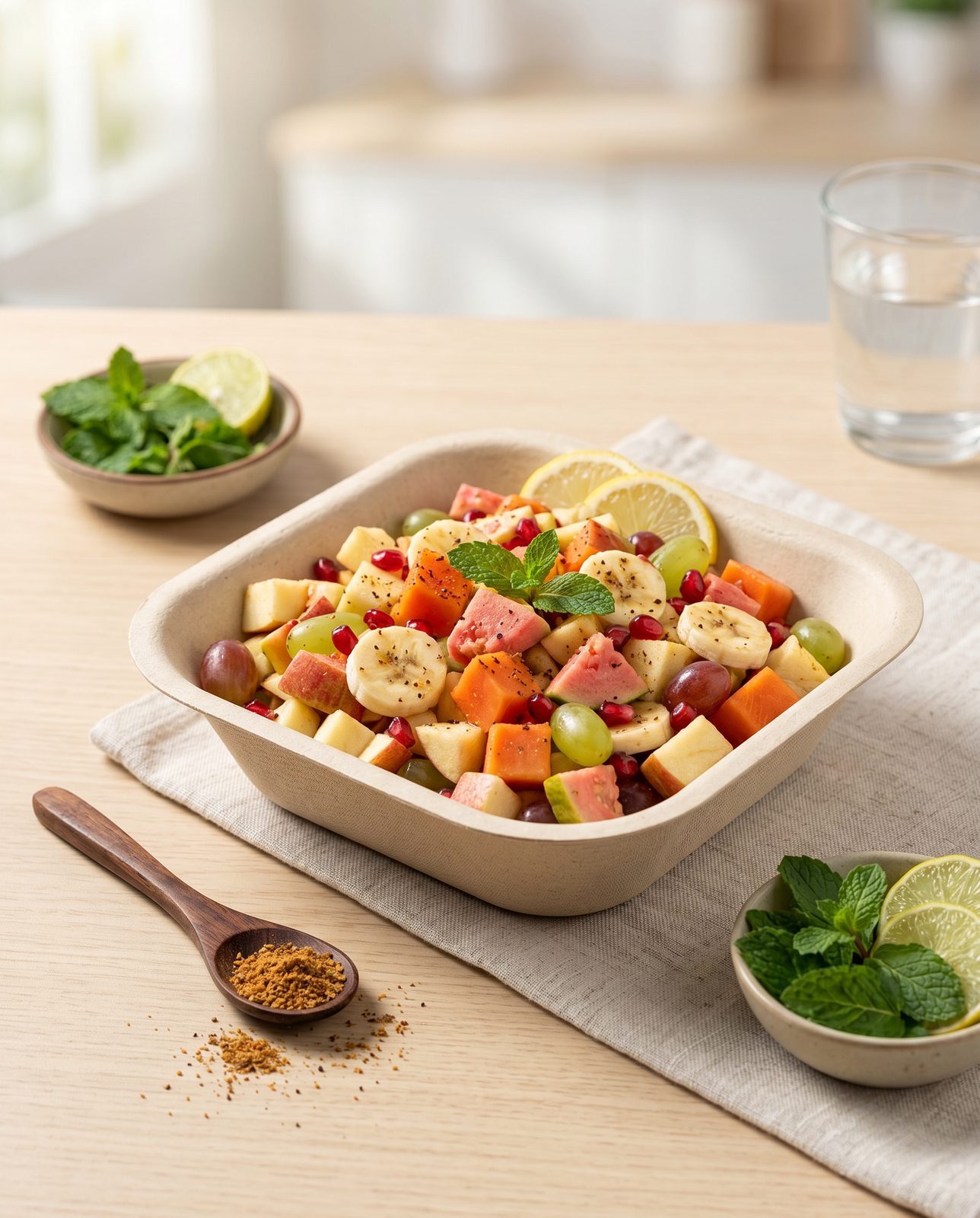
Restaurants near large ghats can also run an early-morning stall on 16 November. Families arrive before sunrise and wait in the cold, so tea, ginger water and simple satvik food without onion or garlic sell well once the arghya is done. Keep the menu short and plan your waste bins, because the morning crowd leaves fast.
In a Nutshell
Chhath Puja 2026 runs from Nahay Khay on Friday, 13 November to Usha Arghya on Monday, 16 November, with Sandhya Arghya on Sunday, 15 November. The prasad list is thekua, kasar, the Kharna rasiya with roti, and a soop of seasonal produce: bananas, sugarcane, coconut, gagal lemon, apple, sharifa, singhara, sweet potato, suthni, radish, fresh ginger and turmeric. Sweet shops should label thekua clearly, add a best before date and pack it airtight for courier orders. Ghat committees should serve prasad in small portions and keep plastic out of the water.
FAQ
What is the main prasad of Chhath Puja?
Thekua is the main prasad of Chhath Puja. It is a fried cookie of wheat flour, jaggery and ghee, offered in the soop with kasar (rice and jaggery laddoo), bananas, sugarcane, coconut and other seasonal fruit.
What is offered as Kharna prasad?
Kharna prasad is rasiya, a kheer of rice cooked in milk with jaggery, eaten with roti or puri and banana. The vratin eats it after sunset on the second day, and then begins the 36-hour nirjala fast.
What are the dates of Chhath Puja in 2026?
Nahay Khay is on Friday, 13 November; Kharna on Saturday, 14 November; Sandhya Arghya on Sunday, 15 November; and Usha Arghya with paran on Monday, 16 November 2026.
Which fruits are offered in Chhath Puja?
The usual fruits are a banana bunch, sugarcane, coconut with husk, gagal lemon, sweet lime, orange, apple, custard apple, guava, pomegranate and singhara, along with roots such as sweet potato, suthni, fresh ginger and turmeric.
Is salt used in Chhath prasad?
No. The prasad, including thekua, kasar and rasiya, is made without salt, onion or garlic. Many families cook the Nahay Khay meal with rock salt (sendha namak) instead of regular salt.
Handing out prasad at a ghat or packing thekua orders this Chhath? Compostable bagasse donas and bowls are an easy way to serve thekua, kasar and cut fruit without leaving plastic by the water. See CHUK disposable bowls and donas, order a sample box before the festival week, or WhatsApp us for bulk pricing.