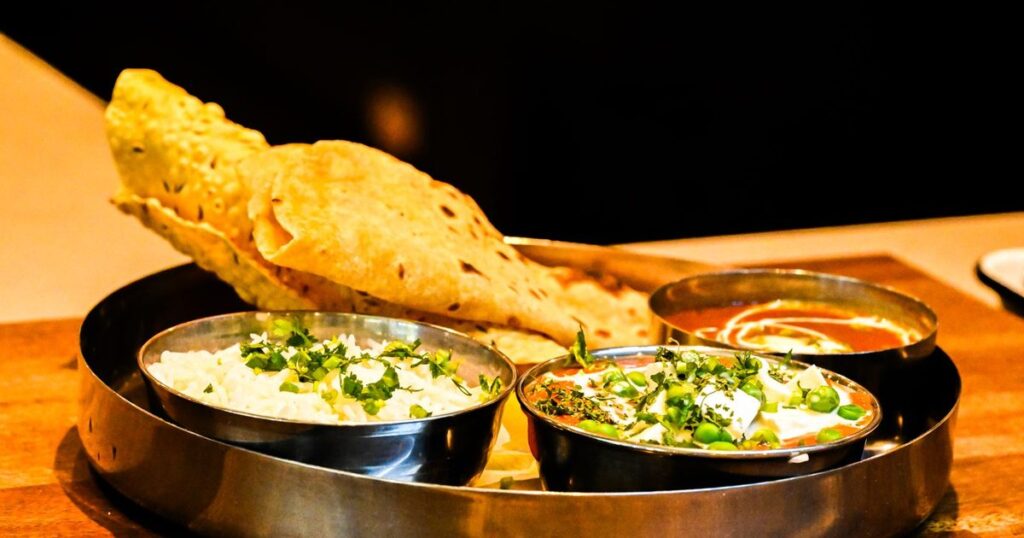
A full Indian wedding food menu list runs in nine courses: welcome drinks, chaat and live counters, starters, main course, dal, breads, rice, salads and raita, then desserts and paan. Most North Indian wedding menus carry 35 to 50 dishes. Here are 50, so you can build or check a wedding catering menu in one sitting.
What is on a complete Indian wedding food menu list?
Every family edits the list to its own region and budget, but the courses barely change. A typical Delhi, Punjab or UP wedding uses the shape below, and Gujarati, Marwari and South Indian menus swap dishes within the same courses. Mark the dishes you can make well at volume and the gaps you would have to buy in.
| # | Dish | Course | Note |
|---|---|---|---|
| 1 | Masala chaas | Welcome drink | Spiced buttermilk, cheap and popular at day functions |
| 2 | Aam panna or kokum sherbet | Welcome drink | Kokum for coastal menus |
| 3 | Fresh lime soda | Welcome drink | Sweet, salted or mixed |
| 4 | Kesar badam milk | Welcome drink | Served warm at winter weddings |
| 5 | Masala chai and coffee | Welcome drink | Runs all evening at a separate counter |
| 6 | Pani puri (golgappa) | Chaat counter | The busiest counter at most weddings |
| 7 | Aloo tikki chaat | Chaat counter | Made on a tawa in front of guests |
| 8 | Papdi chaat | Chaat counter | Papdi, potato, curd and chutneys |
| 9 | Raj kachori | Chaat counter | A large kachori filled and topped with curd, sev and chutney |
| 10 | Dahi bhalla | Chaat counter | Lentil dumplings in sweet curd |
| 11 | Chilla or moong dal cheela | Live counter | Popular at morning and haldi functions |
| 12 | Pav bhaji | Live counter | Easy to scale on one large tawa |
| 13 | Dosa | Live counter | Plain, masala and mysore, with sambar and chutney |
| 14 | Momos | Live counter | Now standard at North Indian weddings |
| 15 | Pasta or noodles | Live counter | The kids’ counter |
| 16 | Paneer tikka | Starter | The one starter almost every veg menu carries |
| 17 | Hara bhara kabab | Starter | Spinach and pea patties |
| 18 | Veg spring rolls | Starter | Fried in batches, holds well |
| 19 | Dahi ke kabab | Starter | Hung curd patties, soft inside |
| 20 | Mushroom or tandoori aloo | Starter | Second tandoor option |
| 21 | Chicken tikka | Starter (non-veg) | Only where the family serves non-veg |
| 22 | Mutton seekh kabab | Starter (non-veg) | Skewered, from the tandoor |
| 23 | Fish amritsari | Starter (non-veg) | Batter-fried fish, Punjabi weddings |
| 24 | Shahi paneer or paneer butter masala | Main course | The anchor paneer gravy |
| 25 | Kadai paneer or matar paneer | Main course | A second, drier paneer dish |
| 26 | Malai kofta | Main course | Cream gravy, a wedding staple |
| 27 | Mixed vegetable or veg jalfrezi | Main course | Seasonal vegetables |
| 28 | Dum aloo | Main course | Kashmiri or Banarasi style |
| 29 | Chana masala or pindi chole | Main course | Goes with bhature at lunch functions |
| 30 | Butter chicken | Main course (non-veg) | The default non-veg gravy |
| 31 | Mutton rogan josh | Main course (non-veg) | Or a mutton curry in the family style |
| 32 | Dal makhani | Dal | Slow-cooked black dal, on almost every menu |
| 33 | Yellow dal tadka | Dal | The lighter dal for guests who want one |
| 34 | Kadhi pakoda | Dal | Common at day functions in Rajasthan and UP |
| 35 | Butter naan | Bread | Needs a tandoor and a dedicated cook |
| 36 | Tandoori roti | Bread | Plain or butter |
| 37 | Lachha paratha | Bread | Layered, from the tandoor |
| 38 | Missi roti | Bread | Gram flour roti, Punjabi menus |
| 39 | Puri or bhatura | Bread | For lunch and haldi menus |
| 40 | Jeera rice or veg pulao | Rice | Plain rice for the dal |
| 41 | Veg or chicken biryani | Rice | Dum biryani, with salan or raita |
| 42 | Boondi raita | Raita and salad | Or mixed vegetable raita |
| 43 | Green salad and laccha onion | Raita and salad | With lemon and green chilli |
| 44 | Pickle, papad and chutney | Accompaniment | Kept at the end of the main counter |
| 45 | Gulab jamun | Dessert | Served hot from a chafing dish |
| 46 | Jalebi with rabri | Dessert | Fried at a live counter |
| 47 | Moong dal halwa or gajar halwa | Dessert | Gajar halwa in the winter season |
| 48 | Rasmalai | Dessert | Served chilled |
| 49 | Kulfi and ice cream | Dessert | Matka kulfi or a kulfi falooda cart |
| 50 | Meetha paan and mukhwas | After the meal | Paan counter near the exit |
A tight menu for 150 guests uses about 25 of these: two drinks, three chaat or live counters, four starters, five main dishes with one dal, three breads, one rice, raita and salad, and three desserts. If you already sell sweets, our Diwali sweets list has 40 mithai by region you can offer as add-ons, and the Eid catering menu guide covers biryani and kebab quantities for non-veg weddings.
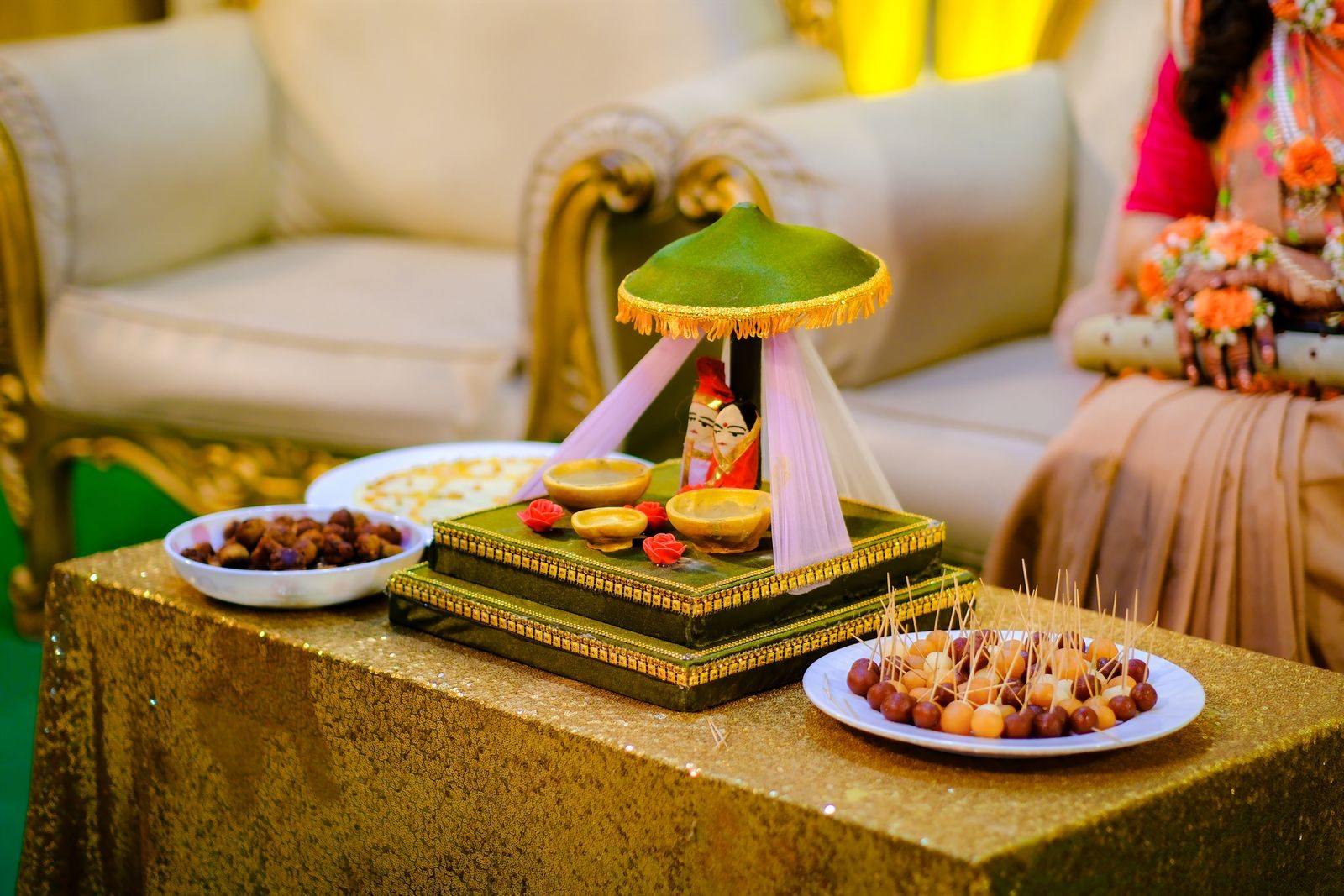
What food is served at haldi, mehendi, sangeet and the reception?
A North Indian wedding is four or five events over two or three days, and each one eats differently. The big wedding-night dinner usually goes to a banquet caterer. The smaller events are where a restaurant gets in.
| Function | Time and size | What is usually served |
|---|---|---|
| Roka or sagai (engagement) | Evening, 50 to 150 guests | Snacks, two or three starters, a short veg dinner, mithai boxes for guests |
| Haldi | Morning, close family, 30 to 80 | Puri with aloo sabzi, chole bhature, kachori, poha, jalebi, chai, chaas |
| Mehendi | Afternoon, mostly women, 50 to 150 | Chaat counter, pav bhaji, chilla, sandwiches, cold drinks, kulfi |
| Sangeet or cocktail night | Late evening, 100 to 300 | Starters on rotation for hours, a short main course, live counters |
| Wedding (pheras) | Night, 200 to 1,000 | The full menu above, usually with a banquet or tent caterer |
| Reception | Evening, 200 to 800 | Full menu with more starters and a larger dessert spread |
When is wedding season 2026, and which dates will be busiest?
The season restarts after Dev Uthani Ekadashi on Friday, 20 November 2026, with Tulsi Vivah on the 21st. Drik Panchang lists 11 vivah muhurat dates in the rest of the year: 21, 24, 25 and 26 November, then 2, 3, 4, 5, 6, 11 and 12 December. Its list stops after 12 December, when Kharmas begins, and picks up again in the new year. In Delhi or Jaipur, expect the 21st, the 25th and the first weekend of December to be the tightest days for tents, halwais, tandoor cooks and serving staff. The haldi and mehendi for a 25 November wedding fall on the 23rd and 24th, so your busy days begin earlier than the muhurat dates suggest. Families lock their caterers around three weeks out, so have your packages and WhatsApp catalogue ready by the second week of November. If a local muhurat list differs, go by the one the family’s pandit uses.
How can a small restaurant win bulk wedding catering orders without a banquet hall?
A restaurant can sell wedding food with a menu that travels well and staff who can serve at a home or a rented terrace. Most families are happy to give the haldi lunch or the mehendi chaat to the restaurant they already order from, because the big caterer is expensive for a 60-person event and often will not take it. Start by building three fixed packages for these smaller functions: a morning menu (puri, aloo, chole, halwa, chai), a chaat-and-snacks menu for mehendi, and a short dinner for the roka. Give each one a per-plate price for 50, 100 and 150 guests. Put a sample photo of each package on your WhatsApp catalogue and your Google Business Profile. Tell your regulars, at the counter and on delivery bags, that you take wedding orders. A neighbourhood restaurant that already cooks for these families every week has an advantage no event caterer has, because the family already knows the food.
Weddings also bring repeat work. The family that liked your haldi lunch will call you for the griha pravesh and the first Diwali. For more ideas on getting in front of couples and planners, read our guide on how to stand out as a caterer and get more wedding clients.
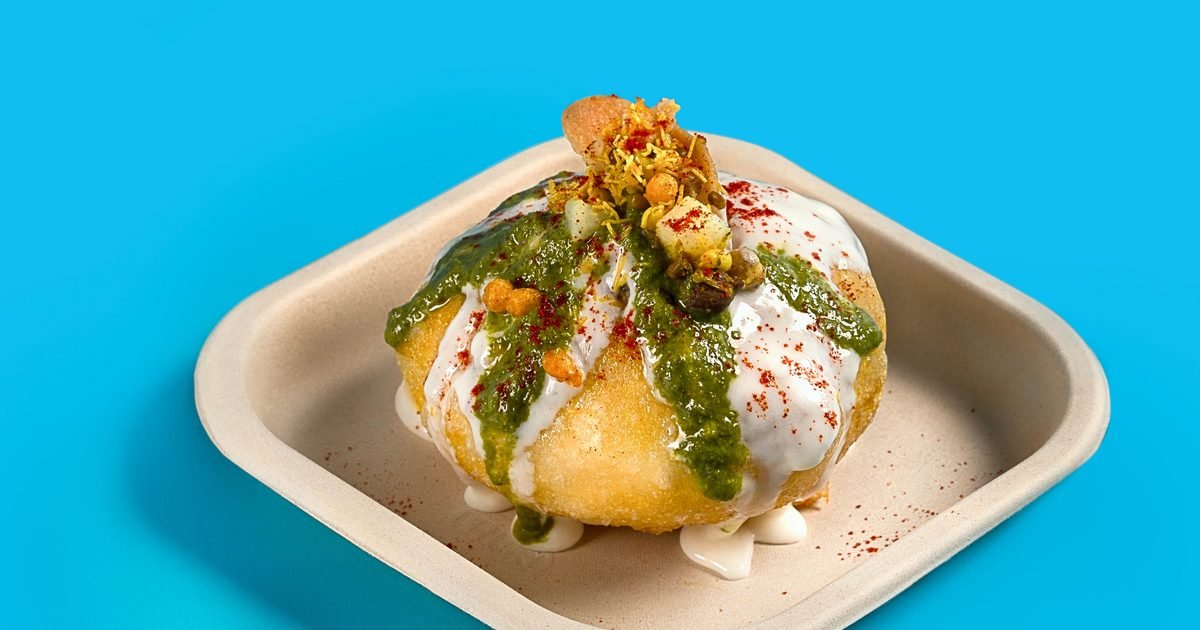
How do you price a wedding menu per plate?
Quote weddings per plate. Start from your food cost for one guest across the whole menu, then add labour, transport, disposables and your margin. Most restaurants aim to keep raw food cost at 30 to 35 percent of the price they charge. If a plate costs you Rs 180 in ingredients, the price should be around Rs 520 to Rs 600 before GST. The worked example below is for a 100-guest mehendi chaat-and-snacks menu. The numbers are only illustrations, so use your own costs.
| Line | Per plate (example) | How to work it out |
|---|---|---|
| Raw food cost | Rs 160 | Recipe cost of every dish, multiplied by the portion each guest will take |
| Wastage buffer (10%) | Rs 16 | Weddings always over-prepare; build it in |
| Staff for the event | Rs 60 | Cooks and servers for the hours on site, divided by guests |
| Transport and gas | Rs 20 | Tempo hire, LPG for live counters |
| Disposables | Rs 15 | Plates, bowls, cutlery, glasses, napkins |
| Total cost | Rs 271 | The floor you must not quote under |
| Price with food cost at a third | About Rs 490 | Rs 160 divided by 0.33. That leaves about Rs 219 over total cost; quote a clean Rs 499 |
Quote a minimum guest count, ask for 50 percent advance when the order is confirmed, and charge separately for extra guests beyond the agreed number. Write down what happens if the guest count drops by more than ten percent, because that is where most wedding disputes start.
How do you manage a bulk catering order from enquiry to clean-up?
A wedding order is a small project, and it goes wrong in the same places every time: the guest count, the timing, and who brings what. Use the same order sheet for every booking:
- Enquiry: date, function, venue, guest count, veg or non-veg, Jain or no onion-garlic needs.
- Tasting: offer a paid tasting for four people, adjusted against the final bill.
- Confirmation: final menu, per-plate price, advance received, written guest count.
- Three days before: buy dry stock, book the tempo, brief the staff, confirm the serving time with the family.
- On the day: arrive two hours early, set up counters, keep one person on the family’s phone.
- Clean-up: clear the venue, separate wet waste from plates and cups, take back your utensils.
- Next day: send the final bill and ask for a review and two referrals.
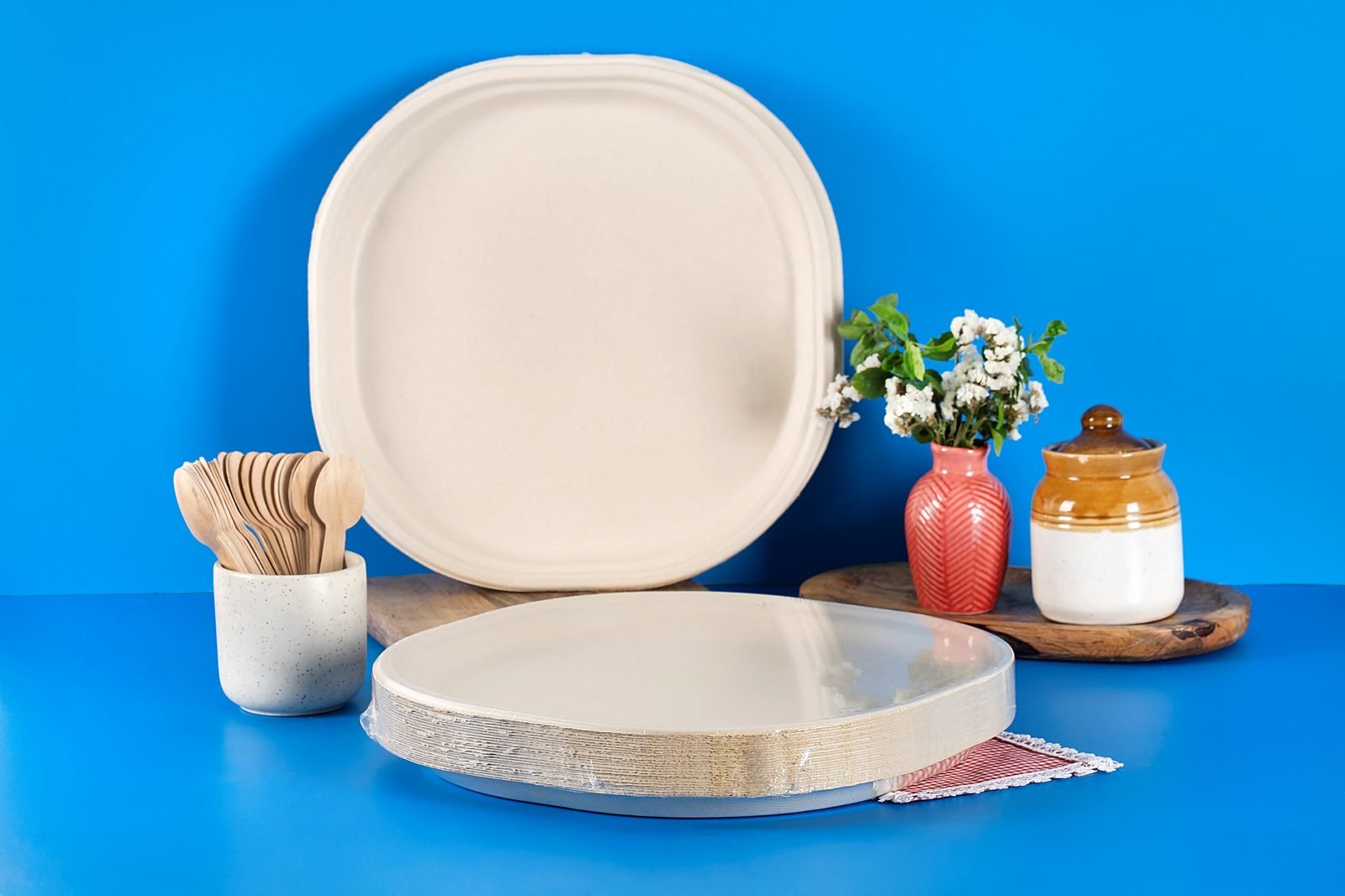
Two things matter more at a home function than in your own kitchen. The first is food safety on the move. Catering is food business under the FSSAI rules, so your licence has to cover it. Check your category on the FSSAI FoSCoS portal, and if renewal is due during the season, our FSSAI licence renewal checklist walks through it. Keep hot food above 60 degrees in chafing dishes, and do not leave curd, rasmalai or chaat out of the cold for hours. The second is plates and waste. At a terrace haldi there is no dishwashing area, so most restaurants bring disposables. Plastic plates are banned, and thin paper ones go soggy under chole or dal. Many caterers now use compostable bagasse plates and bowls (Chuk is one of the brands), which hold hot, wet gravies and can go out with the wet waste. The food waste management guide has a simple way to measure leftovers so you prepare less next time.
If you are sending food rather than serving it, pack each course separately and label the boxes by counter. The takeaway food packaging guide explains how to stop gravies leaking in a long tempo ride. New staff who do not know terms like per-plate cost or food cost percentage can look them up in the restaurant operations glossary.
In a Nutshell
An Indian wedding food menu runs from welcome drinks and chaat counters through starters, paneer and dal, breads and rice, to gulab jamun, kulfi and paan. Most menus carry 35 to 50 dishes. Wedding season 2026 restarts after Dev Uthani Ekadashi on 20 November and runs to 12 December, with 11 muhurat dates. Small restaurants should go after the haldi, mehendi and roka with three fixed packages priced per plate, keep food cost near a third of the price, and run every booking from one order sheet.
FAQ
How many dishes should be on an Indian wedding menu?
Most wedding menus carry 25 to 50 dishes. For 150 guests, about 25 dishes is enough: two drinks, three chaat or live counters, four starters, five main dishes with one dal, three breads, one rice, raita and salad, and three desserts.
What are the wedding dates in November and December 2026?
Drik Panchang lists vivah muhurat dates on 21, 24, 25 and 26 November and on 2, 3, 4, 5, 6, 11 and 12 December 2026. The season restarts after Dev Uthani Ekadashi on 20 November.
How much does wedding catering cost per plate in India?
It depends on the city, the menu and the number of dishes, so there is no single rate. Work it out from your own food cost: keep raw food cost at 30 to 35 percent of the price, then add staff, transport and disposables before you add your margin.
What food is served at a haldi ceremony?
Haldi is a morning event for close family, so the food is simple and filling: puri with aloo sabzi, chole bhature or kachori, poha, jalebi, chai and chaas.
Do I need a separate FSSAI licence for catering?
Catering is a food business, so it must be covered by an FSSAI registration or licence. If your restaurant licence does not list catering, check the right category on the FoSCoS portal before you take outdoor orders.
Taking haldi, mehendi or roka orders this season? Bagasse plates that hold chole, dal and halwa without going soggy make home functions easier to serve and to clear. See CHUK disposable plates, order a sample box before your first booking, or WhatsApp us for bulk pricing.