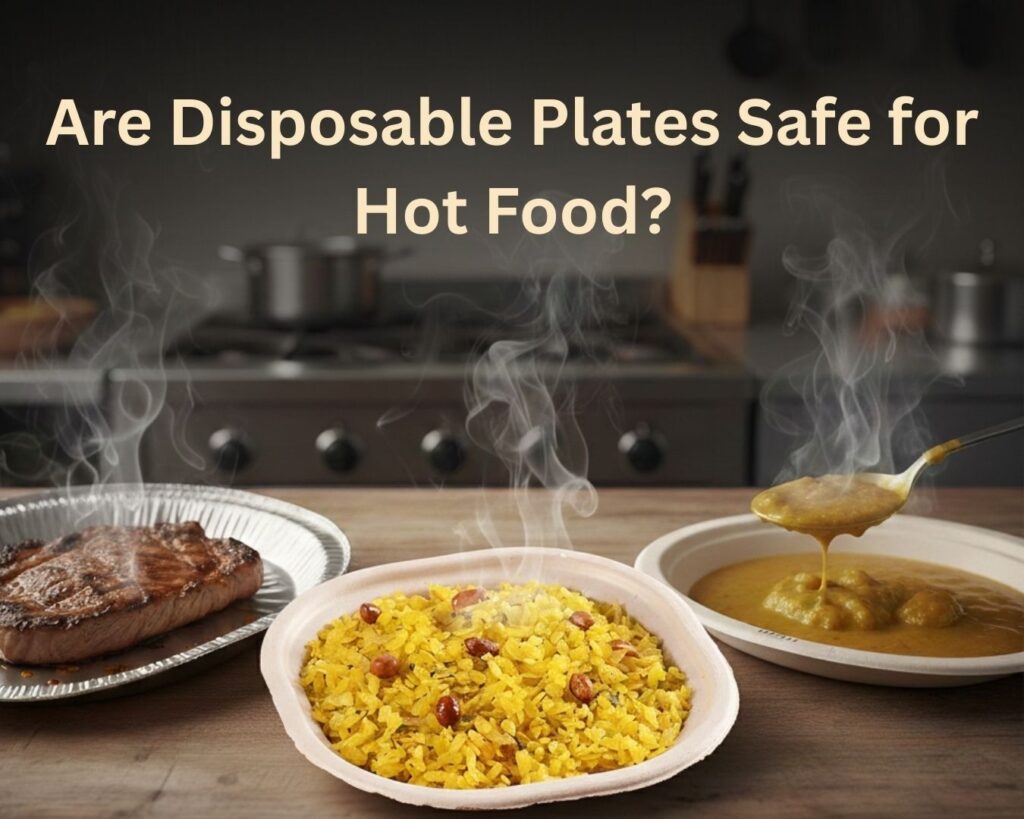
Are Disposable Plates Safe for Hot Food? The Honest Truth Nobody Talks About
You serve biryani at a catering gig. Dal at a wedding. Samosas at a corporate event. The food is hot, oily, and loaded with spice. And the plate holding it all together? You probably never gave it a second thought.
Here is what they don’t tell you: the moment your food turns hot, the plate beneath it starts telling a very different story.
Whether you are a restaurant owner dishing out 500 meals a day, a caterer managing a weekend shaadi, or a consumer grabbing takeaway on the go, you deserve to know what your food is actually touching. This is not fear-mongering. This is material science, broken down honestly.
Let us get into it.
What Actually Happens When Hot Food Meets a Disposable Plate?
Heat changes the game entirely. At room temperature, most disposable plates behave fine. But Indian food is rarely room temperature. Think piping-hot rajma, sizzling tawa items, freshly fried pakoras dripping in oil.
Here is the science in plain language:
- Heat softens materials. Coatings that hold up with dry snacks start breaking down with hot curries.
- Oil acts as a solvent. It pulls chemicals out of synthetic linings faster than water does.
- Acidity accelerates migration. Tamarind-based sambhar, tomato gravies, and lemon-dressed chaats all increase the rate at which chemicals leach.
Put all three together, which is exactly what most Indian meals do, and you have a perfect storm for chemical migration from plate to food.
The question is not just “are disposable plates safe?” It is specifically: are disposable plates safe for hot food? And the answer depends entirely on what the plate is made of.
The Paper Plate Illusion: What They Don’t Tell You
Paper disposable plates feel like the safe, natural choice. They look harmless. They are marketed as the better option. But here is the honest truth most manufacturers won’t put on the label.
Most paper plates are not plastic-free.
To make paper strong enough to hold hot dal without collapsing into a soggy mess, manufacturers apply a thin coating. That coating is usually one of two things:
- PE (Polyethylene): A conventional plastic. Full stop.
- PLA (Polylactic Acid): Marketed as “plant-based,” but it still behaves like plastic under heat. It requires industrial composting conditions to break down and is not home-compostable.
So when you serve hot food on a “paper” plate, the food is not touching paper. It is sitting on a plastic-lined surface. And when heat and oil hit that lining, microplastic particles can migrate directly into your food.
As a restaurant owner, that is a liability you did not sign up for. As a consumer, that is a risk you did not consent to.
Disposable Plate Materials vs Heat Safety: A Comparison
Here is a straightforward comparison of common disposable plate materials and how they perform with hot, oily food.
| Material | Plastic Coating? | Heat Resistance | Oil Resistance | Microplastic Risk | Compostable? |
|---|---|---|---|---|---|
| Styrofoam / Thermocol | Entirely plastic | Low – deforms with heat | Low | Very High | No |
| Standard Paper | Yes (PE lining) | Medium | Low without coating | High | No (coating prevents it) |
| PLA-Coated Paper | Yes (bio-plastic) | Medium | Medium | Moderate-High | Only industrially |
| Plastic (PP/PS) | Entirely plastic | Varies | High | Very High | No |
| Bagasse (Sugarcane Fibre) | No coating needed | High – naturally heat tolerant | High – fibre density resists oil | Negligible | Yes – home and industrial |
| Areca Leaf | No coating needed | High | Medium-High | Negligible | Yes |
The pattern is clear. Materials that rely on plastic coatings for performance are the ones that pose risk under heat. Materials built from natural fibre density, like bagasse, handle heat without needing a synthetic safety net.
Microplastic Leaching: The Risk You Cannot See
Microplastics are not visible to the naked eye. You will not taste them. You will not smell them. But research consistently shows they are entering our bodies through food contact materials.
Here is why this matters for your business and your health:
- Microplastics accumulate. They do not flush out of the body easily. Studies have found them in blood, lungs, and even placentas.
- Heat is the trigger. At room temperature, most coatings remain stable. But at 60 degrees Celsius and above, which is the temperature of most Indian meals when served, degradation begins.
- Oil speeds it up. Fatty, oily foods extract plastic particles at a much higher rate than dry or water-based foods.
As a caterer serving 1000+ plates at a function, or as a cloud kitchen pushing 200 deliveries a day, the cumulative exposure you are facilitating matters. Not because anyone is blaming you, but because knowing this gives you the power to make a better choice.
Why “Compostable” Does Not Automatically Mean “Safe for Hot Food”
This is where a lot of well-intentioned buyers get tripped up. You see “compostable” on the label and assume it is safe. But compostable is an end-of-life claim, not a food-safety claim.
Some compostable plates still use:
- Synthetic binders to hold the shape
- PLA coatings for moisture resistance
- Chemical additives to improve shelf appearance
If those coatings are synthetic, the same heat-related risks apply regardless of the compostable label. The plate might break down in a composting facility, but it could still leach chemicals into your hot food before it gets there.
The distinction that actually matters: compostable plates made from natural fibres, without plastic coatings or synthetic liners, are the ones that perform safely under heat. The compostable label alone is not enough. You need to look deeper.
What Actually Makes a Disposable Plate Safe for Hot Food?
Forget the marketing. Here are the material characteristics that matter:
- No plastic or polymer coating. If the plate needs a synthetic layer to function, it is not truly heat-safe.
- Strength from natural fibre structure. The plate should hold up because of how the fibres are compressed, not because of what was sprayed on top.
- Resistance to heat, oil, and moisture simultaneously. Indian food tests all three at once. The plate needs to pass all three.
- No adhesives that soften at high temperatures. Some plates use heat-sensitive glues in their construction that break down during use.
- Certified food-grade contact. Look for actual food safety certifications, not just environmental claims.
When these conditions are met, the risk of chemical migration drops to negligible levels. That is the standard you should be holding your plate supplier to.
Why Bagasse Plates Handle Hot Food Differently
Bagasse is the fibrous residue left after sugarcane juice extraction. It is an agricultural byproduct that would otherwise be burned or discarded.
Here is why bagasse behaves differently from paper or plastic when hot food is served:
- Natural fibre density. Bagasse fibres interlock during moulding, creating a structure that is inherently strong without coatings.
- Heat tolerance built in. The moulding process itself involves high heat and pressure, meaning the finished plate has already survived temperatures far beyond what your food will reach.
- No coating required. Because the fibre structure handles oil and moisture on its own, there is no synthetic layer to degrade or leach.
- No chemical migration. Independent lab tests on uncoated bagasse plates consistently show negligible chemical transfer, even with hot, oily food.
This is not a theoretical advantage. It is a measurable, testable difference that shows up in lab results.
The Business Case: Why This Matters for Restaurant Owners and Caterers
As a restaurant owner, you are already juggling food costs, staff management, FSSAI compliance, and delivery platform commissions. The last thing you need is a food safety concern hiding in your disposable plates.
But here is the business angle they don’t tell you:
- Customer awareness is growing. Diners are Googling “microplastics in food packaging.” When they find answers, they remember which restaurants cared and which did not.
- FSSAI is tightening regulations. Compostable food container regulations in India are evolving. Getting ahead of compliance is cheaper than catching up.
- Sustainability sells. Gen Z and millennial diners actively prefer brands that demonstrate real environmental commitment. Compostable disposables are a visible, tangible signal.
- Premium perception without premium pricing. Switching from plastic-coated paper to bagasse often costs only marginally more but elevates your brand positioning significantly.
This is not about saving the planet as a moral obligation. It is about running a smarter food business in 2026.
How to Identify Genuinely Safe Disposable Plates
Next time you are sourcing plates for your restaurant, cloud kitchen, or catering business, ask these questions:
- Is there a coating on this plate? If yes, what is it made of?
- What is the base material? Natural fibre (bagasse, areca) or paper?
- Has it been tested for food contact safety at high temperatures?
- Is it certified compostable by a recognized body? Look for BIS, OK Compost, or similar certifications.
- Can the supplier provide migration test reports? These show what (if anything) transfers from plate to food under heat.
If your supplier cannot answer these questions clearly, that tells you something.
For a deeper dive into identifying quality disposable plates, check out this guide on how to identify the best disposable plates.
Where Chuk Fits into This Conversation
Chuk plates are made from sugarcane bagasse. No plastic coatings. No PE linings. No PLA layers. The strength comes from compressed natural fibre, and the plates are designed to handle exactly what Indian food throws at them: heat, oil, moisture, and spice.
This is not a claim of perfection. It is a straightforward material choice. When there is no plastic layer to begin with, there is nothing to leach.
For restaurants and caterers already exploring this shift, here are some related reads:
- Why more food brands are switching to compostable disposables
- Ultimate guide to disposable plates in India
- Food delivery platforms and packaging: what restaurants need to know
- What happens during a surprise food safety inspection?
- How bagasse plates are made
In a Nutshell
- Most disposable plates marketed as “paper” contain hidden plastic coatings that can leach microplastics when exposed to hot, oily food.
- Heat, oil, and acidity, the three defining characteristics of Indian food, are exactly the conditions that trigger chemical migration from synthetic linings.
- “Compostable” on a label does not guarantee safety for hot food. You need to verify the plate is free from plastic coatings and synthetic binders.
- Bagasse (sugarcane fibre) plates are naturally heat-tolerant and do not require plastic coatings, making them a genuinely safer option for hot food.
- As a restaurant owner or caterer, choosing the right disposable plate is both a food safety decision and a business strategy decision.
- Always ask your supplier for material composition details and food-contact migration test reports.
Frequently Asked Questions
Are disposable plates safe for serving hot Indian food like biryani and dal?
It depends on the material. Disposable plates with plastic or PE coatings can release microplastics when hot, oily food is served on them. Plates made from natural fibres like sugarcane bagasse, without synthetic coatings, are considered safe for hot Indian meals because the fibre structure handles heat without chemical migration.
Do paper plates contain plastic?
Many paper disposable plates contain a thin layer of polyethylene (PE) or PLA coating to prevent sogginess and leakage. This coating is not always disclosed on the packaging. If a paper plate holds hot, oily food without becoming soggy, it almost certainly has a plastic lining.
What temperature makes disposable plates unsafe?
Chemical migration from synthetic coatings typically accelerates above 60 degrees Celsius. Most Indian food is served between 65 and 85 degrees Celsius. Oil and acidity further increase the rate of leaching, meaning that hot, oily, and spicy meals pose the highest risk on plastic-coated plates.
Are sugarcane bagasse plates microwave safe?
Yes, uncoated bagasse plates are generally microwave safe because they contain no metal or plastic layers. They can handle the heat generated during microwave reheating without deforming or releasing chemicals. Always confirm with the specific manufacturer, but this is a standard property of quality bagasse tableware.
How can I tell if a disposable plate has a plastic coating?
Try tearing the plate along one edge and look at the cross-section. A plastic coating will appear as a thin, shiny, separate layer. You can also pour a small amount of hot water on the surface. If the water beads up and sits on top rather than being absorbed, there is likely a synthetic coating present.
What certifications should I look for when buying disposable plates for my restaurant?
Look for BIS (Bureau of Indian Standards) certification for food-contact safety, OK Compost or similar compostability certifications, and FSSAI-compliant packaging standards. Reputable suppliers will also provide chemical migration test reports that show what transfers from the plate to food under heat and oil exposure.
Are compostable plates and biodegradable plates the same thing?
No. Biodegradable simply means the material will break down over time, but it does not specify how long or under what conditions. Compostable plates meet specific standards for breaking down within a defined timeframe in composting conditions. More importantly, a plate can be compostable but still contain synthetic coatings that leach under heat. Always check the full material composition, not just the label claim.
Why are restaurants switching from plastic to compostable disposables?
The shift is driven by a combination of tightening regulations (several Indian states have banned single-use plastics), growing customer demand for sustainable options, and the genuine food safety advantages of plastic-free materials. For many restaurants, it is also a brand differentiation strategy that signals quality and responsibility to increasingly aware diners.
Moving off plastic usually starts with the plate
The plate is where most kitchens start when they move off plastic. CHUK’s compostable bagasse plates take hot, oily and wet food without going limp, and they compost after use.
Browse compostable plates | Order a sample box | Get pricing on WhatsApp